

Simon Brundish with the Sport Science Take on Isak’s Ankle Injury
Liverpool FC were just starting to show it.
Not a system. Not a press pattern. A glimpse.
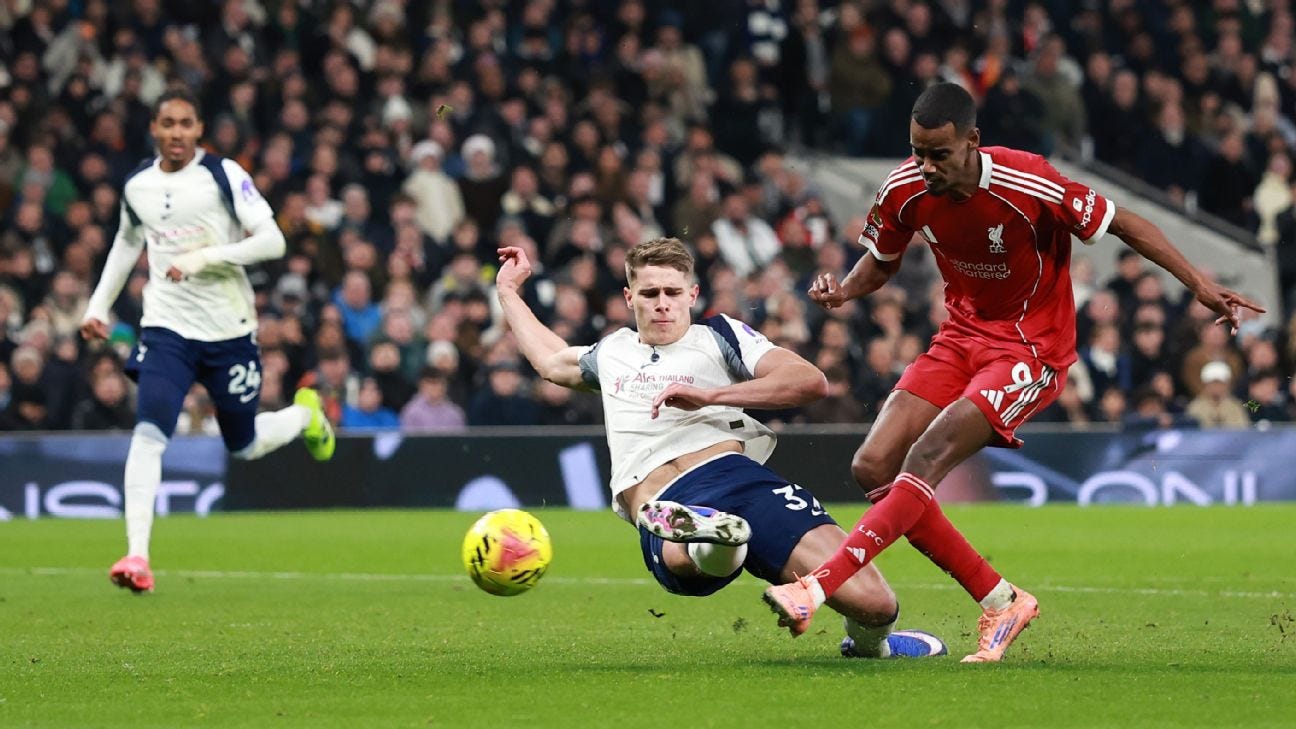
Away at Spurs. 58th minute. Romero blames a long ball at the chest of Mac, who finds Alexander Isak between the lines. One touch into Hugo Ekitiké, a lovely pass into Florian Wirtz, and then the moment. A perfectly weighted through ball. Isak runs off the back of his defender, opens his body, slips it past the keeper.
The defender slides in late trying to block the shot.
The goal stands. The ankle does not.
Liverpool take the lead and at the same time lose the striker who had just looked like the £125 million superstar, the epoch of a new attacking shape dynasty.
That goal was not just a finish. It was a sequence.
Mac into Isak.
Isak into Ekitiké.
Ekitiké into Flo.
Wirtz slipping Isak through.
That is tempo, spacing, trust, and timing. That is the dream.
Brutal timing for him, and for Liverpool, particularly given the drama around Mo and his now being at AFCON anyway.
What injury are we actually talking about?
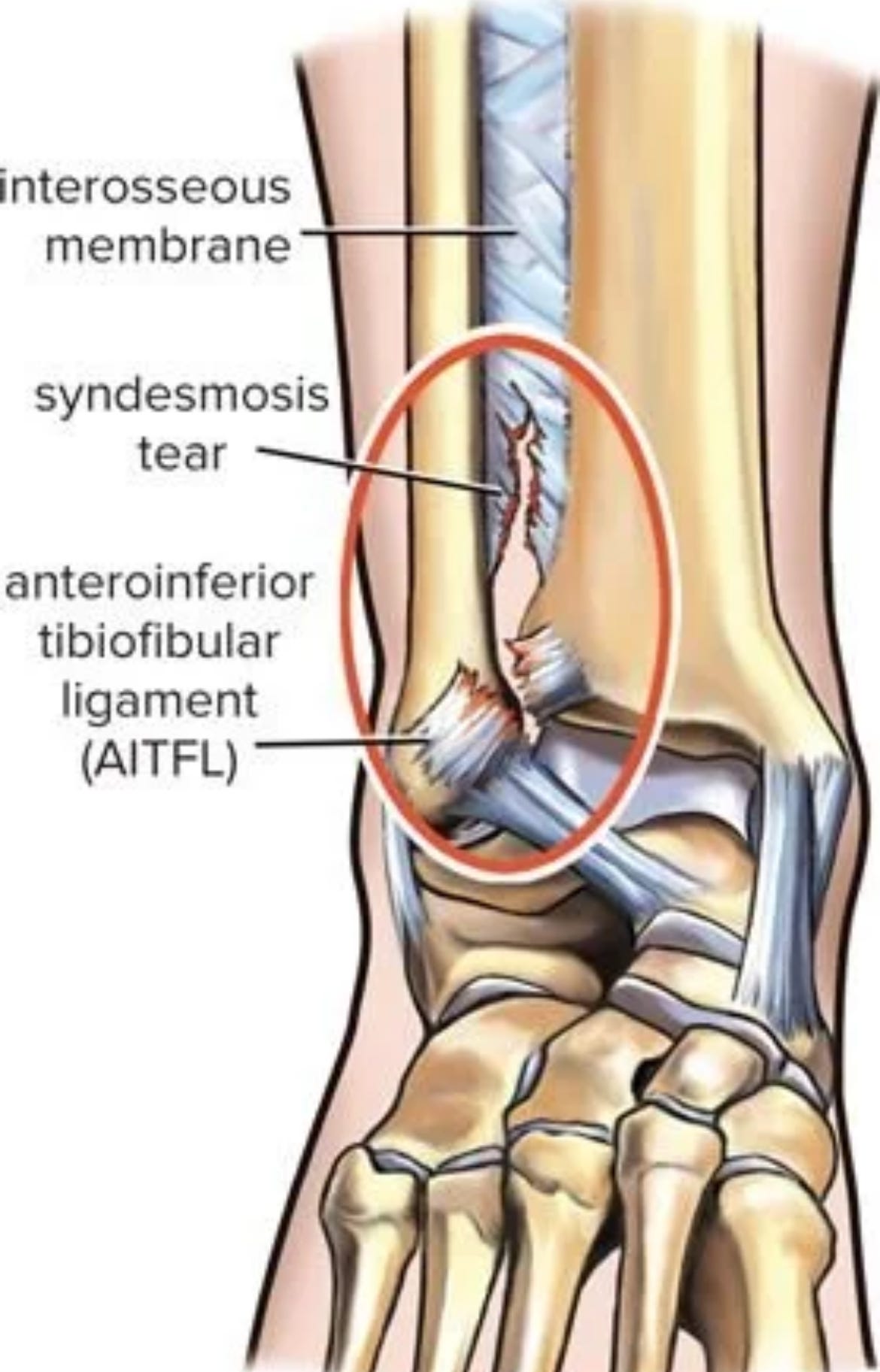
Isak has suffered a fibula fracture with associated syndesmosis injury.
That combination matters far more than either diagnosis on its own.
The fibula is not just a spare bone down the side of the leg. At the ankle it sets width, rotation, and alignment. The syndesmosis is the ligament complex that holds the tibia and fibula together. When it is disrupted, the ankle stops behaving like a stable hinge under load.
In football terms this is not about pain tolerance. It is about whether the ankle can repeatedly absorb braking, cutting, and awkward contact without the talus shifting where it should not.
That is why surgery is the default option at elite level.
When can Isak realistically return?
This is where honesty matters.
Syndesmosis injuries with an associated fibula fracture sit toward the slower end of ankle returns, even when everything goes well.
A sensible elite football timeline looks like this:
• 8 to 10 weeks before meaningful pitch exposure
• 3 to 4 months before integrated team training
• 5 to 7 months before competitive minutes that resemble the real player
Could he appear earlier. Possibly. But early appearances are usually short, managed, and heavily protected.
Liverpool’s staff will be far less interested in the first jog or the first cameo than in next day swelling response, repeat sprint tolerance, and confidence decelerating onto that ankle under fatigue.
Those are the true clearance gates.
What condition should we expect him to be in on return?
Fitness
Cardiovascularly he will be fine. Elite players maintain decent aerobic and anaerobic capacity fairly well through bike, pool, and controlled running progressions. But repeat sprint and high volume decelerations tend to only peak when in the rhythm of a season.
Strength and mechanics
Expect some combination of calf strength asymmetry, reduced ankle stiffness, and slight hesitation in high braking moments.
This does not show up in straight line speed. It shows up when a striker has to stop, adjust, and finish in tight spaces.
Trust
This is the quiet limiter.
Syndesmosis injuries affect ankle trust. Players often look sharp in training but subconsciously protect themselves in chaotic match situations. That fades with exposure but it takes minutes, not medical clearance dates. Rehab is a constant battle between the conscious and unconscious brain. Can we as coaches fool the brain into solving a movement solution it didn’t expect which leads to a little more faith that it can move further, push with more force or land harder.
What about the long term outlook?
The good news is that this injury is mechanically solvable.
If fixation restores alignment and spacing cleanly, and there is no cartilage damage, there is no reason Isak cannot return to his previous level.
The watch points are subtler. Post match swelling during fixture congestion, ankle stiffness in winter blocks, managed training days rather than setbacks. Niggles in supporting postural muscles.
These injuries tend to whisper rather than shout.
Handled properly this becomes a timing issue, not a trajectory issue.
The Liverpool reality
Liverpool do not need Isak back quickly. They need him back right.
Rushing a striker back from this type of ankle injury rarely ends in a dramatic breakdown. More often it creates a stop start rhythm that prevents momentum from ever really returning. Potentially lowering the ceiling of his career and pissing £125 million up a wall.
The temptation will be there, especially after seeing what that 58th minute looked like.
The smarter play is patience.
Because that goal at Spurs did not look like a moment. It looked like a preview.
And previews are only frustrating if you panic and turn them into something that never quite delivers.
Great informative article 👏👏