

There are anniversaries that pass quietly. You acknowledge them, perhaps pause for a moment, then carry on with your day. This is not one of them.
A year ago, football stopped.
It stopped because the news was too cruel to process, too sudden to comprehend. Diogo Jota, just 28 years old, and his younger brother André Silva had been taken from their family in a tragic road accident. A newly married husband. A father of three young children. Two sons. Two brothers. Two lives that should have stretched decades into the future, ending in an instant.
Last summer I struggled to make sense of it, and if I am honest, I have not become much better at it twelve months later.
Time does what it always does. It keeps moving. Football certainly does. Liverpool have played another season, celebrated victories, endured disappointments and welcomed fresh faces through the doors at Kirkby. Transfer stories have dominated headlines once again, tactical debates have filled podcasts, and supporters have done what supporters always do, they have looked ahead to the next challenge.
Yet every now and again, football reminds you that it is only football.
Today is one of those days.
Before anything else, my thoughts are with Rute, with the three children growing up without their father, with Diogo and André’s parents, and with everyone who loved them. While supporters mourn anniversaries, families live them. That is a distinction worth remembering because there is no fixture list for grief, no full-time whistle, no point at which life simply returns to normal.
Memory Made Permanent
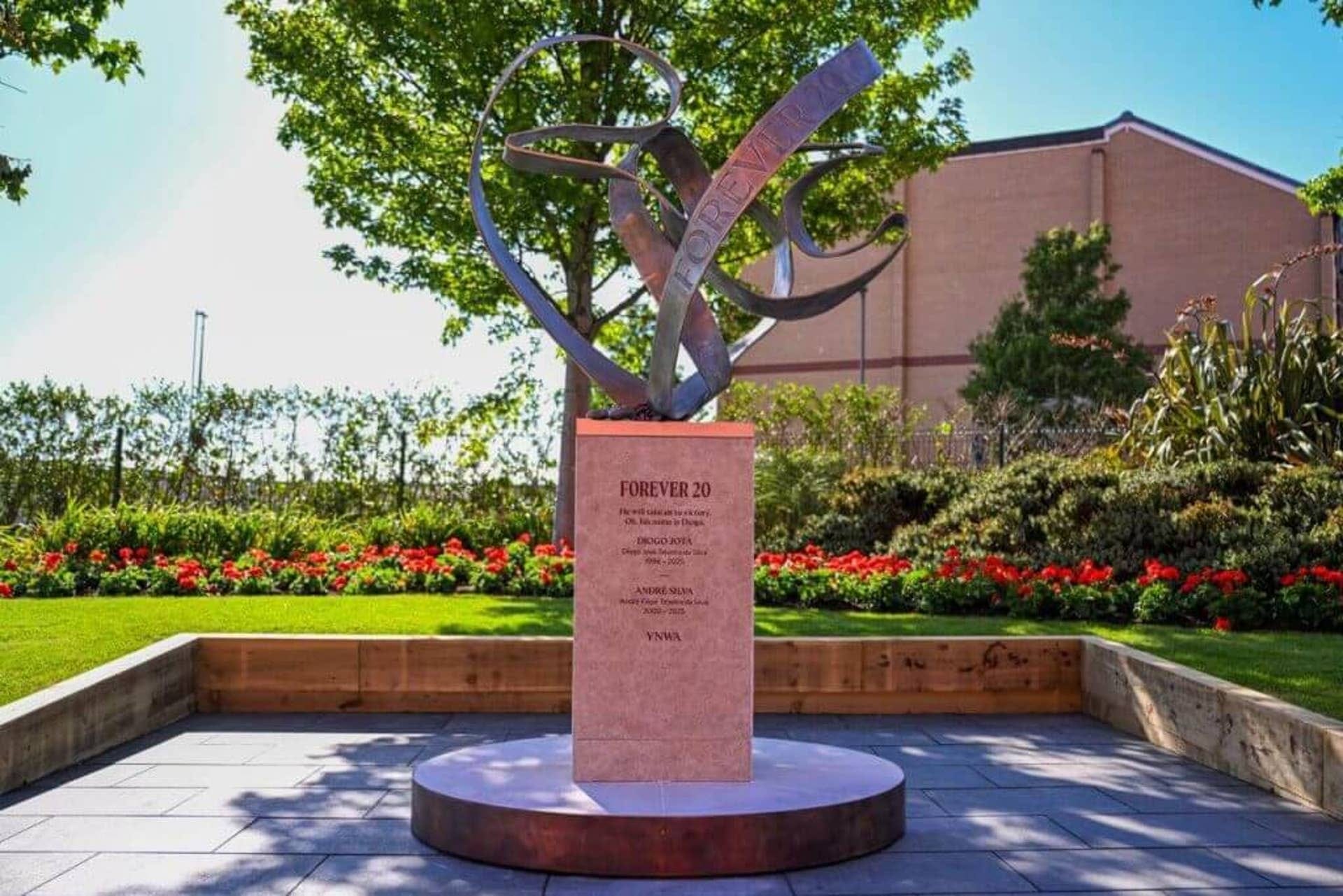
Liverpool have chosen this anniversary to unveil Forever 20, a permanent memorial outside Anfield honouring Diogo and André.
I have looked at the photographs several times now and every time I notice another detail.
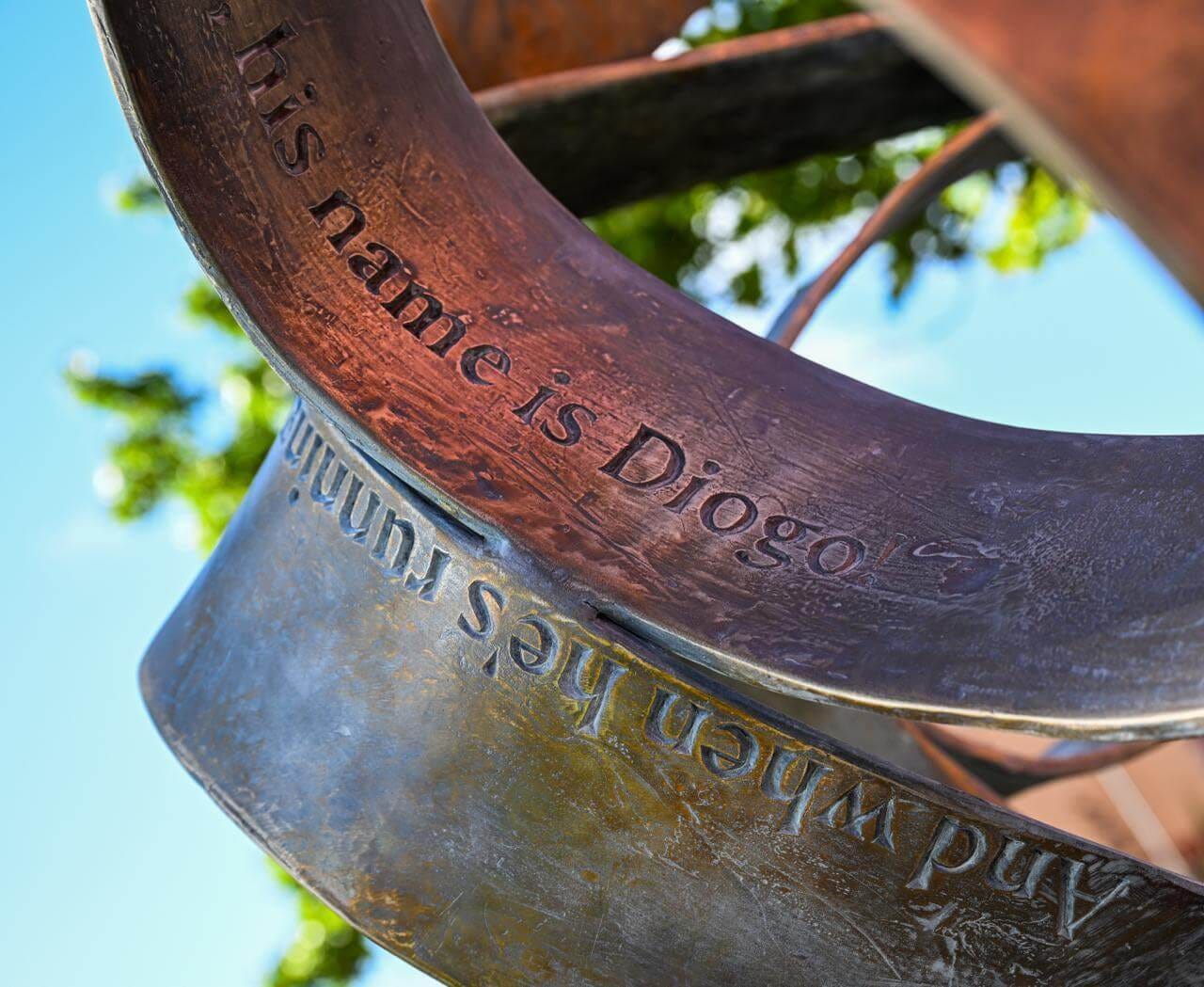
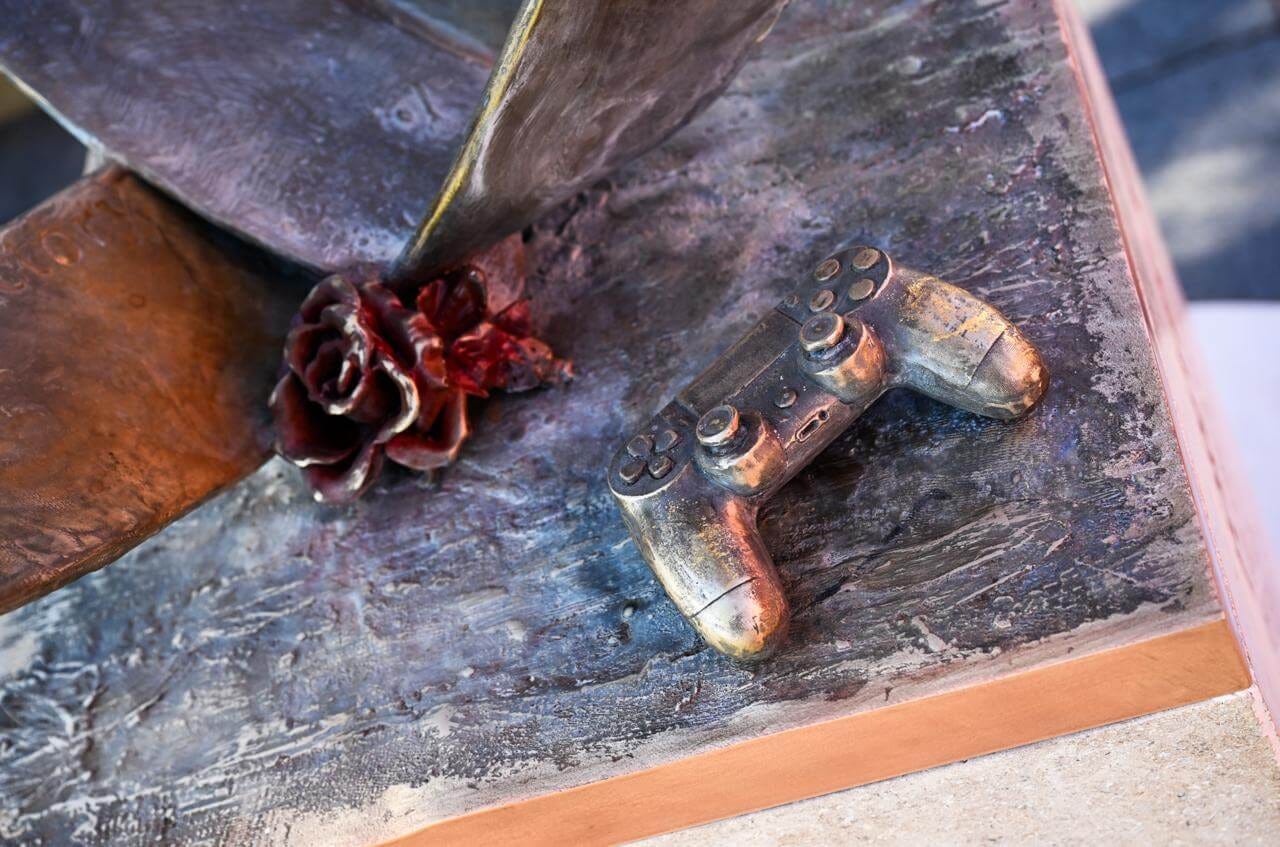
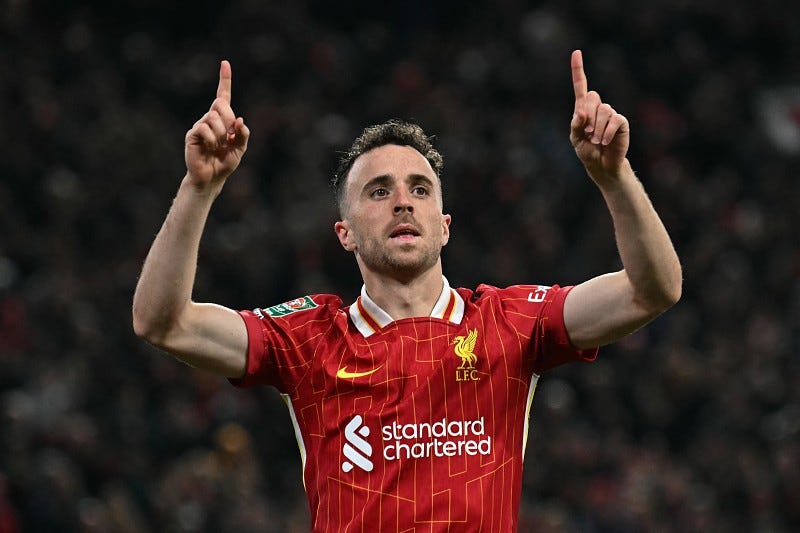
At its heart sits the flowing shape inspired by Diogo’s famous celebration. Walk around it and the sculpture reveals the numbers 20 and 30, the shirt numbers worn by the two brothers. Embedded within it are fragments of scarves and shirts left by supporters during those heartbreaking days last July. A single flower has been cast in bronze. Portuguese stone from Gondomar connects Anfield with the place the brothers called home. Resting on the plinth is a PlayStation controller, a quiet reminder of a footballer whose love of gaming became almost as recognisable as his pressing and finishing.
Nothing has been included for decoration. Everything has meaning.
Perhaps that is why the memorial feels so different from many sporting tributes.
It is not there to celebrate goals or medals. It is there to preserve memory.
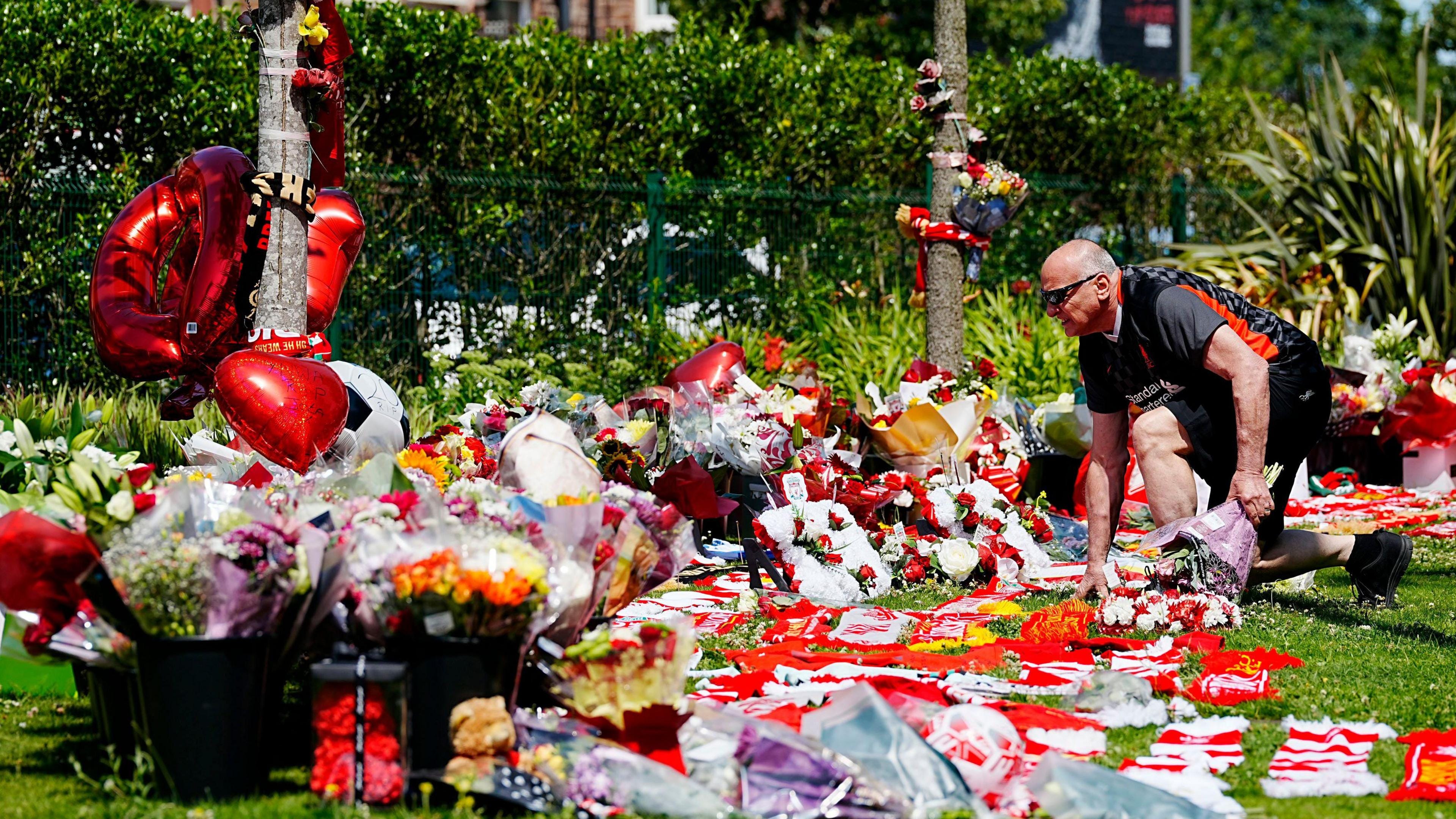
The location matters too. Liverpool could have placed it almost anywhere around Anfield. Instead, it stands where supporters gathered instinctively after the tragedy. Nobody organised those thousands of flowers, scarves, cards and handwritten messages. They appeared because people needed somewhere to take their grief.
Now those tributes have become part of the memorial itself.
There is something deeply moving about that. The sorrow of thousands has become part of something permanent, transformed from fragile flowers and fading ink into bronze and stone. It feels less like a monument and more like a promise.
More Than Liverpool’s Number 20
Football has always been tempted to reduce people to achievements.
Goals scored.
Trophies won.
Minutes played.
Transfer fees.
Diogo Jota gave Liverpool wonderful moments that deserve to be celebrated. Sixty-five goals, winners in huge matches, relentless pressing, an instinct for arriving at precisely the right moment. He helped deliver the Premier League title and played his part in restoring Liverpool to the summit of English football.
Yet over the past year, I have found myself thinking less about those moments and more about the man everyone describes.
Listen to those who worked alongside him, and the words barely change.
Kind.
Selfless.
Quietly competitive.
Someone who made others feel valued.
Someone who cared more about the team than himself.
Managers speak about tactics every week. Players praise each other after every victory. Football is rarely short of compliments. Yet the tributes paid to Diogo have always felt different because they never begin with football.
Arne Slot captured that perfectly this week when he reflected on the anniversary. He spoke about how moments like these remind you that football is never the most important thing. More revealing still was his description of Diogo as someone who brought people together, someone who always put the group first and made those around him feel important.
Those are not qualities measured by analysts or recorded by Opta.
They are qualities recognised by people.
Perhaps that explains why this loss reached so far beyond Liverpool supporters. Rival fans mourned. Players from every corner of the sport paid tribute. Football, for a brief moment, remembered that behind every shirt number sits a family, behind every television appearance sits a husband, a father, a son or a brother.
Sometimes we forget that.
Diogo Jota reminded us.
Season Shaped by Absence
I often think back to last summer and wonder how many people outside Liverpool truly appreciated what followed.
Supporters are expected to move quickly in modern football. One news cycle replaces another. One transfer replaces the last. Outrage lasts a day before attention turns elsewhere.
This felt different.
Every visit to Anfield carried a reminder.
Every time his song echoed around the ground there was a lump in the throat that caught supporters by surprise. We still sang it because songs are how Liverpool remembers our own. The words became less about celebrating a forward who had scored goals and more about refusing to allow his memory to fade.
That is one of the great strengths of this football club.
Liverpool has always understood remembrance.
Whether through triumph or tragedy, those who shape its story remain part of it forever. The club’s history has never been confined to trophies in cabinets. It lives in stories passed between generations, in songs carried from one match to the next, and now in a sculpture that ensures visitors will continue asking why number 20 means so much.
Children who never watched Diogo Jota play will one day stand before Forever 20 and ask questions.
Parents will tell them.
Grandparents will tell them.
Supporters they have never met will tell them.
That is how memory survives.
Not because history books demand it, but because ordinary people refuse to let it disappear.
Carrying His Name Forward
There is an old belief that football heals.
I’m not sure it does.
Football distracts. It gives us somewhere to gather, somewhere to sing, somewhere to share emotions with strangers wearing the same colours. There is comfort in that, and Liverpool has always provided it in abundance.
Healing belongs to families.
Supporters can only bear witness.
As this anniversary arrives, I hope Rute finds strength in knowing how deeply her husband continues to be loved. I hope their three children grow up understanding that their father meant far more to Liverpool than the goals he scored. I hope Diogo and André’s parents see that two sons taken far too early continue to unite people across countries and across generations.
That is no small legacy.
Football often speaks about immortality in sporting terms. Records are broken, trophies eventually gather dust and even the greatest players become part of history.
Love endures far longer.
Looking at Forever 20, I realised something that I could not have understood twelve months ago.
The memorial is not there because Liverpool cannot let go.
It is there because Liverpool knows exactly what deserves to be held on to.
Diogo Jota will always be remembered as a brilliant footballer.
He deserves that.
But I suspect that, in years to come, supporters will remember something even greater. They will remember the kindness spoken about by every teammate. They will remember the humility that made him so easy to admire. They will remember how a city embraced a young man from Portugal until he became one of their own.
Some footballers become legends because of what they win.
Others become legends because of how they make people feel.
Diogo Jota belongs firmly in the second group.
One year on, there are still no easy words.
There probably never will be.
There is only gratitude for what he gave, sorrow for everything that was taken away, and a promise that his song will continue to ring around Anfield long after all of us have gone.
Forever 20 is not simply the name of a memorial.
It is Liverpool’s pledge that Diogo Jota and André Silva will never be forgotten.
Today, as always, my thoughts remain with Rute, their three children, Diogo and André’s parents, and everyone fortunate enough to have loved them.
You’ll Never Walk Alone.
😢