

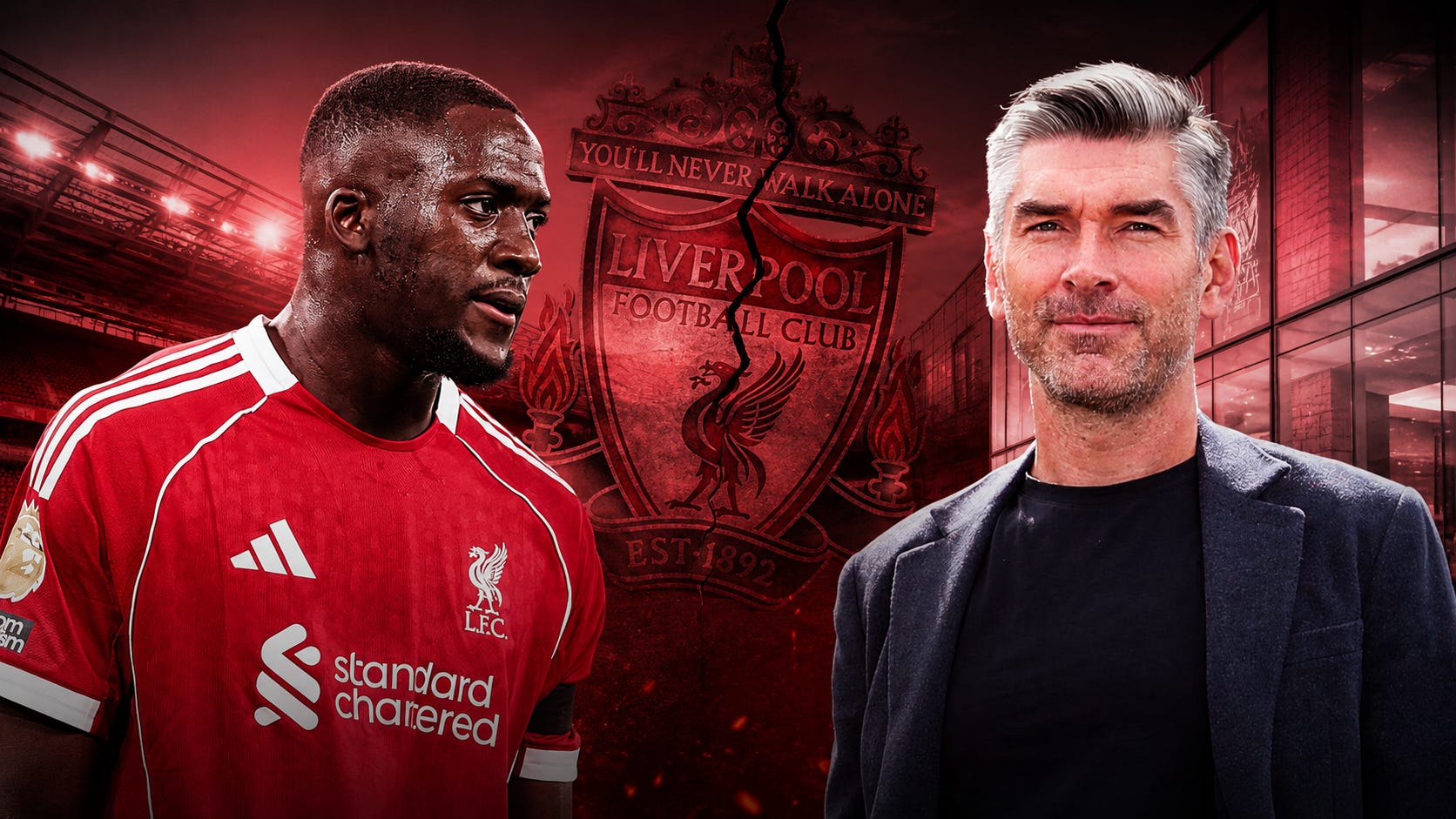
Ibrahima Konaté’s Liverpool exit has the strange feel of something both inevitable and still faintly absurd. For months, the logic pointed one way. A player in his peak years does not usually allow a contract to dilute down to almost nothing and then suddenly reach for the pen. At elite level, that kind of delay normally means leverage, appetite for the open market, or both.
That was why Konaté’s comments after the Merseyside derby landed with such force. He spoke as though he expected to stay, said Liverpool meant a great deal to him, and talked like a man ready to inherit responsibility from departing legends. For a short while, it was possible to wonder whether everyone had misread the room.
As it turned out, the room had been read perfectly well all along.
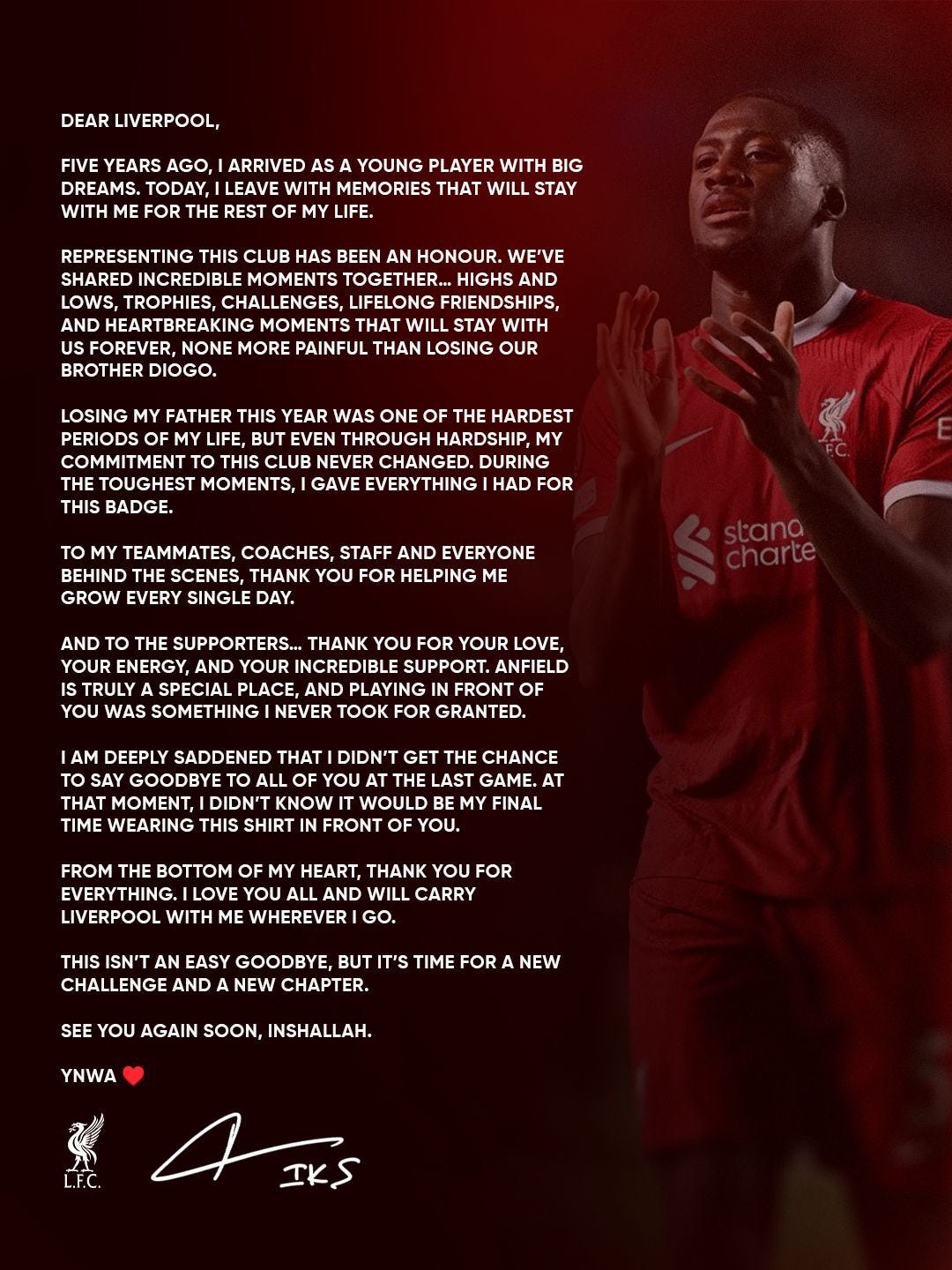
His farewell post was warm, emotional and hard to dismiss. Konaté wrote of Liverpool with affection, mentioned the pain around Diogo Jota, and spoke movingly about the death of his father. Nobody should strip the humanity from this. Konaté gave Liverpool five years, 183 appearances, trophies, power, personality and some enormous performances.
Yet Liverpool have lost a 27 year old centre back on a free transfer. That sentence alone should sting inside the club.
Konaté Exit Was Coming
Konaté leaves behind a Liverpool career that resists neat judgement. There were nights when he looked like a centre back built for the modern game. Paris in 2022 remains the obvious example. Liverpool lost the Champions League final, yet Konaté was immense. Quick across the grass, brutal in contact, calm enough to carry the ball into pressure, he looked like a player whose ceiling touched the roof of Europe.
That first season told Liverpool what they had bought from RB Leipzig for £36m. They had waited for him and found a defender who could make the pitch feel like a private training ground. At his best alongside Virgil van Dijk, there was a bouncer-like quality to the pair of them. The opposition could see the door. They were not getting through it.
The frustration is that his best never became the weekly condition. He could look world-class, then spend too long appearing like a player waiting for the world-class version of himself to report for duty. Injuries interrupted earlier seasons. Form dipped at awkward times. This season, when the contract issue was reaching its final stage, the timing could hardly have been worse.
That matters. Konaté clearly placed a higher value on his skill set than Liverpool’s decision makers were prepared to place on his output. In pure ability terms, he had a case. In terms of consistency, Liverpool had one too.
Wage Structure Meets Main Character Syndrome
I have written before that Konaté has a touch of main character syndrome. Some of it has always looked harmless enough, even funny at times. The complaints over Man of the Match awards, the social presence, the sense that he understood his own theatre. There is nothing wrong with personality in a dressing room. Liverpool need characters. The difficulty comes when self-assessment reaches the negotiating table. Konaté seems to see himself as a top-tier Liverpool player. On certain afternoons, he is right. Over a season, the evidence becomes harder to sustain.
That is where Richard Hughes and Liverpool’s football operation have drawn their line. Konaté reportedly earned around £150,000 a week and wanted a significant rise. In isolation, that request does not sound outrageous for a starting international centre-back who helped win the Premier League in 2024/25. Viewed against the reported contracts given to Cody Gakpo and Ryan Gravenberch, you can see why Konaté’s camp would ask the question.
If others in the 24 to 28 age bracket are moving toward the upper reaches of the wage structure, why should he stand still?
That, I suspect, is where Liverpool decided the slope had become too steep. They were not prepared to move every prime-age player into the richest bracket because one or two deals had already shifted the market inside the club. Konaté became the point at which the club stopped bending.
It may prove sensible in the long run. Wage structures are not abstract spreadsheets. They shape dressing rooms. Give one inconsistent performer elite money and the next conversation starts higher. Curtis Jones has a good season, Dominik Szoboszlai’s agent phones, another player points across the room. Konaté may be the final trigger rather than the original problem.
Centre Back Void Cannot Be Ignored
None of that makes this painless. Liverpool have still allowed a valuable centre back to walk away for nothing. That continues a worrying pattern, even when every individual case has its own explanation. Supporters are entitled to ask how a club built on sustainable decision making keeps arriving at situations where saleable assets reach the door without a fee attached.
It is too easy to say they should have sold him last summer. That only works if a buyer was ready, Konaté was willing to go, and Liverpool had a replacement prepared. Football is full of solutions that exist only after the danger has passed. Keeping him helped maintain a title winning squad. Nobody complained about that while the medal was being polished.
The issue is what happens now.

Liverpool cannot start next season with Van Dijk at 35, Joe Gomez and his injury record, plus Giovanni Leoni and Jeremy Jacquet as the supporting cast. Leoni is returning from an ACL injury and has not played Premier League football. Jacquet is talented, expensive and highly rated, yet also new to England and coming back from a significant injury. That is not a title challenge platform. It is a dice roll.
Van Dijk remains magnificent, although even magnificence needs help. Liverpool have already lost Salah and Robertson. They have lost know-how, voice, authority and the small daily standards that keep a training ground honest. Konaté was a senior figure, a big presence, and somebody who had lived the pressure of finals, title races and Anfield expectation.
Lacroix Fits Liverpool’s Next Move
If Andoni Iraola becomes Liverpool manager, the centre back question grows even sharper. His football asks defenders to handle space, aggression and uncomfortable moments. It needs pace, nerve and recovery power. That cannot be left to hope.
If there is still a window to call Marcos Senesi before Spurs close the deal, Liverpool should at least know the answer. He has Premier League experience, left-footed balance and familiarity with Iraola’s demands. The concern would be mobility on a side that may need to defend large spaces, yet he would bring know-how straight away.
Maxence Lacroix may be the smarter play. I wrote about him last week and still think he carries many of the tools Liverpool should be hunting. He has speed, athletic reach, front-foot defending, and the profile to work beside Van Dijk now, then form part of the next version of the back line after Van Dijk goes. Palace will not make it easy, and nor should they, yet Liverpool are beyond the stage where cleverness can become delay.
This is the danger with trying to be the smartest club in the room. Sometimes the smart move is restraint. Sometimes it is recognising that the void in front of you is too large to explain away with projections and promise.
Konaté was not worth any price. Liverpool were right to resist being dragged into a wage bracket they did not believe he had earned. Still, walking away from him creates a serious obligation. Hughes has protected the wage structure. Now he has to protect the team.
That means signing a centre back ready for Premier League football, not another prospect wrapped in future tense. Liverpool can live without Konaté. They cannot live with pretending his departure has not opened a hole.