

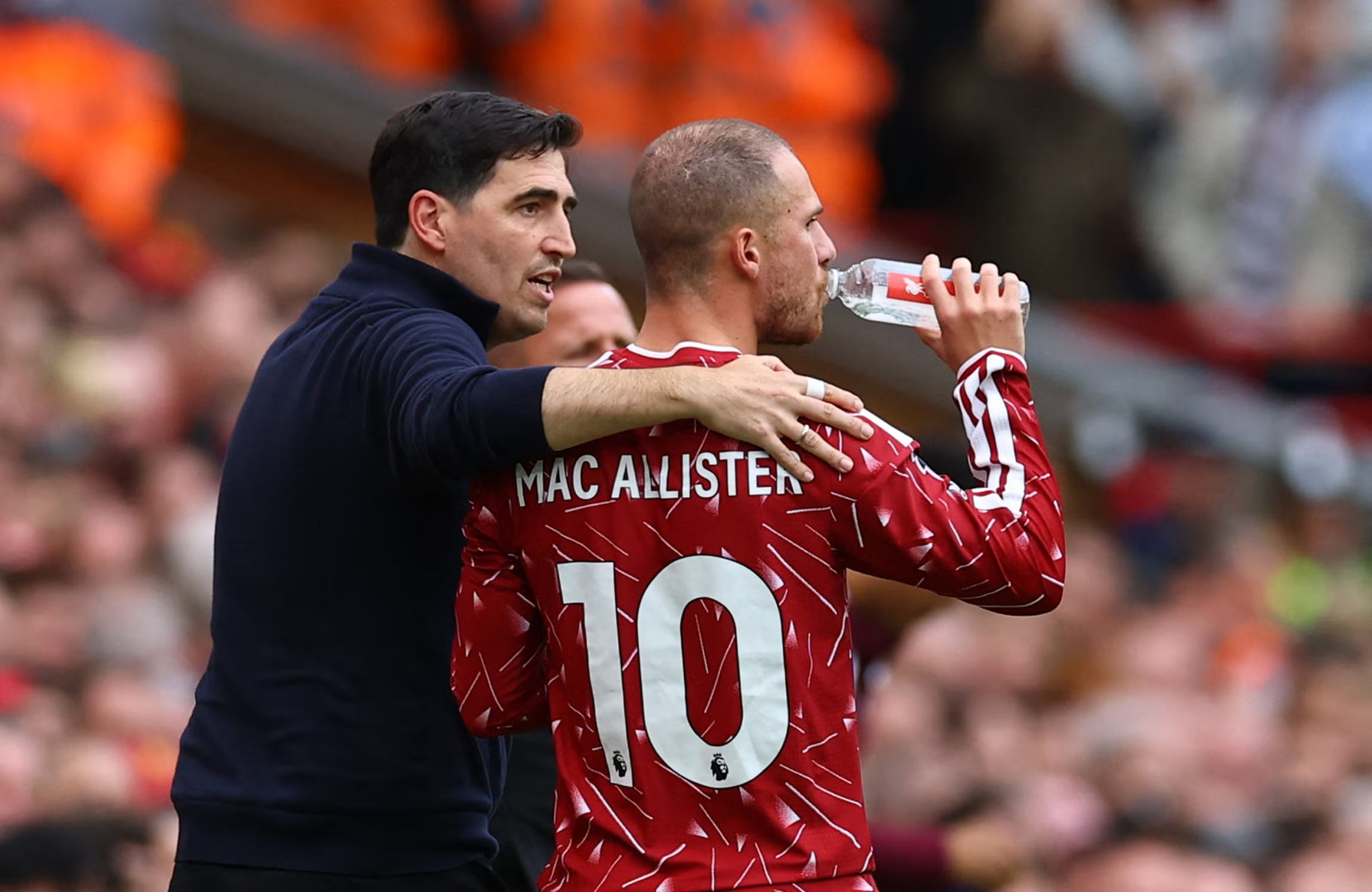
Liverpool dominated plenty of the numbers against Fulham, yet a flat 0-0 draw showed how much work remains in turning possession and territory into genuine Premier League threat.
There will not be many Liverpool games this season that disappear from the memory quite as quickly as Saturday’s 0-0 draw with Fulham.
It was flat. It was slow. At times it felt as though Liverpool were playing with heavy legs, which probably should not have come as a great surprise after the Champions League victory over Atlético Madrid only a few days earlier.
There has to be some context around that.
Andoni Iraola described the turnaround as about as difficult as it gets and Liverpool certainly looked like a team feeling it. The sharpness we saw against Atlético was missing, simple passes went astray and combinations that had looked promising in midweek suddenly looked disconnected.
The problem for Liverpool is that this schedule is now part of life.
Tonight brings Tottenham Hotspur to Anfield in the Carabao Cup, and I expect Iraola to rotate heavily, perhaps almost completely, after asking so much of the senior players over the past week. Giorgi Mamardashvili has already been confirmed to start, and this feels like the obvious opportunity to give minutes to players who need them while allowing some of Saturday’s starters to recover.
That makes the Fulham performance understandable to a point. It does not make it satisfactory.
Liverpool had enough possession, enough territory and enough chances to win. They simply never found the rhythm or quality required to turn those advantages into goals.
Liverpool Had Control Without Enough Purpose
The headline numbers look reasonably healthy.
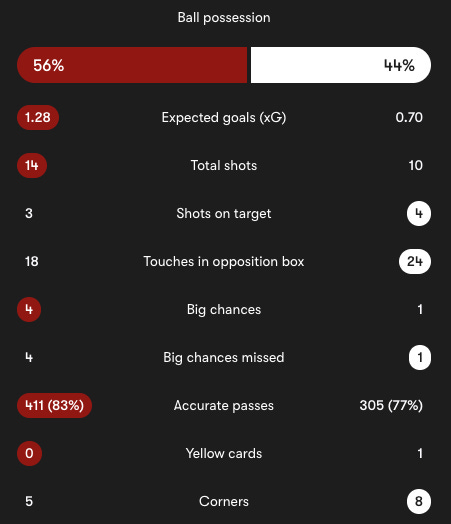
Liverpool had 56% possession, Fulham 44%. They took 14 shots to Fulham’s 10, generated 1.28 xG compared with 0.70 and created four big chances while Fulham managed one.
On those numbers alone, you would probably expect Liverpool to win.
Dig a little deeper and the frustration becomes much easier to understand.
Liverpool completed 494 passes, with 411 finding their target at 83% accuracy. Fulham attempted 398 and completed 305 at 77%.
More importantly, Liverpool made 239 passes in the opposition half. Fulham managed only 127.
That is a sizeable territorial advantage.
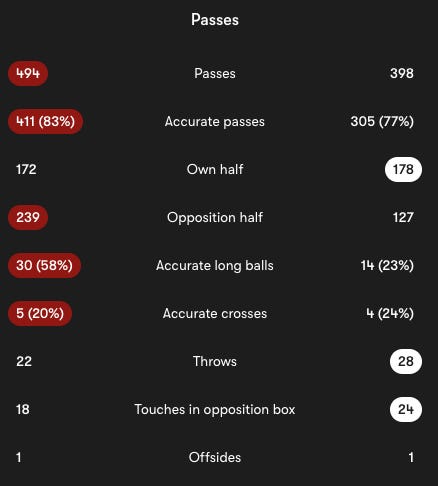
Yet Liverpool had only 18 touches inside the Fulham penalty area.
Fulham had 24.
That is the statistic that jumps out at me more than almost anything else from the game.
Liverpool had substantially more possession in advanced areas, yet Fulham actually entered Liverpool’s penalty box more frequently. That tells us where the problem was. Liverpool could move the ball towards the final third, then everything became more difficult.
The attacking zones offer another clue.
Liverpool channelled 49% of their attacking play down one side, 30% down the other and only 21% through the centre.
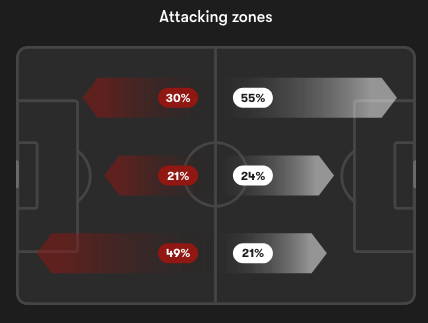
There was very little coming through the heart of Fulham’s defence.
That allowed the visitors to defend Anfield in a way they were reasonably comfortable with. They could protect the middle, send Liverpool towards wider areas and deal with the delivery when it arrived.
Fulham deserve some credit for that. Their approach worked.
Liverpool still need a better answer.
Four Big Chances Should Have Produced Something
The strange thing about the game is that Liverpool’s attacking numbers were actually better than the performance felt.
They produced 1.28 xG compared with Fulham’s 0.70, with Liverpool generating 0.84 from open play and another 0.44 from set pieces.
The Reds also created four big chances.
All four were missed.
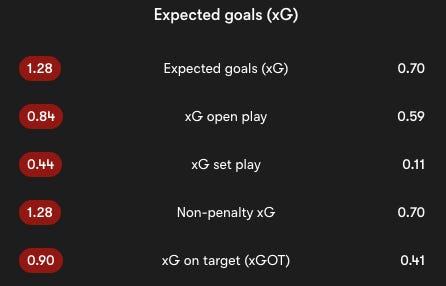
That matters because a performance can feel poor while still containing enough opportunities to win the game.
Liverpool had 14 shots, nine of them from inside the penalty area. Five more came from outside.
Fulham had 10 attempts, eight from inside the box, which again shows they carried more attacking threat than you might expect from a side with only 44% possession.
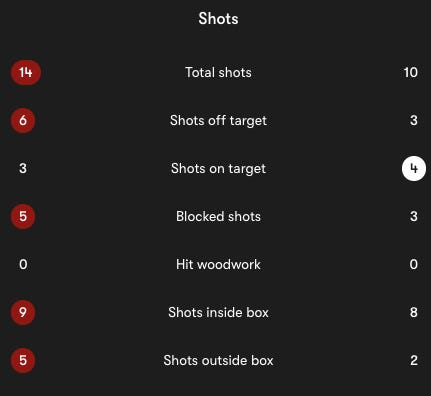
Liverpool only put three of their 14 efforts on target.
Fulham managed four.
That lack of accuracy summed the afternoon up.
There were still moments. Dominik Szoboszlai delivered one excellent ball towards Bradley Barcola, who struck it well before Fulham produced a very good block. Alexander Isak had opportunities too, including the late header that felt like the chance Liverpool had been waiting for.
Those moments arrived too infrequently.
Florian Wirtz is capable of producing the pass that opens these games up, and there were still flashes of his quality. He also looked tired. Liverpool need him receiving the ball around the penalty area far more often because asking him to create one or two decisive moments over 90 minutes places an enormous demand on every action.
If Wirtz gets into those positions six, seven or eight times, something will happen.
That should be one of Iraola’s priorities when he looks back at this game.
Anfield Needs Better Combinations
One of the biggest issues against Fulham was how disconnected Liverpool looked across the pitch.
The relationships were not there.
That is partly understandable because Iraola is mixing new players, different roles and new tactical ideas. It still leaves him with a problem to solve quickly.
The left side struggled to produce much fluency. The right side had similar problems. Through the middle, Liverpool never seemed capable of consistently connecting Wirtz and Isak.
Those combinations are crucial to the way Iraola wants his Liverpool team to play.
The shape can be drawn however you like on a tactics board, 2-3-2-3 or something slightly different depending on the phase, yet it only works if the players within those little units understand each other.
Liverpool looked like a team still thinking about where the next player was going to be.
That takes time.
It also explains why I am reluctant to make sweeping conclusions after four league matches under Iraola. There are too many moving pieces for that.
Saturday still gave him useful information.
He has to find a way of getting an extra player into midfield areas when opponents block Liverpool’s initial routes forward. He needs his full backs to understand when to move inside and when to provide width. He needs Szoboszlai using his running and delivery in areas where they hurt opponents.
Most importantly, Liverpool have to get better service into what I would call the second six yard area.
That is where Isak can be devastating.
When Liverpool managed to put balls across that area against Fulham, something generally happened. There simply were not enough of them.
You can have all the possession you like around a packed defence. Eventually somebody has to put a dangerous ball across the goalkeeper and somebody else has to attack it.
Liverpool need more of that at Anfield.
Schedule Explains Something, Tottenham Offers the Reset
The physical numbers make the schedule discussion interesting.
Fulham covered 115.7 kilometres compared with Liverpool’s 110.3.
They also ran 21.2 kilometres compared with Liverpool’s 19.9.
Yet Liverpool actually sprinted further, 2.3 kilometres compared with 2.0, and recorded 124 sprints to Fulham’s 102.
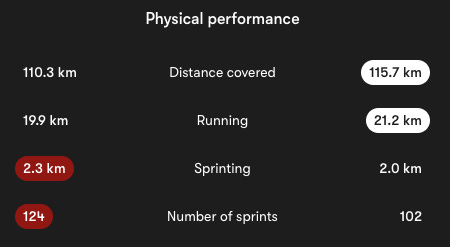
So the willingness to work was there.
The overall performance still lacked freshness.
Liverpool also won 38 duels to Fulham’s 35 and dominated the aerial contests by 13 to seven.
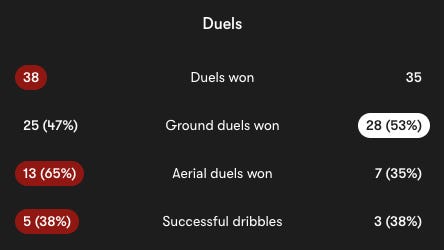
Defensively, there were things to like too.
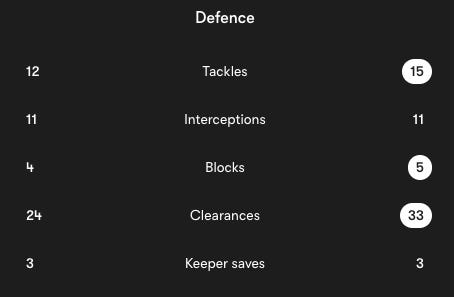
This was another clean sheet and Fulham finished with only 0.70 xG. Liverpool made 11 interceptions and Fulham were forced into 33 clearances, another indication of where a lot of the football was being played.
The concern remains at the other end.
Liverpool have to win these games at Anfield if they want to achieve anything significant in the Premier League. You cannot allow too many home matches against teams outside the obvious title contenders to become afternoons where everybody shrugs and accepts a point.
Iraola knows that.
Tonight’s Carabao Cup game with Tottenham now gives him an interesting opportunity.
I would expect a substantially changed Liverpool team at Anfield, perhaps something approaching full rotation. Mamardashvili will start, Joe Gomez is available again, and this is exactly the sort of fixture where fringe players and younger members of the squad can take some of the workload.
The senior players who have gone from Premier League football into Atlético and then Fulham need some breathing space because the schedule will keep coming.
That is part of Iraola’s challenge now.
He has to build a Liverpool team capable of playing his football three times in little more than a week without one performance looking like the batteries have been taken out.
Fulham was a poor watch and a disappointing result.
It was also another piece of information for a new manager learning about his players, his squad and the demands of managing Liverpool.
There is plenty to improve.
There is also no need for panic.