

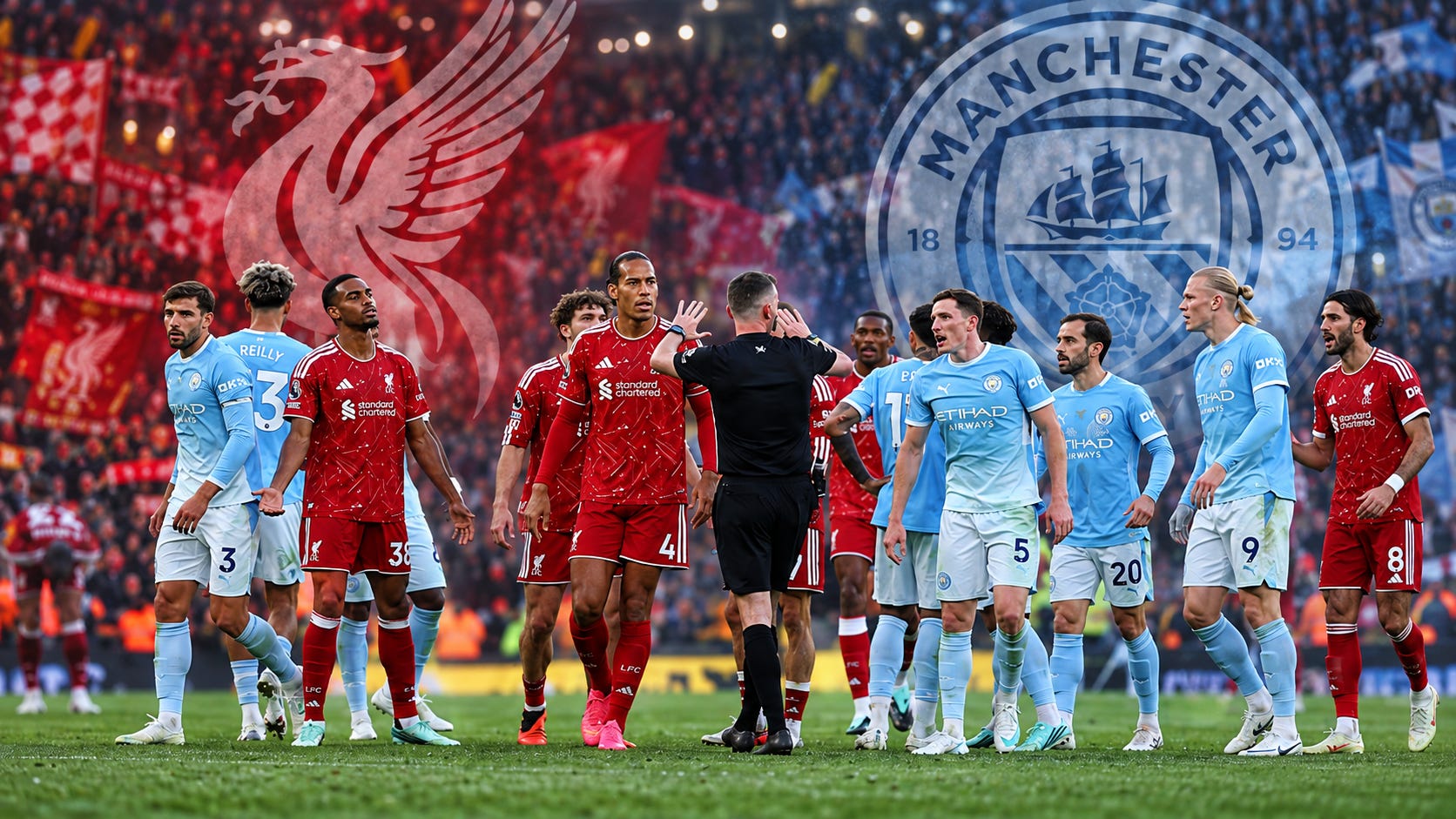
There are occasions when you look at a scoreline and it gives you a fairly accurate account of what happened during the previous 90 minutes.
Liverpool 0-3 Manchester City is certainly not one of them.
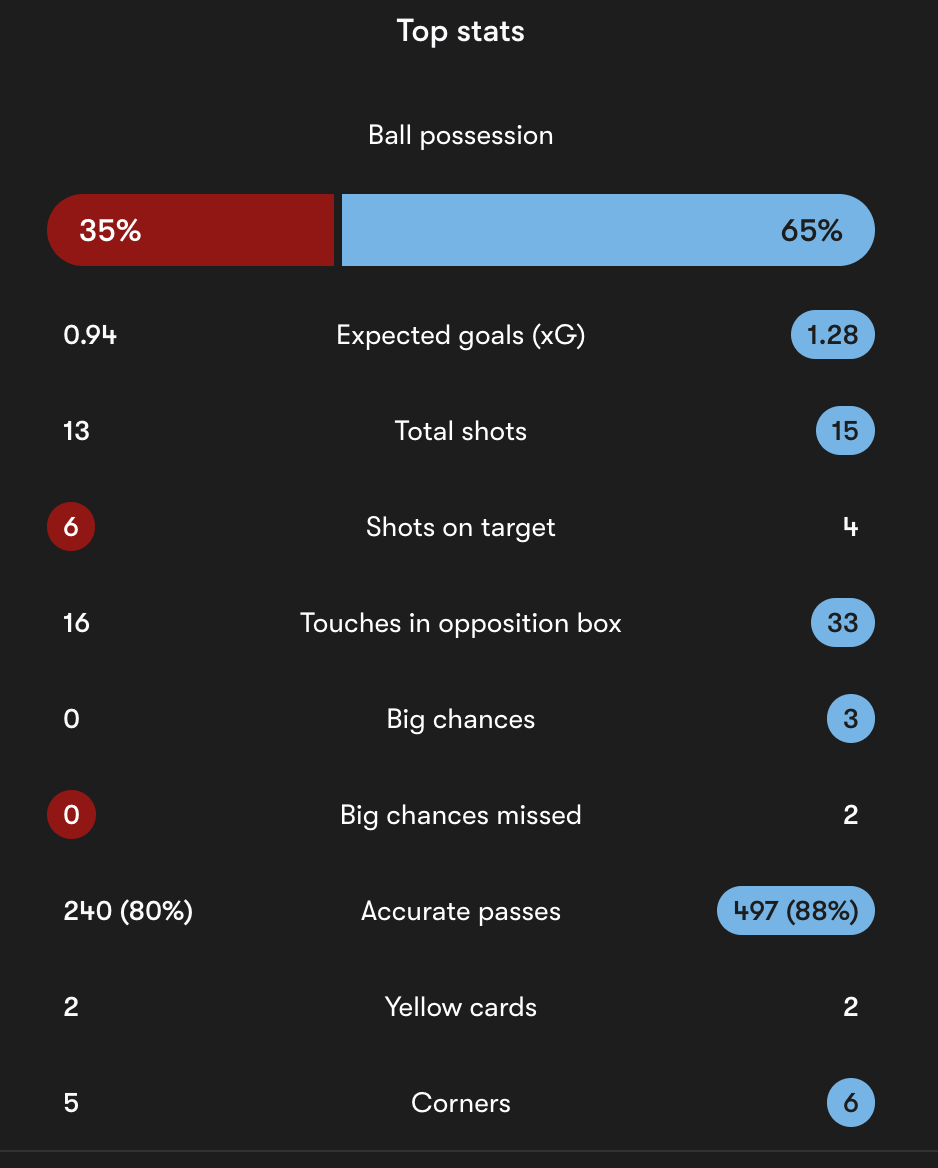
Manchester City left Anfield with three goals, three points and what will eventually become another comfortable looking victory in the record books. Anyone who watched the first hour will know there was considerably more to this game.
Liverpool were good.
They were disciplined, aggressive and competitive. They restricted a Manchester City side full of attacking talent to almost nothing of consequence for an hour, while creating considerably more themselves.
Then Chris Kavanagh sent Ryan Gravenberch off in the 62nd minute.
Erling Haaland scored in the 65th.
Jérémy Doku made it two in the 68th.
Rayan Cherki added the third in the 78th.
The whole afternoon turned in the space of a few minutes. Andoni Iraola described it afterwards as two completely different games, which is exactly what it was. Liverpool were the better side before the dismissal. Manchester City were unquestionably the better side afterwards.
I have no problem admitting Liverpool could have handled the aftermath better.
I have a much bigger problem with the refereeing decision which created the situation in the first place.
Gravenberch Red Card Changed Liverpool v Manchester City
Let us deal with the biggest moment first.
Gravenberch’s first yellow card was incredibly soft.
Iraola was understandably furious afterwards. He pointed out that the challenge took place in the middle of the pitch, Liverpool had nine players behind the ball, no dangerous attack had been stopped and Kavanagh did not even immediately whistle for the foul. Elliot Anderson continued before going to ground, then the yellow card appeared.
I struggle to understand it.
There was contact. Football contains contact.
If every challenge of that type becomes a booking, we are going to finish Premier League games with seven players on each side.
The second challenge is different. Gravenberch is beaten by Doku and he does make contact. I can understand a foul being given and I can understand the argument for a booking when you look at that incident in isolation.
My issue is that he should never have been carrying the first yellow card.
That is why the refereeing matters so much.
Kavanagh had put himself and Gravenberch into a situation which never needed to exist.
Ronald Araujo was also booked very early for complaining. Again, technically you can point to the laws and say the referee is entitled to produce the card.
Fine.
Then referee everybody like that every week.
Iraola made exactly that point afterwards. If complaining automatically earns a yellow card, the same standard has to be applied throughout the season.
That is where the frustration comes from.
Supporters can accept decisions they dislike. What becomes much harder to accept is inconsistency.
You cannot apply the strictest possible interpretation to Liverpool in one moment and then allow the usual Premier League tolerance five minutes later.
And when that inconsistency ultimately contributes to reducing one team to 10 men in Liverpool against Manchester City, it completely changes the football match.
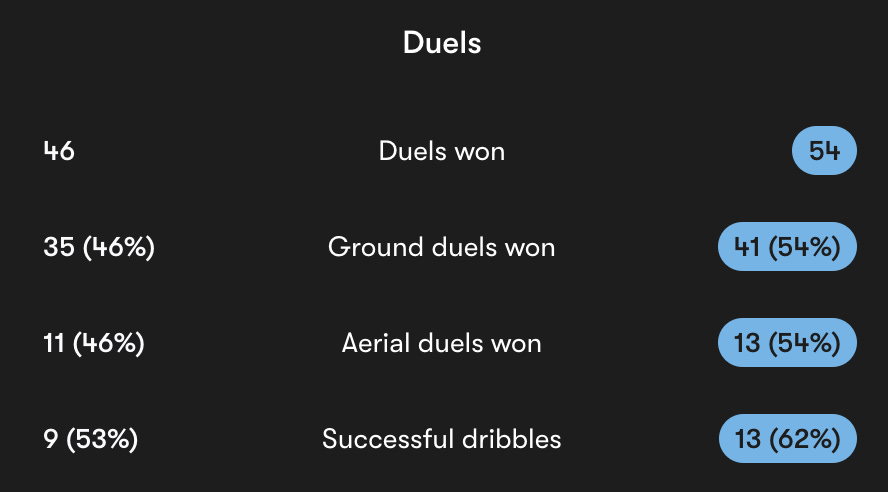
Liverpool still competed physically. City won 54 duels to Liverpool’s 46, with the ground contests finishing 41 to 35 and the aerial battles 13 to 11.
Those numbers hardly suggest a Liverpool side being swept aside.
Neither did anything we watched for the first hour.
