

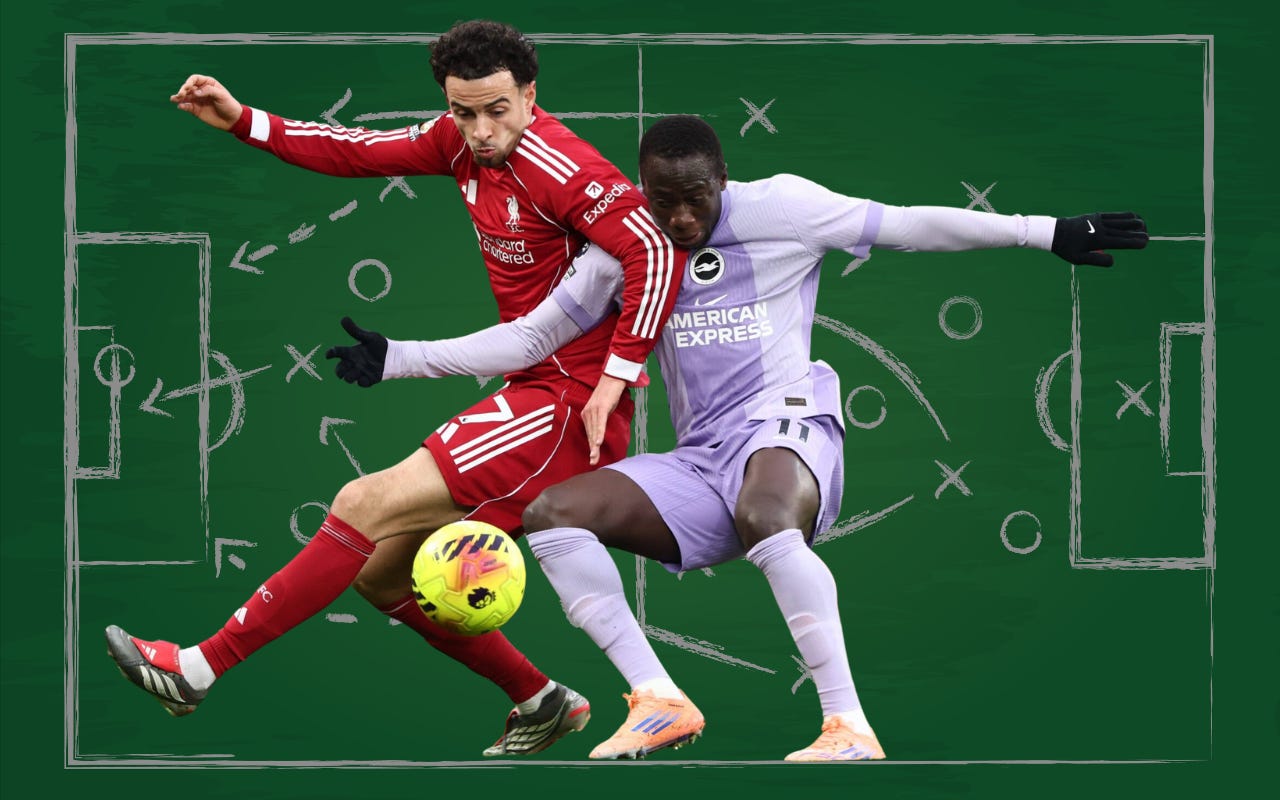
Liverpool’s 2–0 victory over Brighton on Saturday afternoon may come to be remembered less for its drama and more for its importance. In a Premier League season where margins feel increasingly thin, three points against a well coached and awkward opponent carry real weight in the race for Champions League qualification. Liverpool made life simpler for themselves almost immediately, Hugo Ekitiké scoring inside the opening minute, a moment that reshaped everything that followed.
That early goal altered the emotional temperature of the match. Liverpool were no longer chasing control, they were protecting it. Brighton, by contrast, were forced into pursuit mode from the outset, pushing higher, committing bodies forward and taking risks they might otherwise have resisted. Game state, so often an abstract concept in analysis, became very real very quickly.
Liverpool have not always managed these situations well. The late collapse against Leeds United last weekend was still fresh in the memory. This time, though, the response felt calmer and more deliberate. With the lead secured, Liverpool could afford patience in possession and, crucially, could lean into their counter attacking threat rather than forcing play.

Numbers beneath the surface
Despite the comfortable scoreline, the underlying numbers tell a more nuanced story. The accumulated expected goals were almost identical, Liverpool at 2.00 and Brighton at 1.83, with average chance quality also closely matched. Brighton were restricted to just two shots on target, which speaks well of Liverpool’s defensive execution, but the locations of those chances will give Arne Slot’s staff something to consider.
