

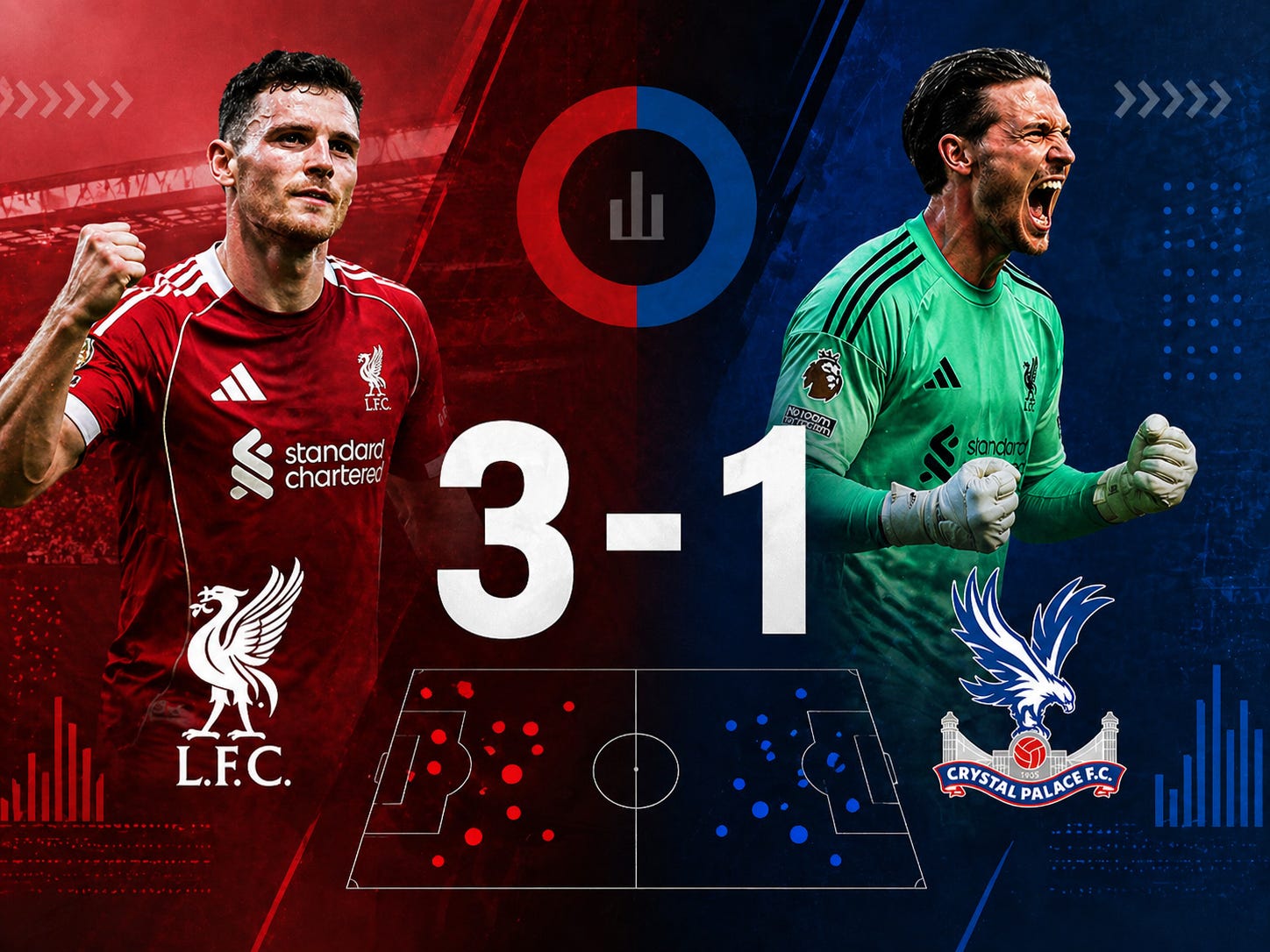
Liverpool continued their push at the top of the Premier League table with a 3-1 victory over Crystal Palace at Anfield, but while the scoreline suggests comfort, the underlying story was rather more complicated.
Arne Slot’s side took the points and there were spells, particularly in the middle period of the match, when Liverpool looked fluent, dangerous and full of attacking rhythm. Yet there were also moments, especially before the opening goal and again late on, when the structural concerns that have followed this side for much of the season resurfaced.
That is perhaps the fairest summary of where Liverpool are right now. They are winning football matches, and that matters most. But they are still doing so while leaving tactical questions unanswered.
Palace Structure Causes Early Frustration
Crystal Palace arrived at Anfield with a clear plan and, to their credit, executed it superbly for long periods.
Oliver Glasner’s side lined up in their now familiar back five structure, morphing into a compact 5-2-3 out of possession. Their objective was simple, deny central progression, force Liverpool into sterile possession, and tempt frustration from the stands.
For half an hour, it worked.
Liverpool had the ball, but not where they wanted it. Palace’s shape consistently left the home side feeling one player short in every meaningful area. The passing lanes into midfield were blocked, Liverpool’s forwards remained too vertical too often, and Palace were able to dictate where Liverpool could play.
The numbers underline that early frustration.
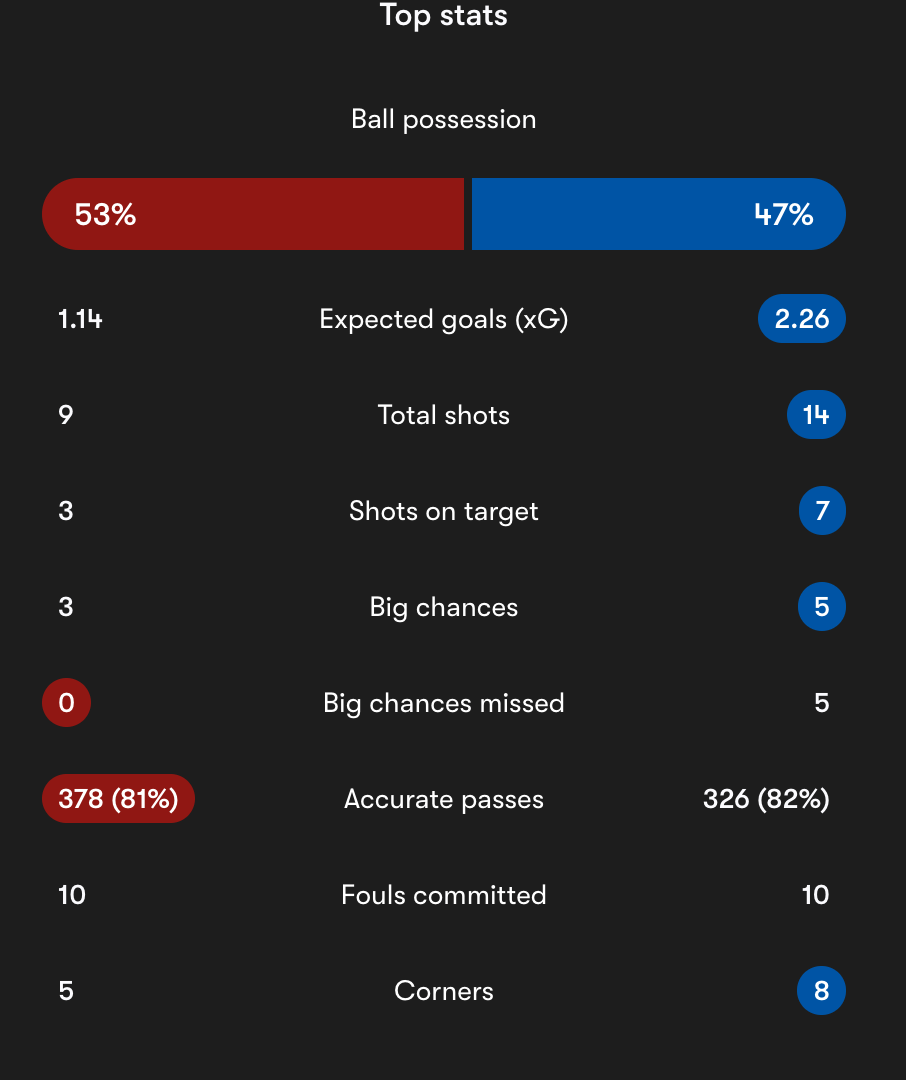
Despite enjoying 53% possession, Liverpool produced only 1.14 xG across the game, significantly lower than Palace’s 2.26. More strikingly, Palace actually registered more total shots, 14 to Liverpool’s 9, and more shots on target, 7 to 3.
On paper, that is not the statistical profile of a dominant home victory.
Yet football, as ever, is rarely that simple.
Clinical Moments Shifted Momentum
Liverpool’s first goal changed everything.
Up to that point, Palace had largely succeeded in making the game uncomfortable. Their pressing structure forced Liverpool wide, their wing backs were aggressive in stepping out, and their centre backs dealt well with much of the early aerial traffic.
Then Liverpool found their breakthrough, and suddenly the match tilted.
That is often the story with this Liverpool side under Slot. The scoreboard has become a tactical weapon in itself. Once ahead, Liverpool’s confidence grows, their passing sharpens, and the game begins to open.
It happened again here.
