

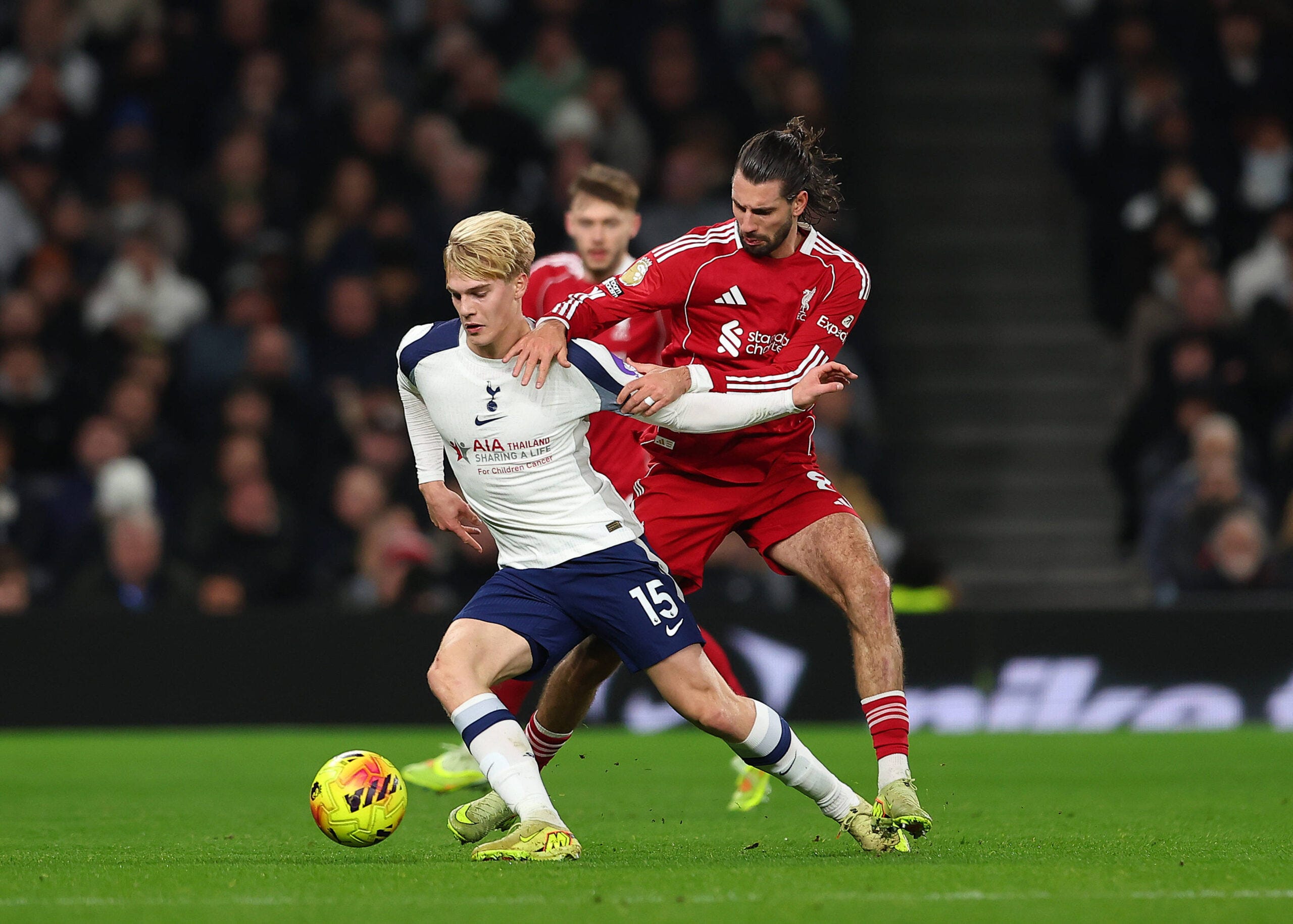
Liverpool Show Control and Vulnerability in Premier League Win Over Tottenham Hotspur
Liverpool left north London with three points and a scoreline that flatters their authority without fully disguising the tension beneath it. The 2–1 victory over Tottenham Hotspur in the Premier League was shaped by dominance, patience, and tactical clarity for long stretches, but also by a familiar late wobble that speaks to where this Liverpool side currently sit in their evolution under Arne Slot.
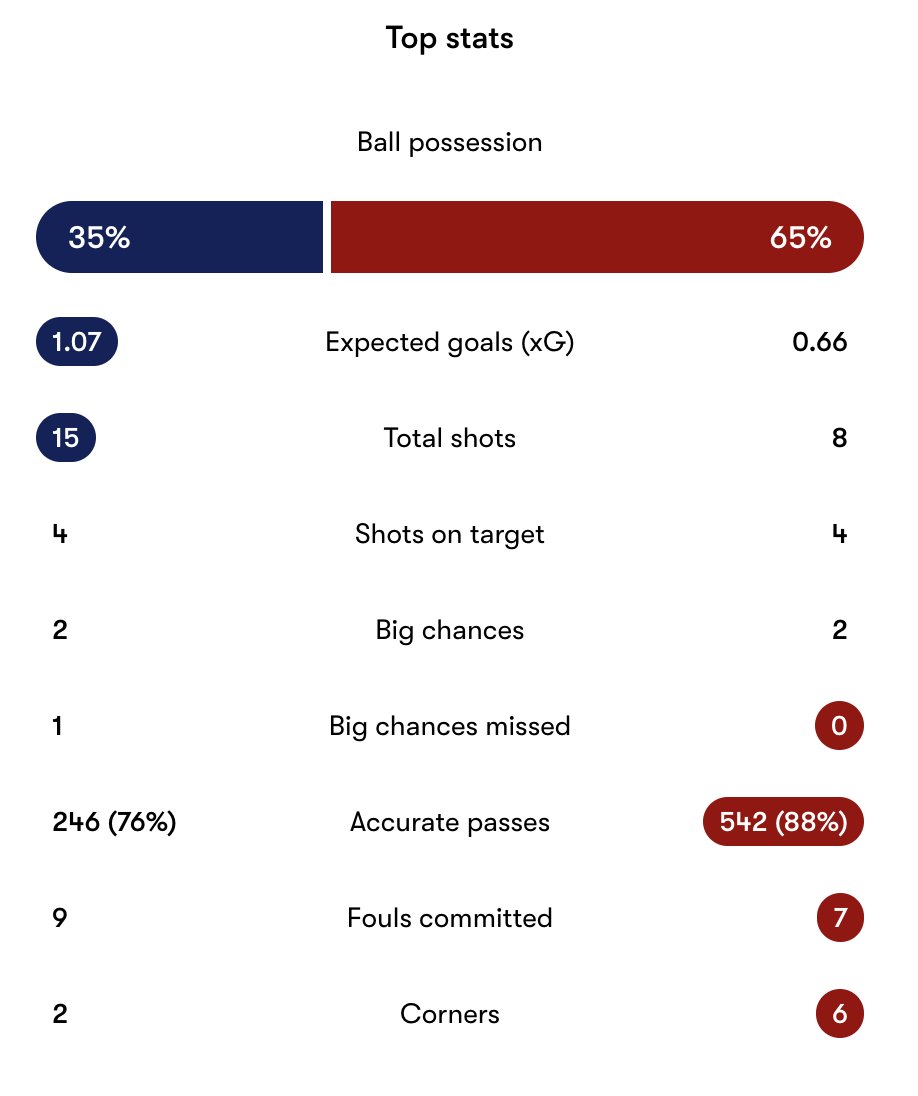
The data from Tottenham Hotspur Stadium tells a clear story of control. Liverpool had 65% possession to Spurs’ 35%, completed 542 accurate passes at an 88% success rate, and registered 614 passes overall compared to Tottenham’s 322. They forced the game to be played largely on their terms, especially after the red card shifted the balance decisively in their favour.
Yet control is not the same as comfort, and this match repeatedly underlined that distinction.
Midfield dominance without early incision
From the opening exchanges, Liverpool’s shape and intent were unmistakable. Slot’s side set up to monopolise the centre of the pitch, effectively forming a narrow five-man midfield in possession that suffocated Tottenham’s ability to build sustained attacks. Spurs were happy to sit in a mid-block, allowing Liverpool’s centre backs time on the ball while denying space between the lines.
Statistically, Liverpool’s control was emphatic. They recorded 30 touches in the opposition box compared to Spurs’ 20, attempted eight shots to Tottenham’s 15 but crucially generated higher quality chances overall. Liverpool’s expected goals settled at 0.66, while Spurs reached 1.07, but that raw number masks the context of shot profiles and game state.
Tottenham’s xG was inflated by late chaos and speculative efforts. Liverpool, by contrast, engineered their best moments methodically. Eleven of their eight shots came from inside the penalty area, compared to Spurs’ seven, and Liverpool struck the woodwork once, an indicator of how close they came to putting the contest beyond reach earlier.
Curtis Jones was central to Liverpool’s approach. His willingness to receive under pressure allowed the away side to bypass Tottenham’s first press repeatedly, while the positioning of Florian Wirtz between the lines gave Liverpool a creative fulcrum higher up the pitch. Wirtz’s influence grew as the match wore on, particularly once Spurs were reduced to ten men and Liverpool could circulate the ball at will.
Red card changes rhythm not responsibility
The sending off altered the rhythm but not Liverpool’s fundamental task. With numerical superiority, the onus shifted entirely onto Slot’s side to turn possession into decisive advantage. In this phase, Liverpool were dominant in territorial terms, completing long passing sequences and pinning Spurs deep.
