

Liverpool at Nottingham Forest: Three Points, One Warning
Liverpool won away at Nottingham Forest. That is the headline. In a Premier League season that demands resilience as much as brilliance, three points on the road matter.
But if we are being honest, and I think we should be, that first half performance cannot become a habit.
There was a strong theme running through the match discussion I listened to afterwards. The idea that Liverpool looked like a team unsure of how to begin the game. That they were surprised by Forest’s intensity. That the structure, particularly in the press, felt loose and reactive rather than proactive.
Watching it back, that rings true.
Liverpool may have ended the game with more possession, more accurate passes and the higher expected goals total. But for 45 minutes, it did not feel that way at all.
A First Half That Should Have Been Costly
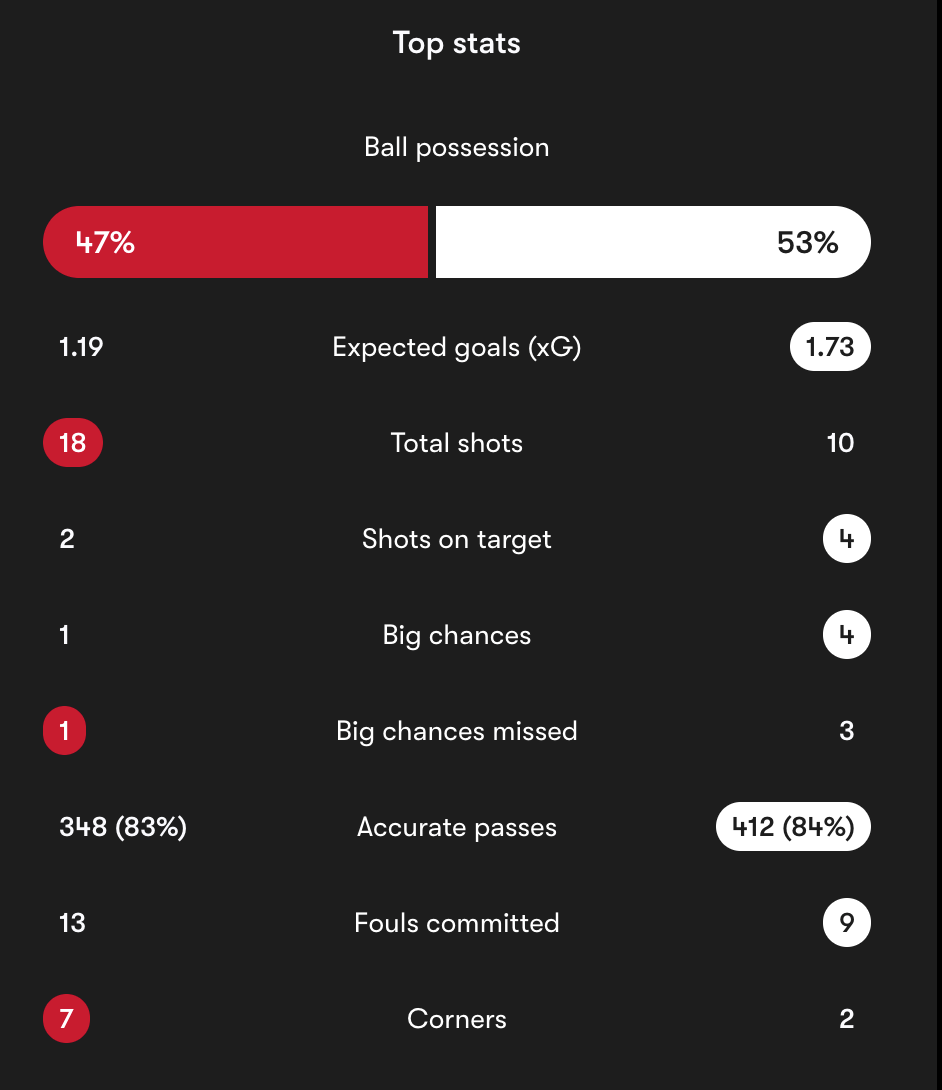
When you study the numbers properly, Liverpool had 53% possession and completed 412 accurate passes to Forest’s 348. They finished with the higher xG at 1.73 to 1.19 and created four big chances to Forest’s one.
But that does not tell the full story of the opening period.
Forest pressed aggressively and Liverpool’s build up looked predictable. The nine and the ten did not appear synchronised in the press. The distances between the forward line and midfield were too big. The midfielders were often caught between stepping and screening.
One of the most striking points raised in the discussion was this: Liverpool cannot look like they have no idea how to play if one attacking piece is missing. That is harsh, but the sentiment carries weight. If your structure collapses because one profile is unavailable, that is a tactical vulnerability.
Forest completed 18 shots across the game. On paper that looks alarming. Yet almost all of them were low value efforts. The only high quality moment in the first half came very early. Beyond that, Liverpool’s centre backs defended the box exceptionally well.
That duality matters. Forest were on top territorially, but Liverpool limited the quality of the chances. It was chaotic, but not carved open repeatedly.
Still, this was a Premier League away match where Liverpool were second best physically and structurally for long spells. That is the concern.
