

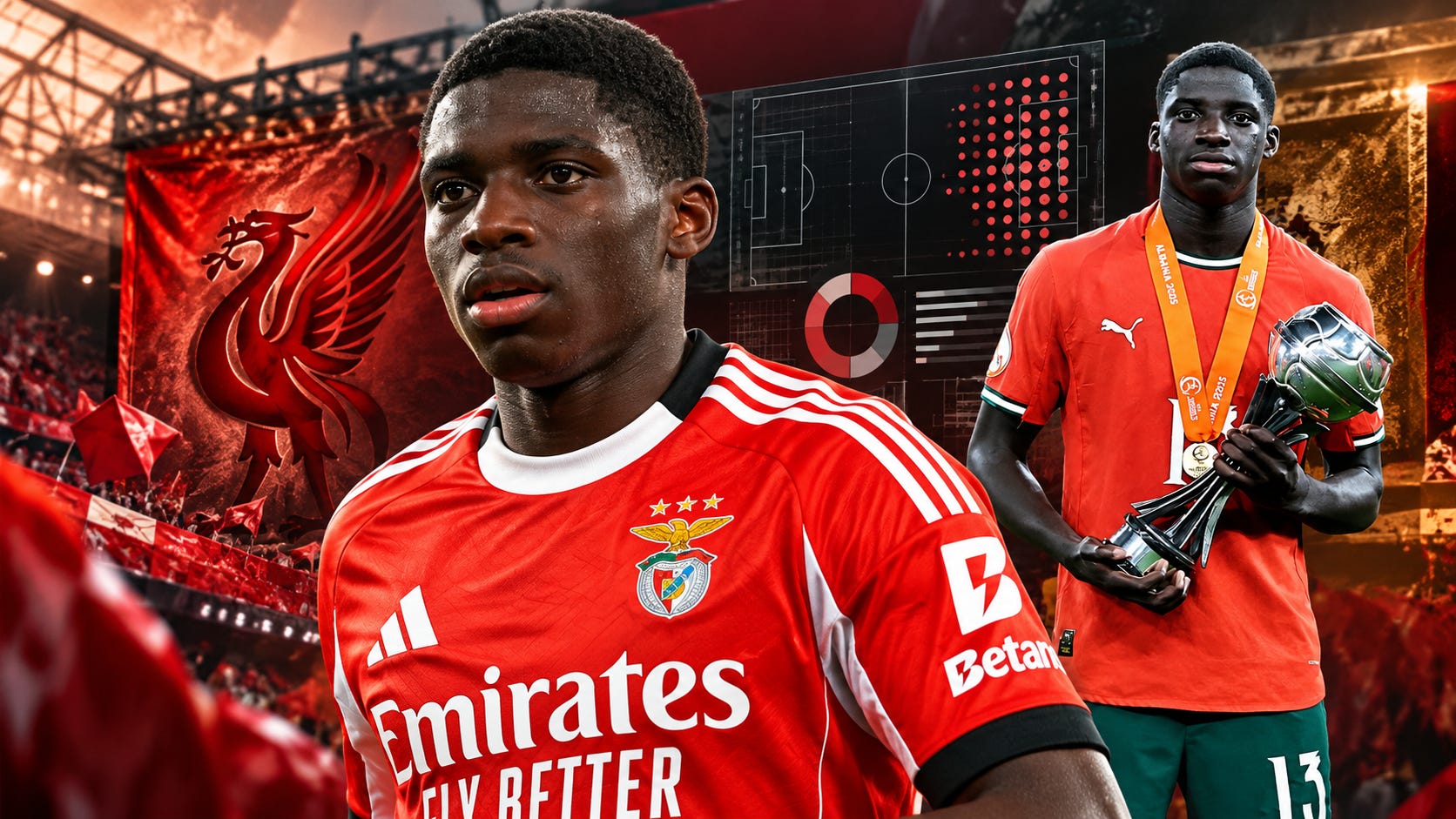
Liverpool have a decision to make at right back, and the more I look at the options available to us, the more convinced I become that physicality has to be at the heart of whatever Julian Ward decides to do next.
We’ve spent plenty of time discussing the problems since Trent Alexander-Arnold left. Jeremie Frimpong was supposed to offer something different, Conor Bradley was expected to establish himself, and yet we’ve arrived in October with Ronald Araújo, a centre back signed on loan from Barcelona, looking like our most convincing option.
That tells you something about where we are.
I joined Lola Katz Roberts on Anfield Index to examine three potential solutions, Benfica’s Daniel Banjaqui, Bayer Leverkusen’s Jarell Quansah and Lens defender Ismaëlo Ganiou. There are qualities I like in all three, but the differences between them are significant.
Ronald Araújo Has Exposed Liverpool’s Right Back Problem
Sometimes the numbers make an argument considerably easier.
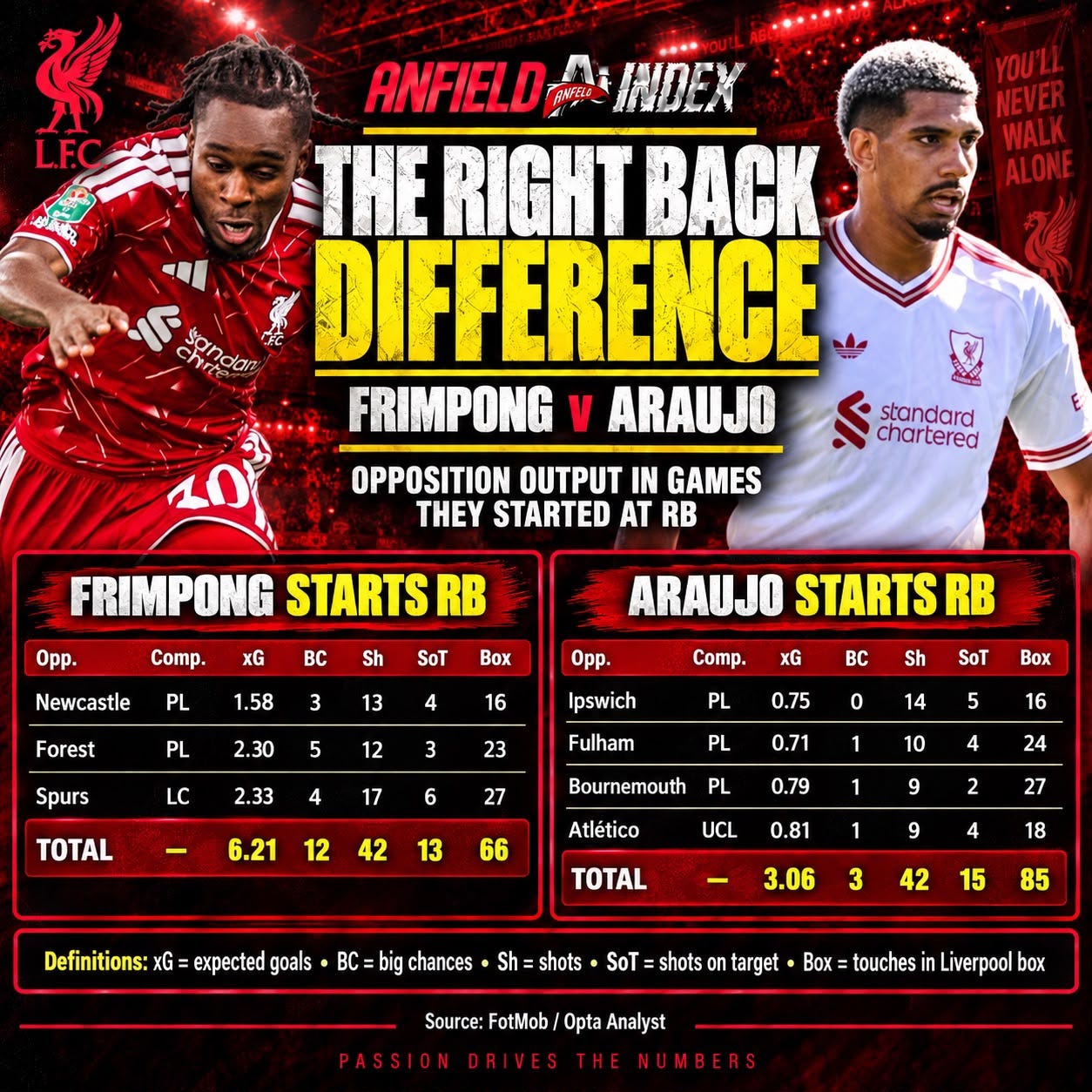
When Frimpong has started at right back this season, the lowest expected goals figure Liverpool have allowed the opposition is 1.58. We’ve regularly conceded more than three big chances in those matches.
Compare that with Araújo.
Liverpool haven’t conceded a Premier League goal while he’s been playing at right back. Even including the Champions League match against Atlético Madrid, the opposition’s expected goals figure has remained below one, with a maximum of one big chance.
It’s a small sample, absolutely, but the difference is striking.
Araújo is a considerably better defender than Frimpong. His positioning, physical presence and ability to deal with attackers give Liverpool something we’ve been missing.
I also think we need to have a more difficult conversation about Bradley.
There’s an assumption among supporters that a fully fit Bradley would automatically solve the problem. I’m struggling to find the evidence for that.
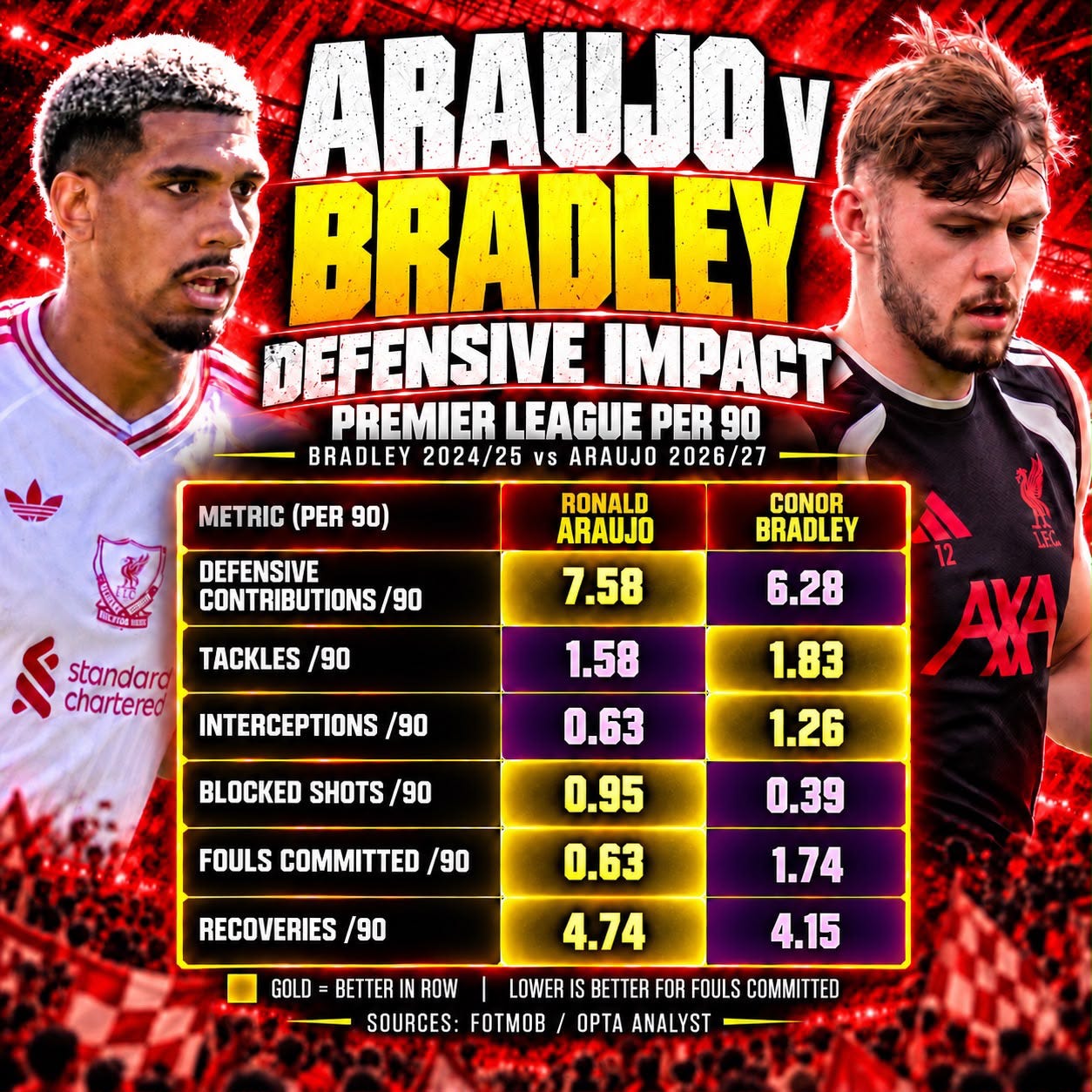
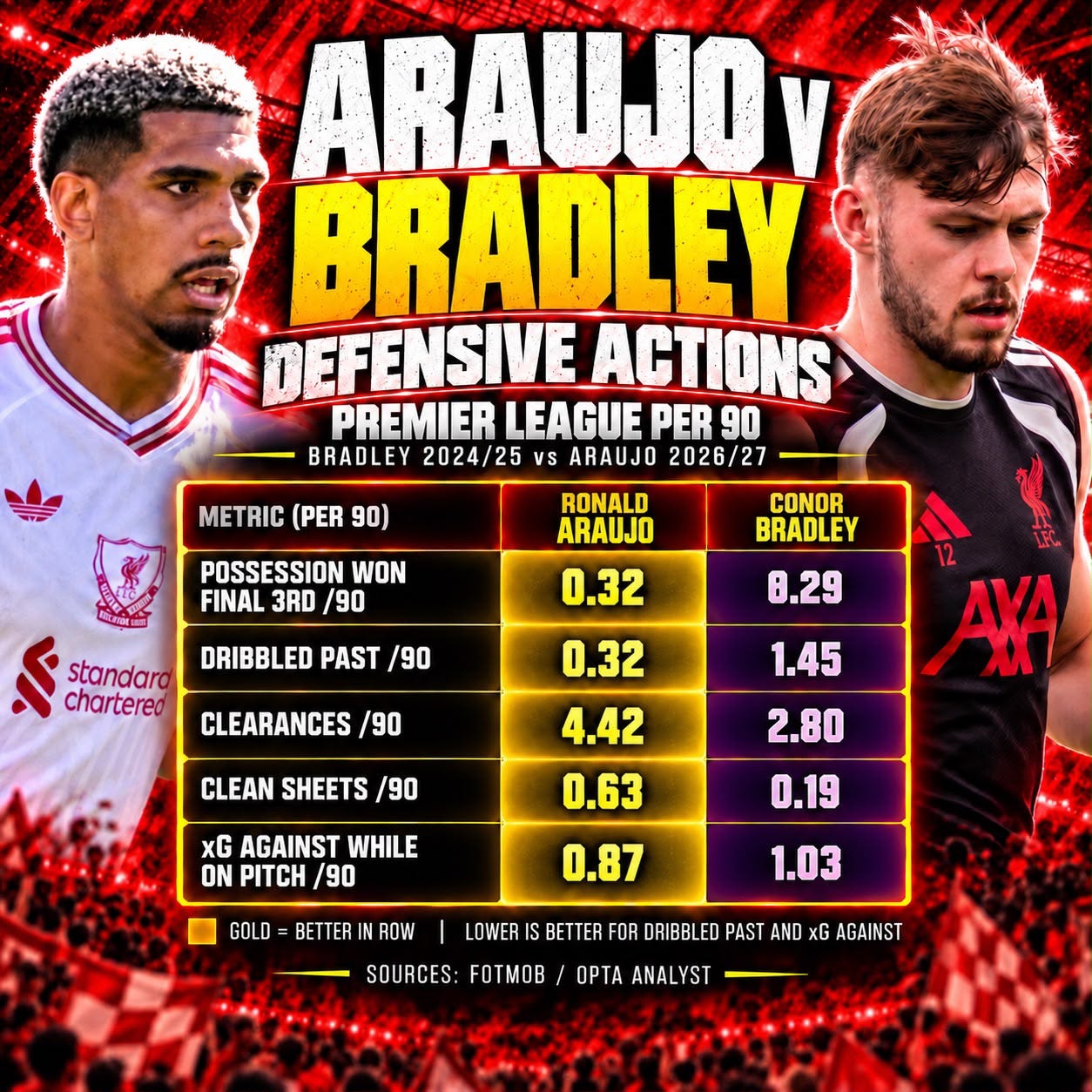
Even during Liverpool’s title-winning 2024/25 season, Bradley was being dribbled past almost one and a half times per 90 minutes. Araújo’s current figure is approximately 0.3.
Bradley makes more tackles, but he also goes to ground regularly. Reading situations, using your body and making intelligent defensive decisions matter enormously in this position.
His injury record is another concern. Even in his best season, he missed 21 matches.
I would love Bradley to rediscover the level he showed when he first broke through under Jürgen Klopp. I remember that Chelsea performance, the goal, the assists and the excitement about what we’d discovered.
But his numbers have declined, and repeated injuries make it difficult to assume that player will return.
Liverpool need another dependable option, and I think we’ve stumbled upon the sort of defender we should be targeting.
Daniel Banjaqui: Benfica’s £40m Talent Has Everything to Become Elite
Daniel Banjaqui is the name that excites me most.
Liverpool have been monitoring the Benfica youngster for some time. Julian Ward and Pedro Marques watched him last season, while Arsenal reportedly had a €30 million offer rejected during the summer.
The figure being discussed now is around £40 million.
That’s substantial money for an 18-year-old with relatively little senior football behind him, but there’s a reason Europe’s leading clubs are paying attention.
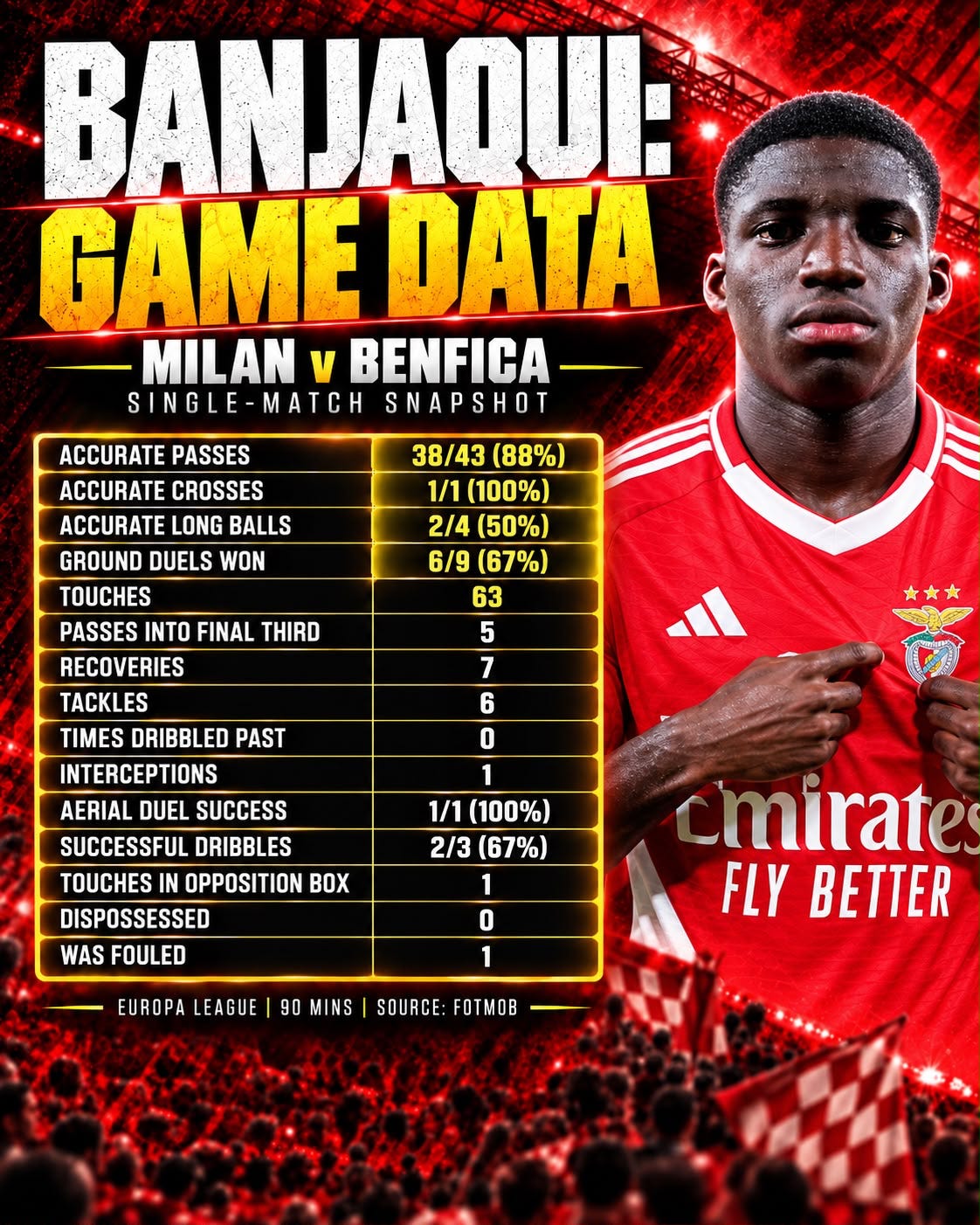
Banjaqui has extraordinary physical attributes.
He wins approximately 60% of his duels, has explosive acceleration and possesses the recovery speed to deal with attackers who initially appear to have beaten him.
Watch his performance against AC Milan in Europe. Benfica won 2-0, and Banjaqui looked remarkably comfortable for someone so inexperienced.
There are moments when an attacker gets ahead of him, only for Banjaqui to accelerate, recover his position and win possession.
That’s the sort of athleticism Liverpool need.
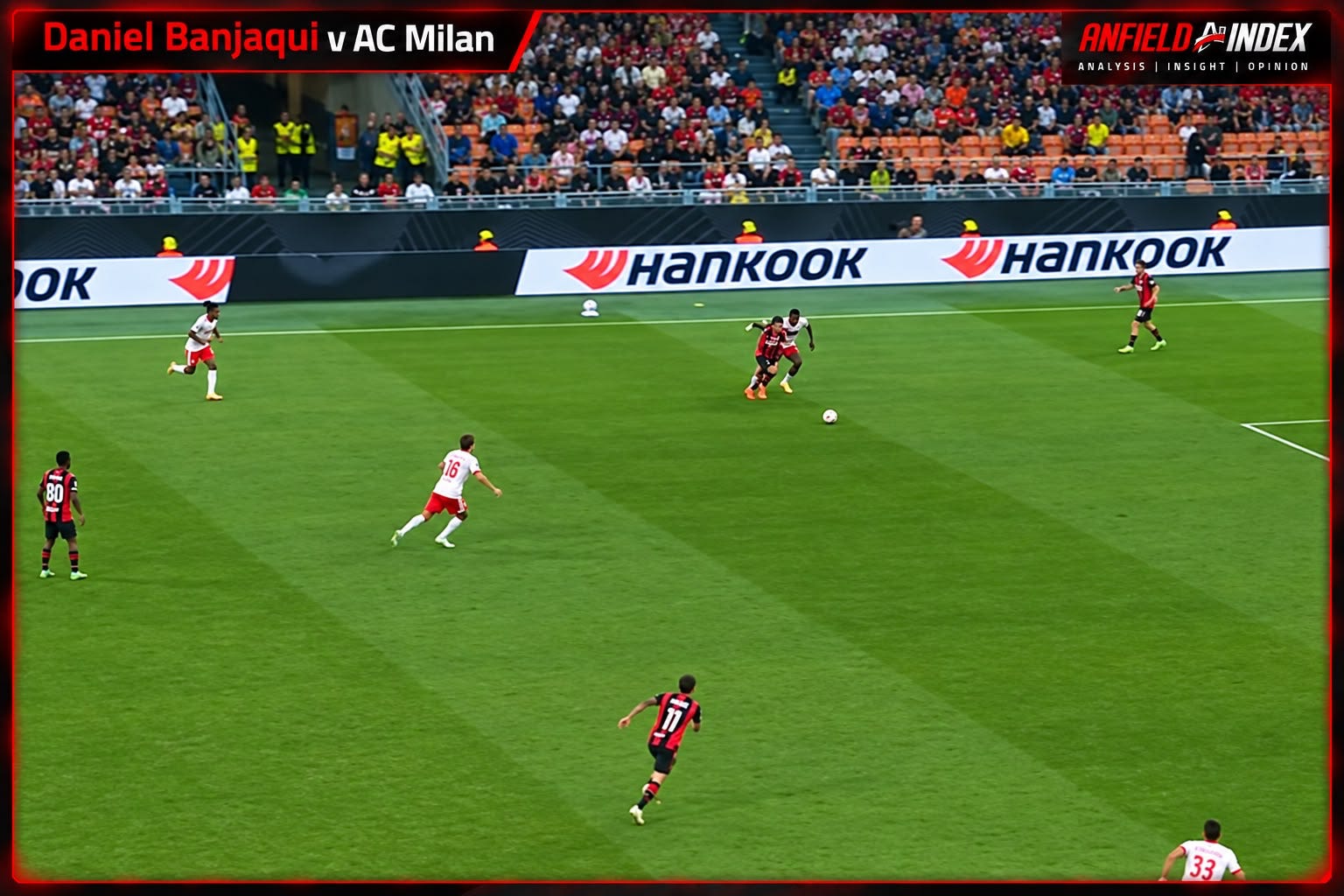
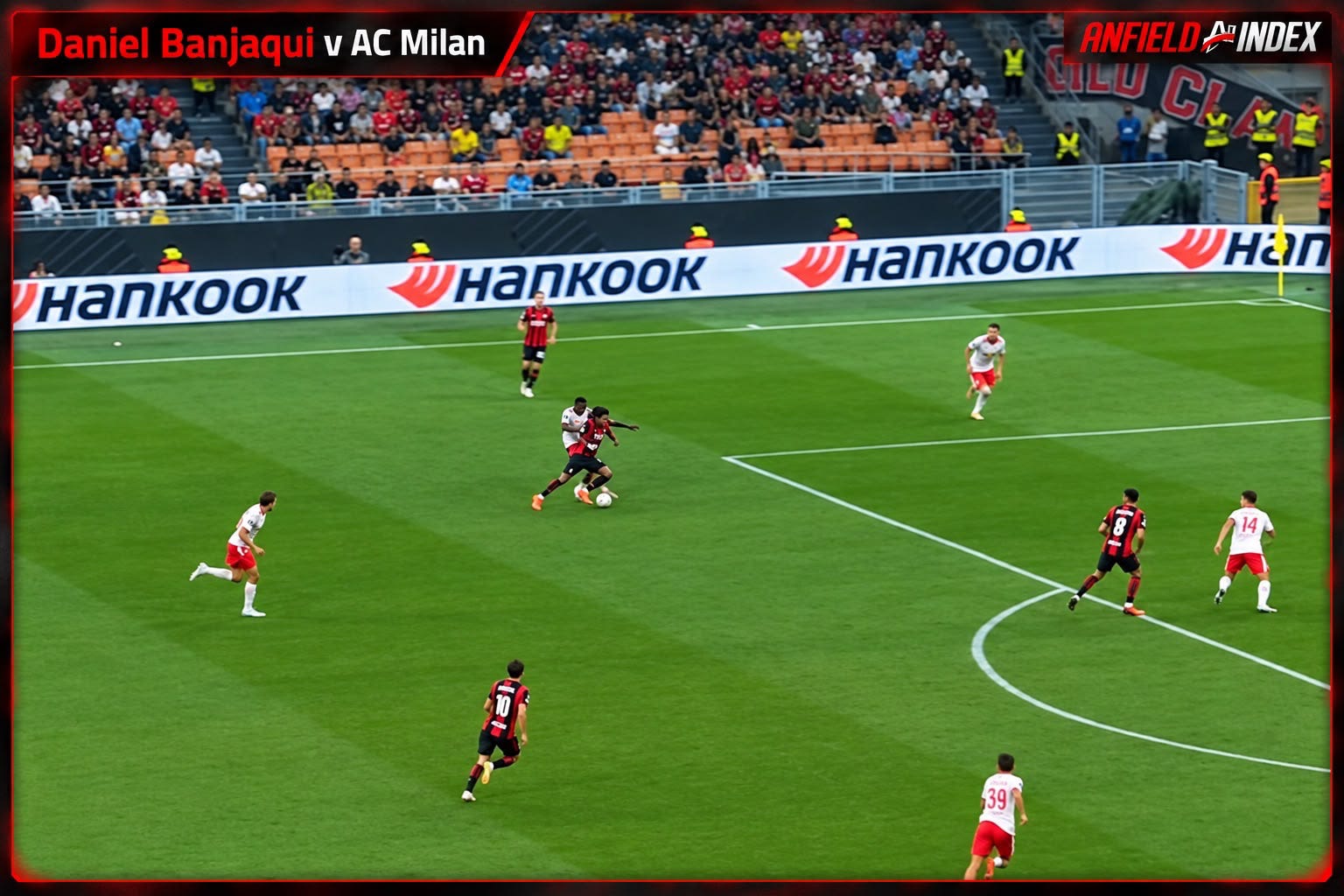
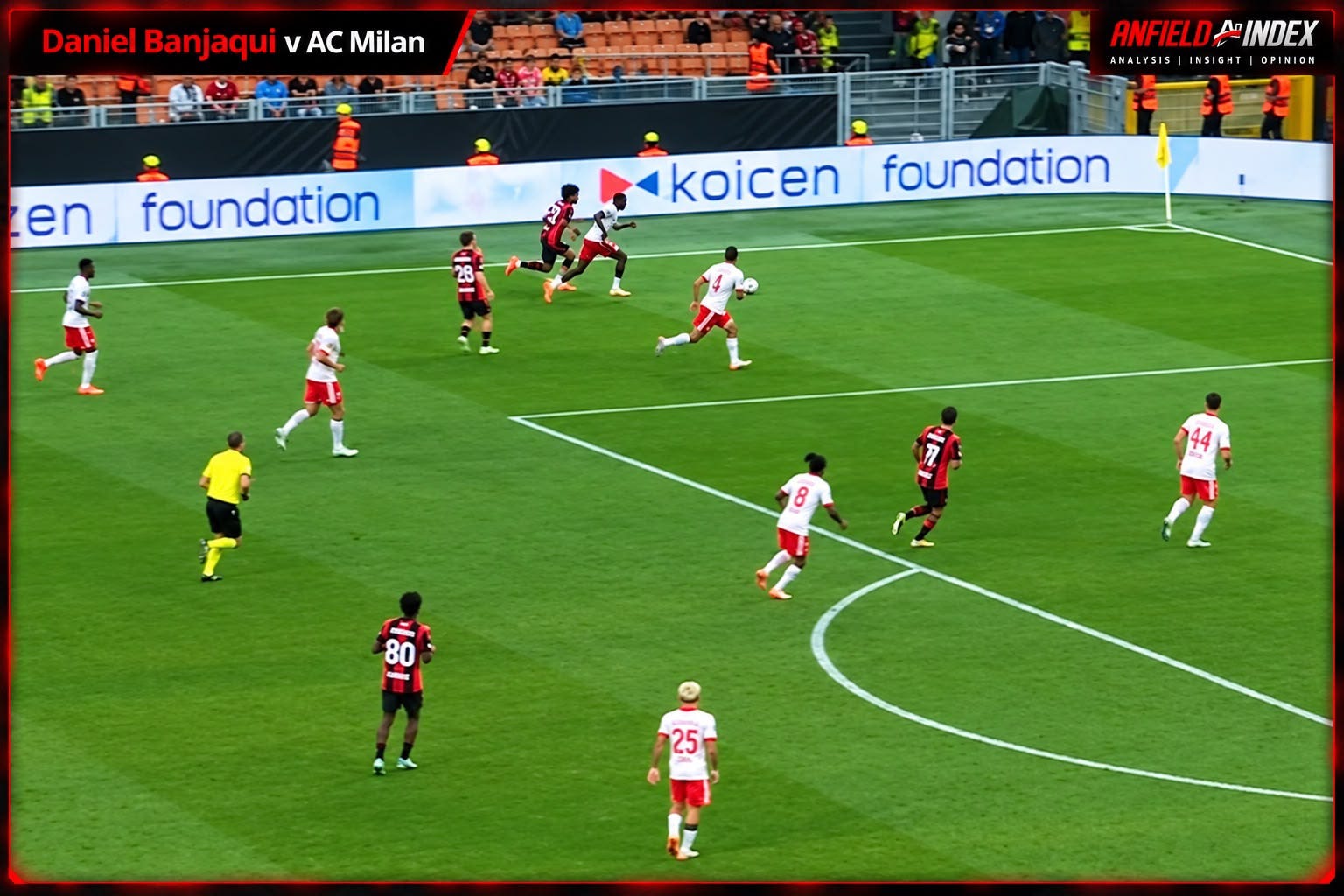
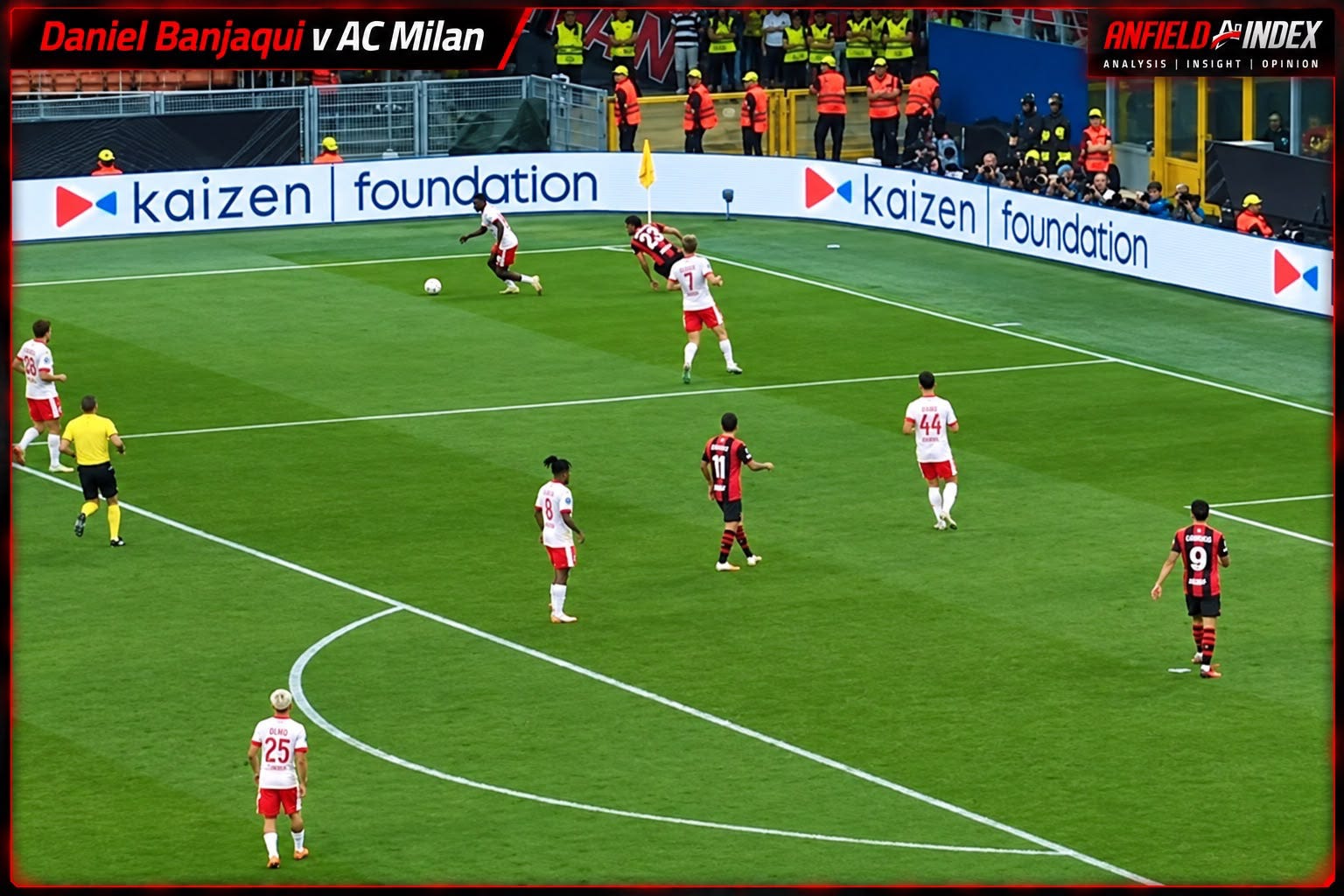
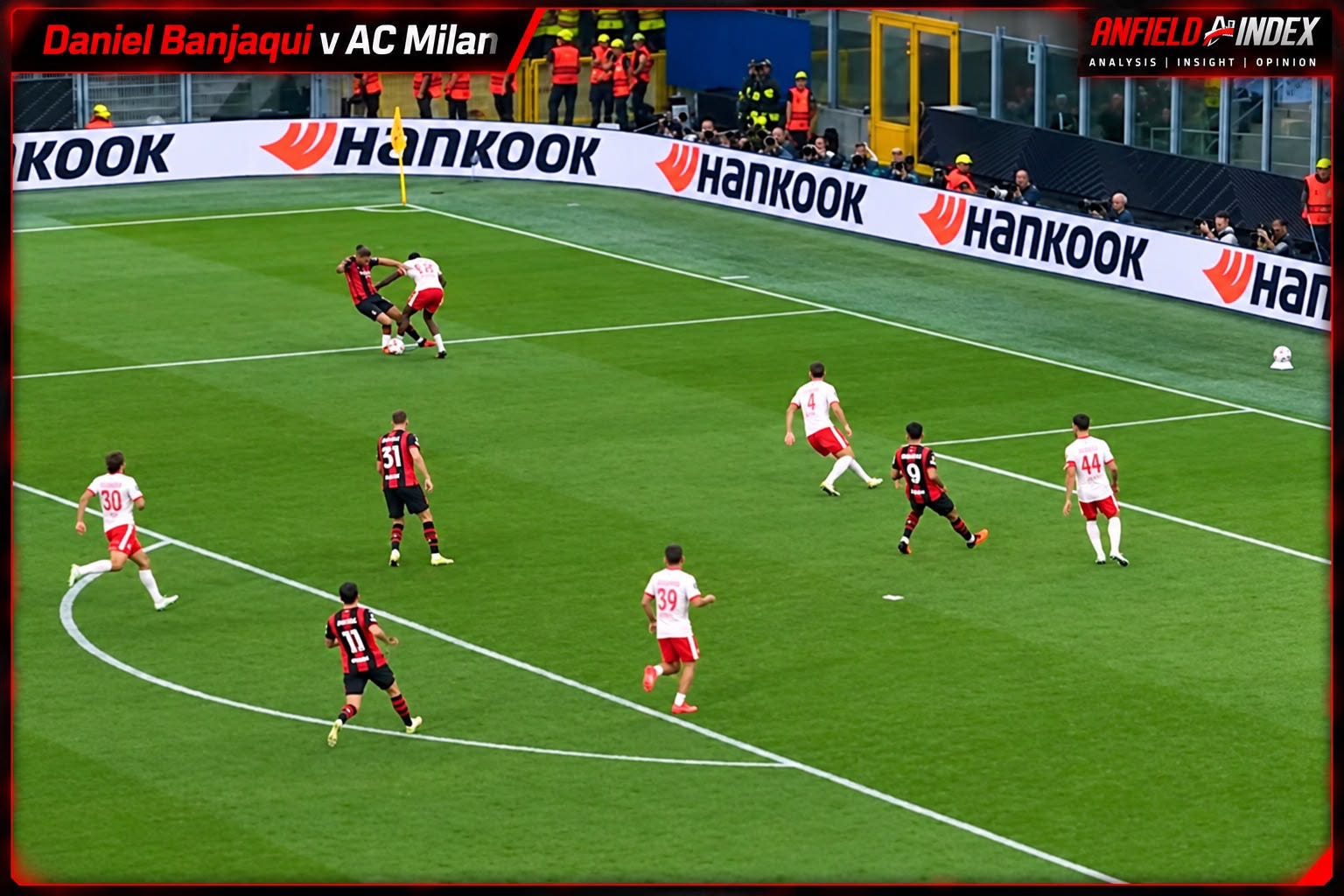
He’s comfortable in possession too.
His passing accuracy stands at 86.7%, with 66% accuracy on long balls. Watch the footage and you’ll see a player capable of striking excellent progressive passes.
During the international break, he also scored for Portugal’s Under-21s after carrying the ball forward, beating opponents and finishing with his left foot, aided by a deflection.
The technical ability is there alongside the physicality.
My concern is experience.
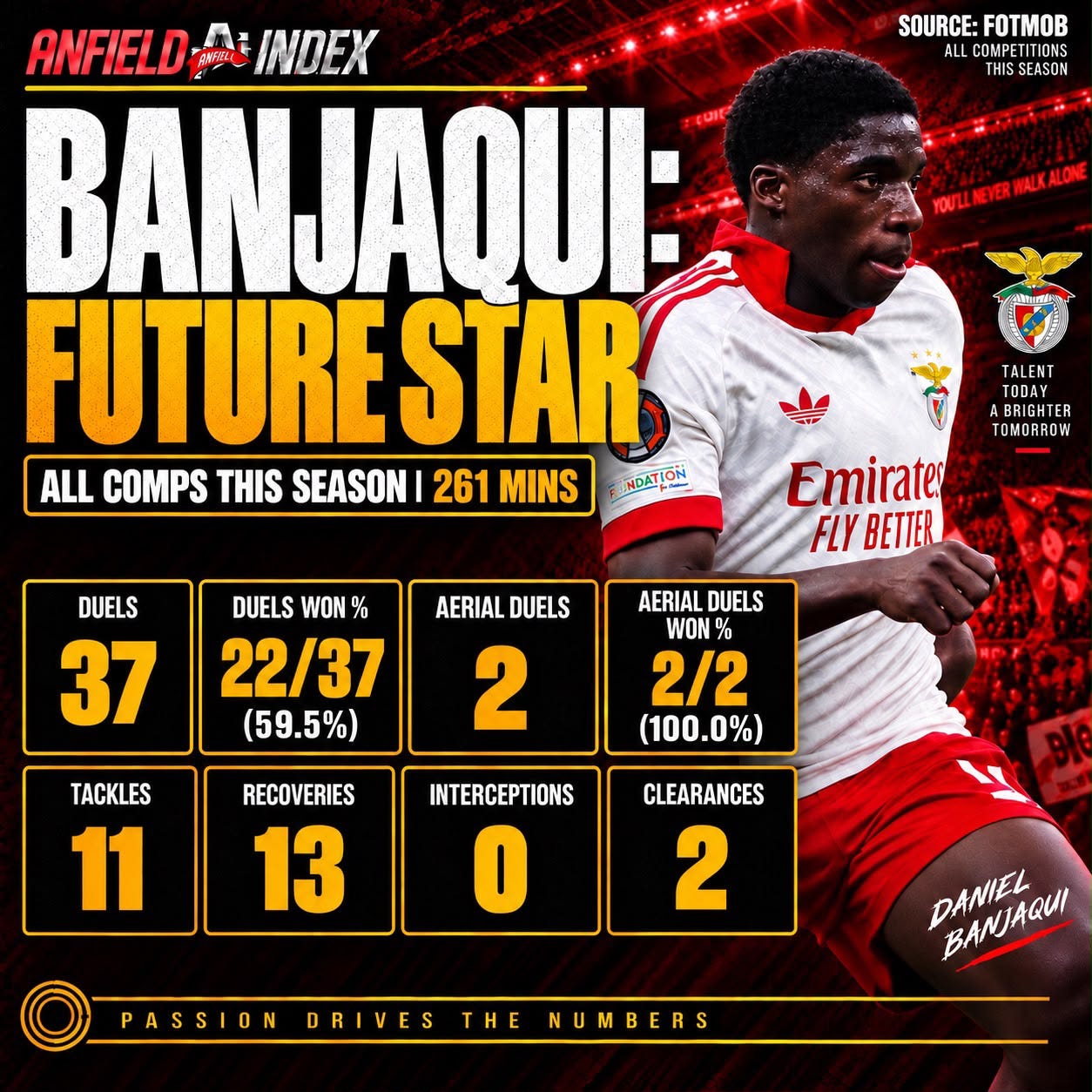
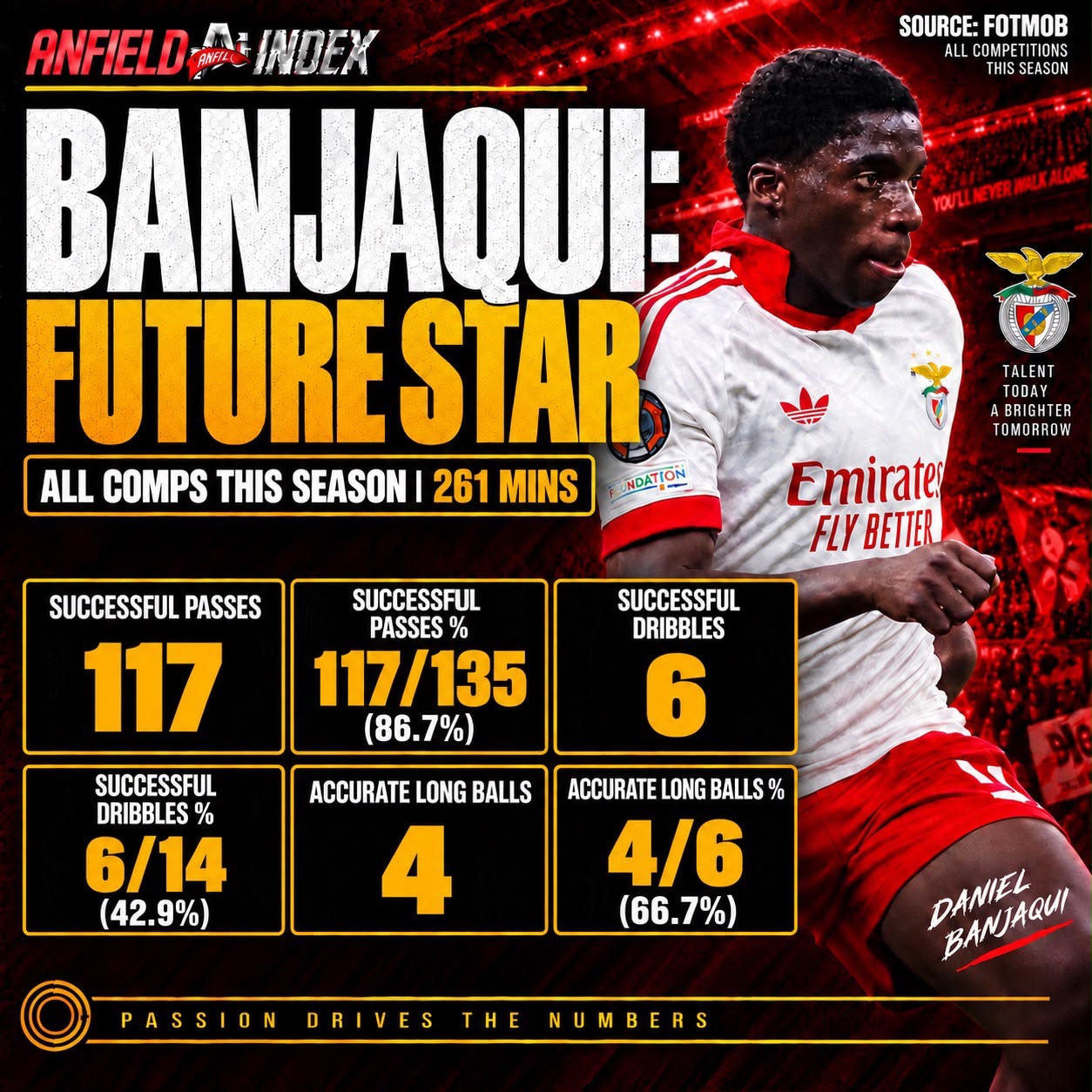
He’s only recently established himself in Benfica’s senior side, having started the season in Portugal’s second division. Moving from a handful of senior appearances to becoming Liverpool’s starting right back represents an enormous step.
We have to acknowledge that risk.
But Liverpool’s recent recruitment suggests they’re increasingly prepared to invest in exceptional young defenders before they accumulate thousands of senior minutes.
Jeremy Jacquet is an obvious example. Giovanni Leoni is another.
Banjaqui has the attributes to follow that approach.
If he continues performing at this level throughout the season, we might reach next summer wondering why Liverpool haven’t already paid £40 million.
Jarell Quansah: Why Liverpool’s Buyback Clause Makes Little Sense
Jarell Quansah presents a completely different proposition.
We know him. He’s homegrown, he’s an England international, and he’s established himself at Bayer Leverkusen.
Liverpool also have a buyback clause reportedly worth somewhere around £56 million to £59.5 million.
That’s a serious investment, particularly when we’re discussing someone who left for approximately £35 million.
Quansah has been playing at right back for Leverkusen and has also featured there for England under Thomas Tuchel.
I understand the attraction of a centre back who can operate in that position.
The problem is that I’m unconvinced Quansah possesses the particular attributes Liverpool require.
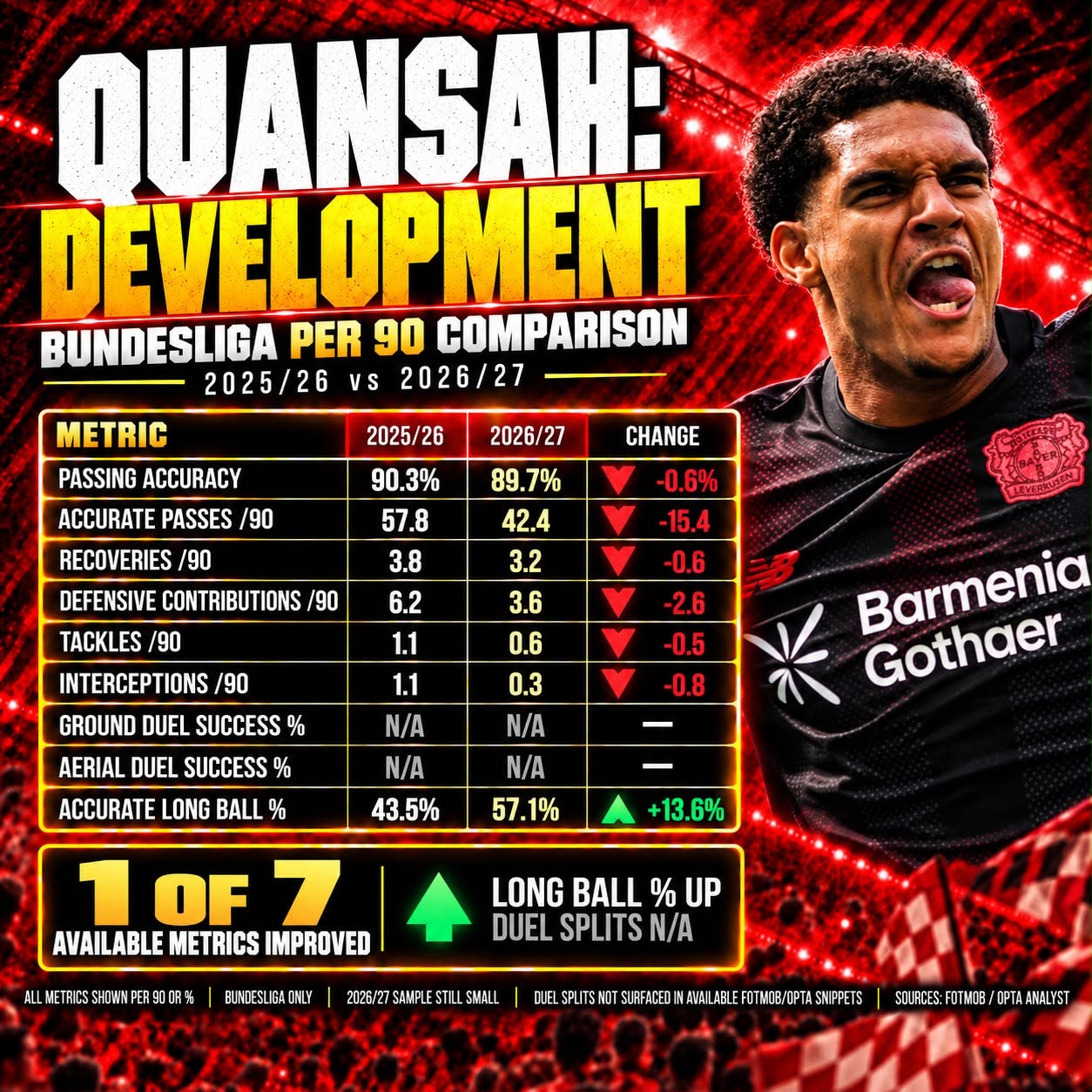
Look at his defensive numbers.
Virgil van Dijk, Jacquet and Araújo all record aerial duel success rates above 70%. Quansah’s Premier League average is approximately 60%.
That’s respectable, but it doesn’t provide the same aerial dominance.
His recorded top speed in Germany is 34.87 km/h. He’s quick enough, although I wouldn’t describe him as possessing the exceptional recovery pace that transforms a defensive system.
Even his performances at Leverkusen raise questions.
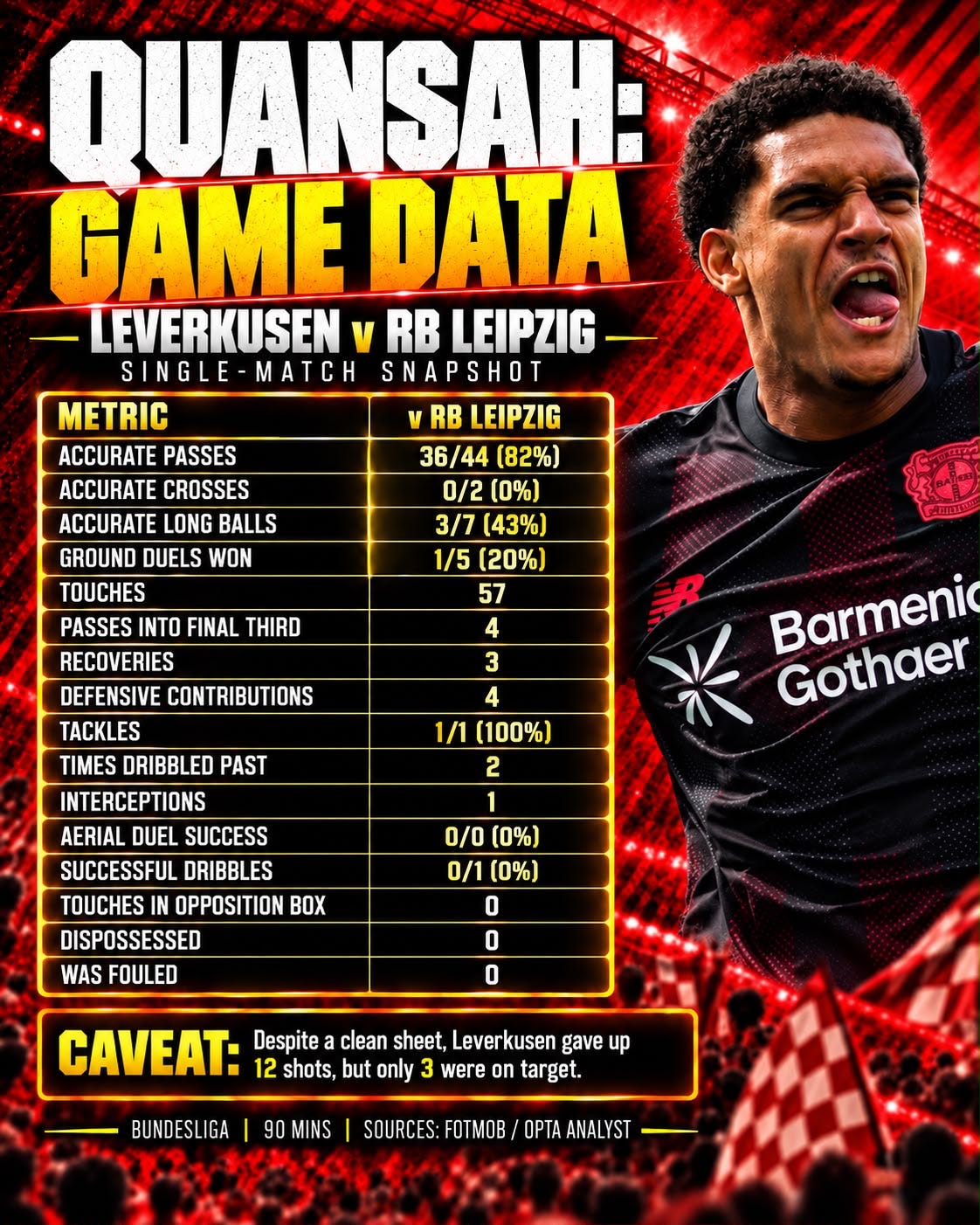
Against RB Leipzig, in a 2-0 victory, Quansah completed 82% of his passes, won one of five ground duels and was dribbled past twice.
That was one of his highest-rated performances according to analysts we consulted.
I recognise the arguments in his favour. He knows Liverpool, has international experience and can cover two positions.
But if we’re spending nearly £60 million, I want somebody who genuinely moves the needle.
I don’t see Quansah becoming the dominant right back we’re looking for, and I’m equally unconvinced he’d be Liverpool’s first choice centre back target if Van Dijk departed.
The buyback clause looks more like sensible protection when Liverpool agreed his departure.
That doesn’t mean we should activate it.
At the reported price, I simply cannot make the argument work.
Ismaëlo Ganiou: Lens Defender Offers Liverpool Another Fascinating Option
Ismaëlo Ganiou is a fascinating alternative, particularly because of his ability in possession.
He started his career operating at right back and right wing back, although Lens have subsequently used him in a back three, including centrally and on the right.
That experience matters because he’s accustomed to defending wide channels.
Of the three candidates, I’d argue he’s the most accomplished passer and ball progressor.
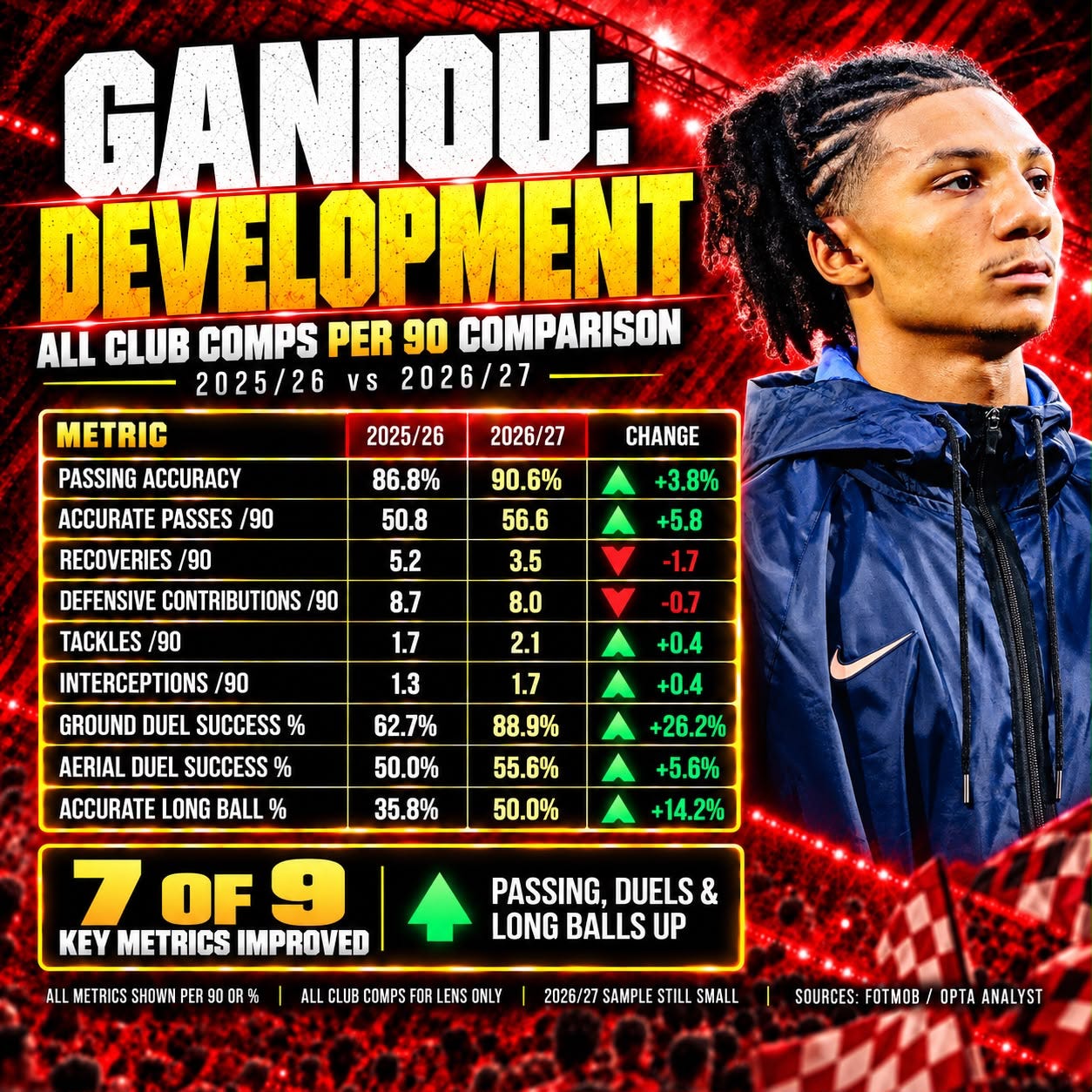
His passing accuracy is above 90%, his progressive numbers are impressive, and he looks exceptionally comfortable receiving possession under pressure.
There are comparisons in his progression metrics with Dean Huijsen.
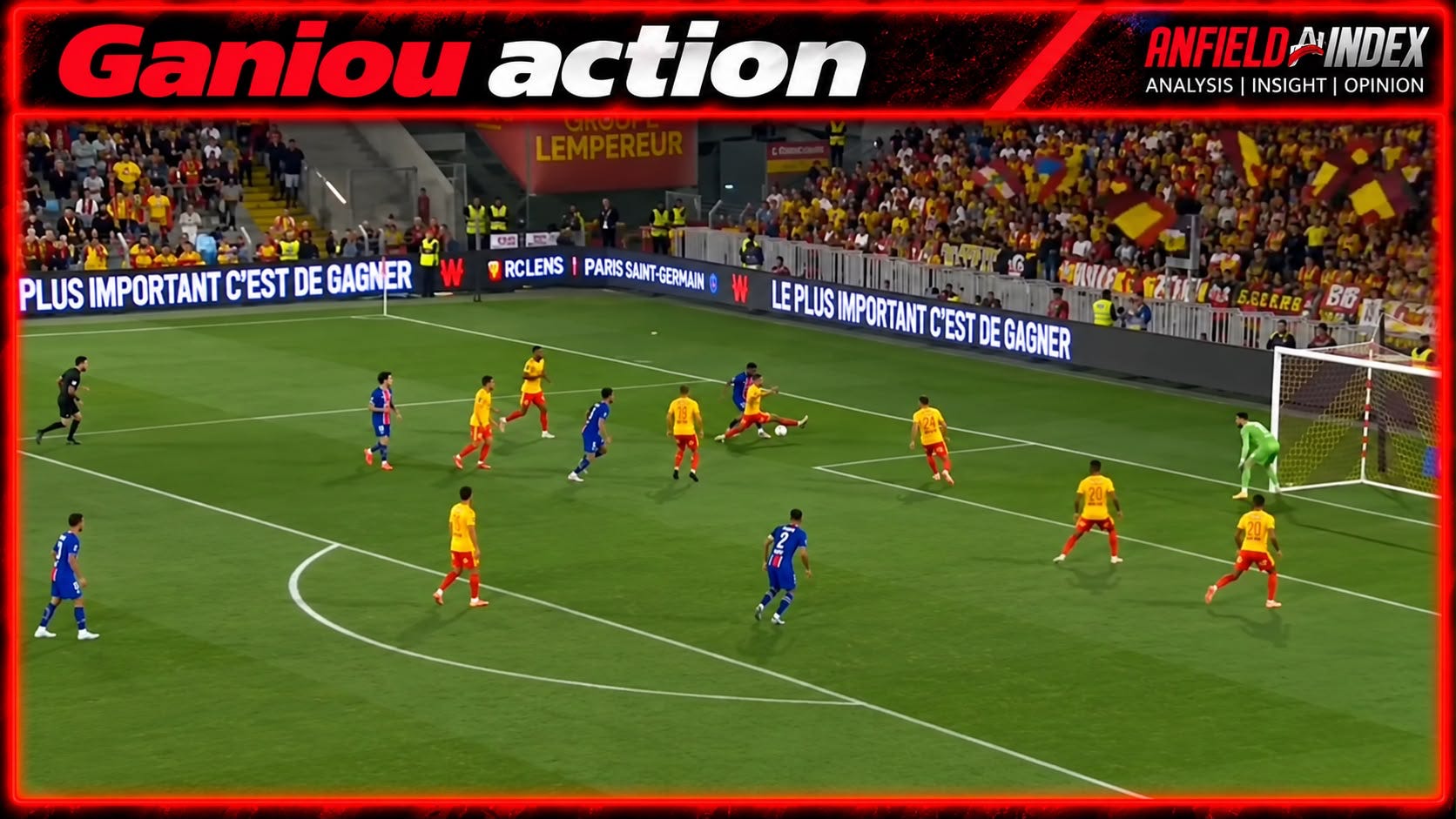
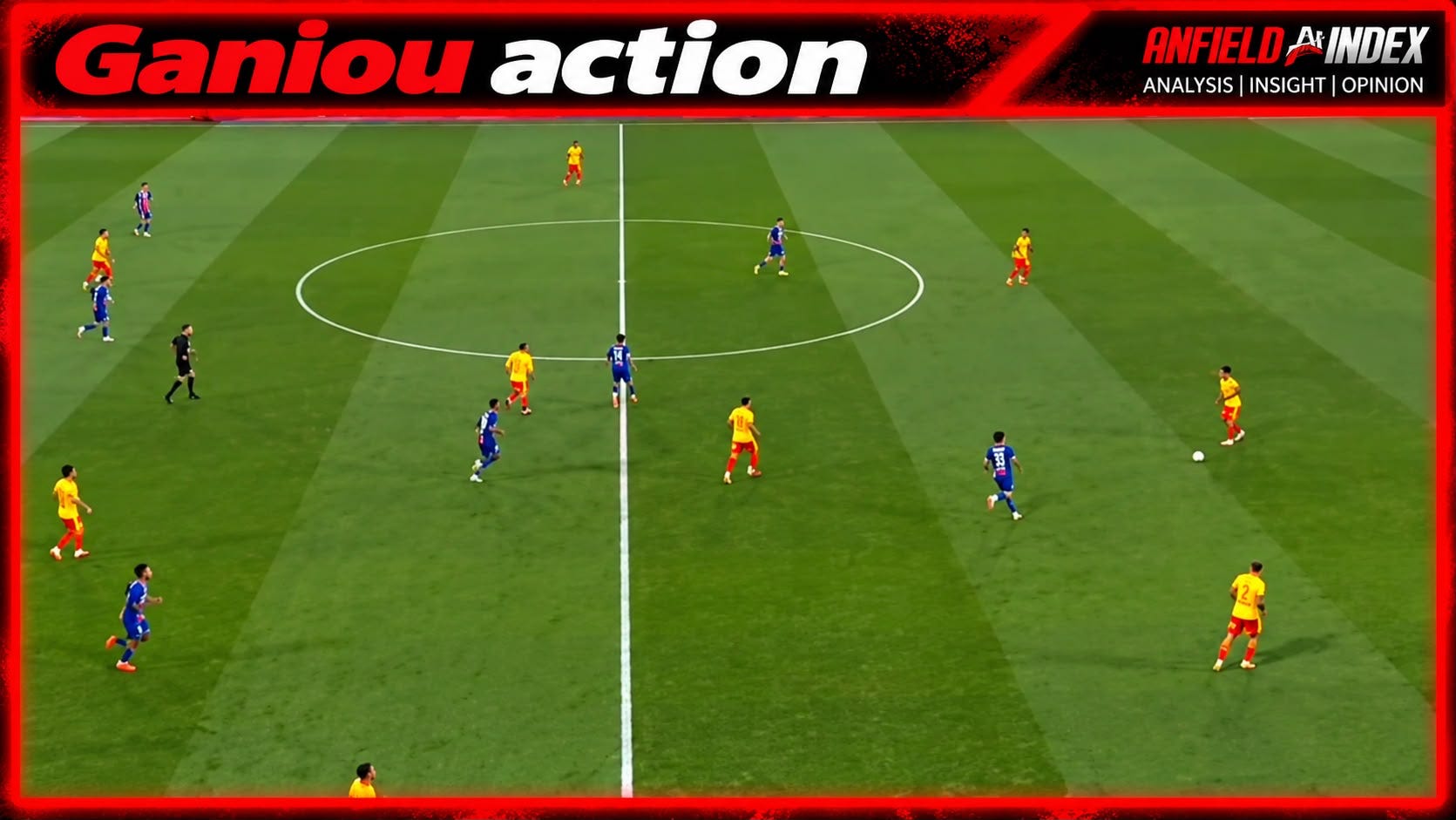
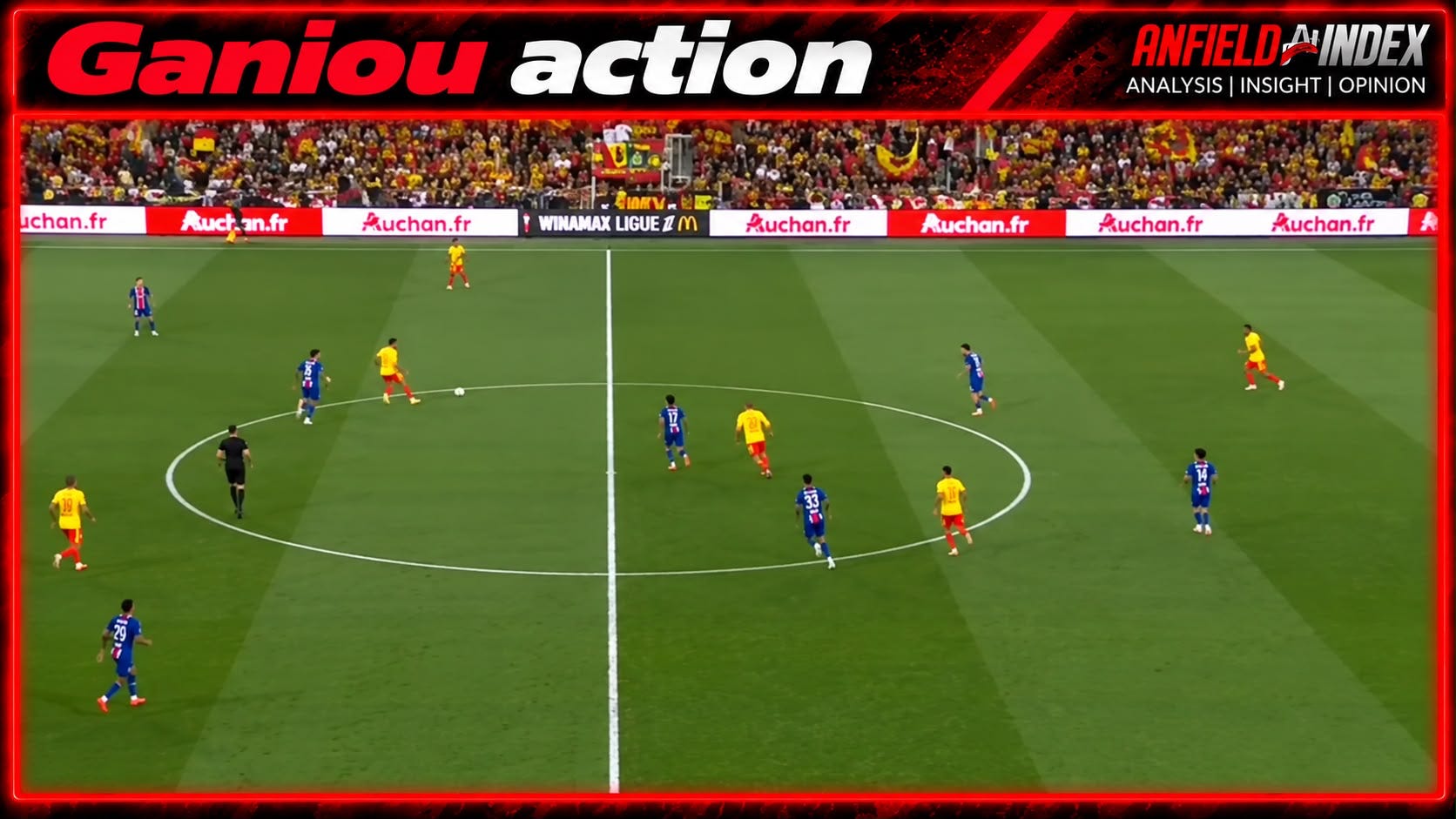
One performance that particularly caught my attention was against Paris Saint-Germain in the French charity shield.
Lens won 1-0, and Ganiou produced several excellent progressive passes, including one played through pressure into an advanced teammate.
He also defended effectively against Khvicha Kvaratskhelia, making important interventions to prevent PSG progressing.
Liverpool watched him last season and had scouts at Lens’ 5-2 victory over Auxerre.
His numbers were impressive, although Auxerre had a player dismissed after 35 minutes, which makes that particular performance harder to assess.
Physically, he’s a different profile from Banjaqui.
He’s approximately six feet tall, and his aerial duel success has improved from around 50% to 55%. That’s still below the level Liverpool’s current centre backs produce.
But his ground duel success has increased by more than 26%, and his aggression, mobility and passing intelligence make him an attractive option.
I wouldn’t necessarily want him as Liverpool’s first choice centre back.
At right back, however, the combination of defensive intelligence and ball progression is extremely interesting.
That brings me back to Araújo.
Liverpool have already demonstrated that a player accustomed to operating centrally can become an effective right back when the defensive attributes are right.
Ganiou could potentially offer another version of that solution.
Ultimately, the decision depends on how Liverpool intend to construct the rest of the team.
If we recruit a physically dominant defensive midfielder, someone in the profile of Lamine Camara, that changes the balance.
If we retain Van Dijk and Jacquet, Liverpool already possess considerable passing ability from central defence.
That might make Banjaqui’s physical qualities even more valuable.
I would also explore whether Barcelona’s financial position allows Liverpool to negotiate Araújo’s reported £47 million purchase option downwards. His defensive performances have been excellent, but his age and the wider squad planning still matter.
And I wouldn’t completely dismiss Lola’s suggestion of Ifeanyi Ndukwe as a possible future right back. His physicality and passing ability make it worth considering, particularly given the competition for minutes at centre back.
For me, though, Banjaqui is marginally ahead of Ganiou.
Both deserve close monitoring throughout the season. Both possess qualities that could improve Liverpool. Both fit the direction our defensive recruitment appears to be taking.
What I want from Julian Ward is a carefully balanced squad, one capable of using three physically dominant defenders in difficult away matches while retaining the flexibility to attack differently when circumstances allow.
We’ve got plenty of technically gifted footballers.
Now we need the physical presence to complement them.
Banjaqui looks capable of providing exactly that.