

Liverpool found themselves caught between progress and familiar flaws once again at Leeds, the good, the bad and the ugly all surfacing in a single performance. Their second consecutive competitive draw this season, after playing none since the Community Shield in August, should have offered a simple narrative. What followed instead, particularly after the final whistle, overwhelmed everything else.
With Mo Salah once again on the bench, Liverpool kept faith with a similar line-up to the one used against Southampton and West Ham United. Dominik Szoboszlai drifted high on the right, Florian Wirtz played close to Hugo Ekitiké, and Cody Gakpo started from the left.
The first half offered little in the way of urgency. Liverpool held back from applying pressure, Leeds enjoyed long spells on the ball, yet their possession rarely turned into meaningful chances. Liverpool carved out a handful of opportunities, but the attacks often unravelled at the final moment through poor decisions or flawed execution.
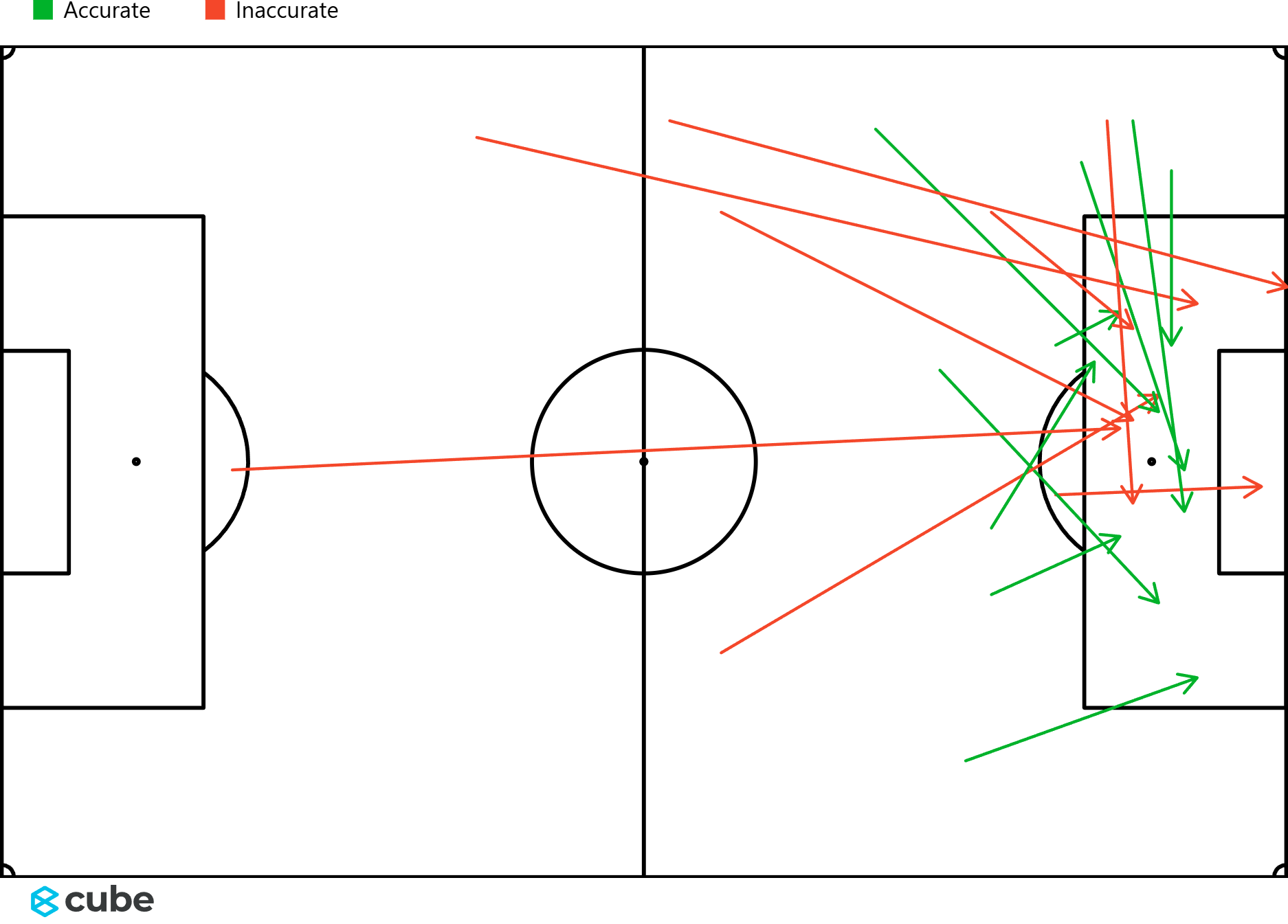
Leeds attempts to find the box
Once again, Liverpool played a match defined by a narrow xG margin. They produced more shots, more attempts on target, and better shot quality once Calvert Lewin’s penalty is removed. They dominated aerial duels, too, yet another late set-piece concession cost two valuable points. That recurring weakness has become a theme of their Premier League campaign.
