

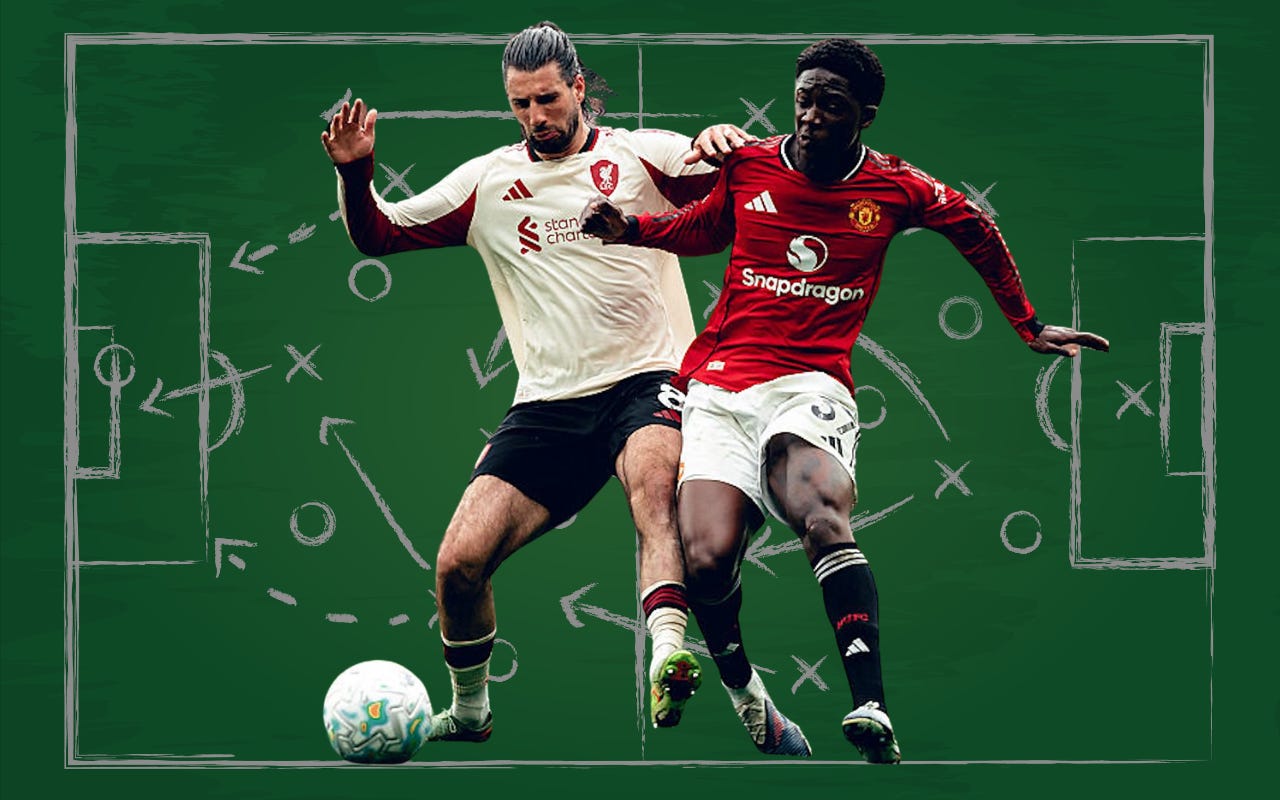
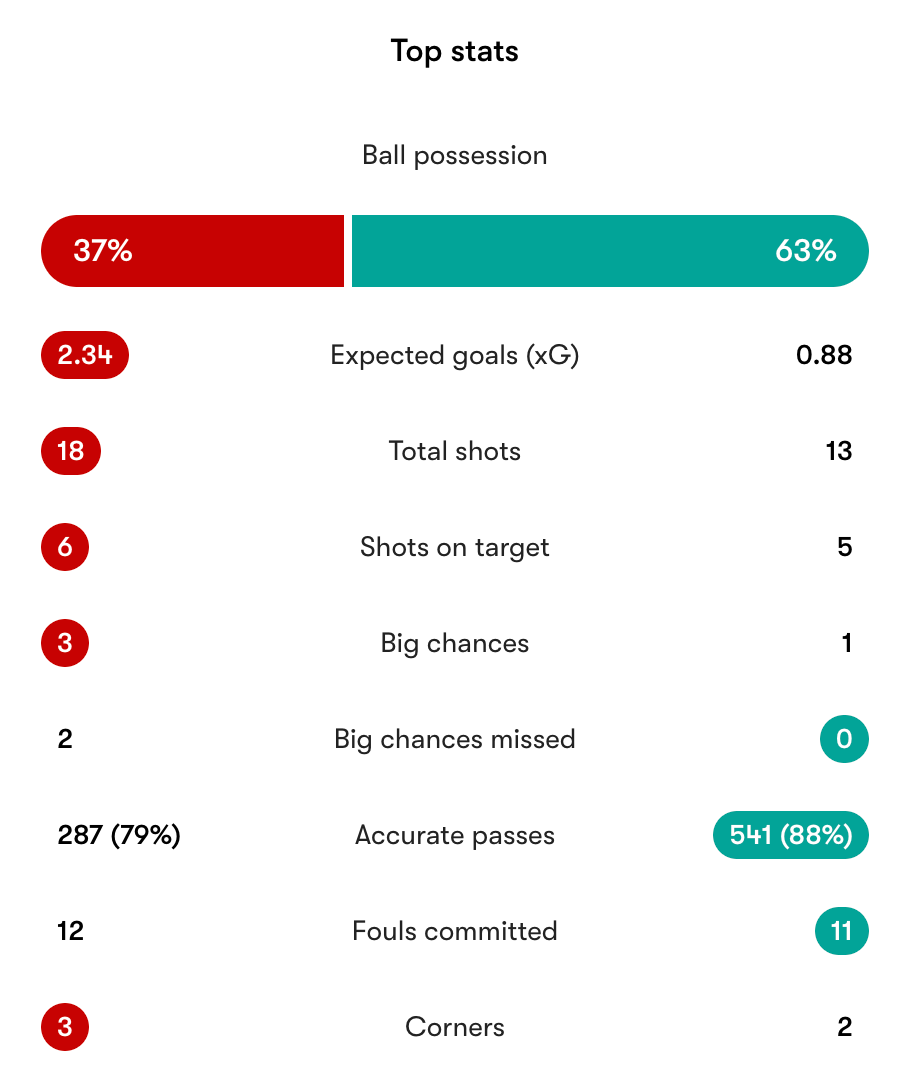
Liverpool went to Old Trafford, had 63% of the ball, completed 541 passes, and still left with a defeat that felt both chaotic and grimly predictable. That is the uncomfortable part. This was not one of those Premier League matches where the numbers tell a different story from the eye. They told the same story, only colder.
Manchester United won 3-2 because they had the clearer plan, the sharper transitions, and the better chances. Liverpool had the ball. United had the threat.
That distinction matters. Arne Slot set Liverpool up to control the game, and in one sense, they did. The Reds attempted 613 passes to United’s 362. They completed 88% of them. They had more possession in both halves and spent long spells moving Manchester United around. Yet control without penetration is only decoration. At Old Trafford, Liverpool looked like a team counting passes while the game counted chances.
Possession Without Protection
The shape explained the intention. Liverpool effectively had five midfielders on the pitch, with Curtis Jones at right back, Alexis Mac Allister and Ryan Gravenberch deeper, and Dominik Szoboszlai plus Florian Wirtz operating as roaming central attackers around Cody Gakpo and Jeremie Frimpong.
In possession, it often resembled a 3-3-4, with Andy Robertson alongside Virgil van Dijk and Ibrahima Konaté, while Jones inverted into midfield. On paper, that gives Liverpool central superiority. In reality, it gave Manchester United space to attack once the first pass broke the pressure.
