

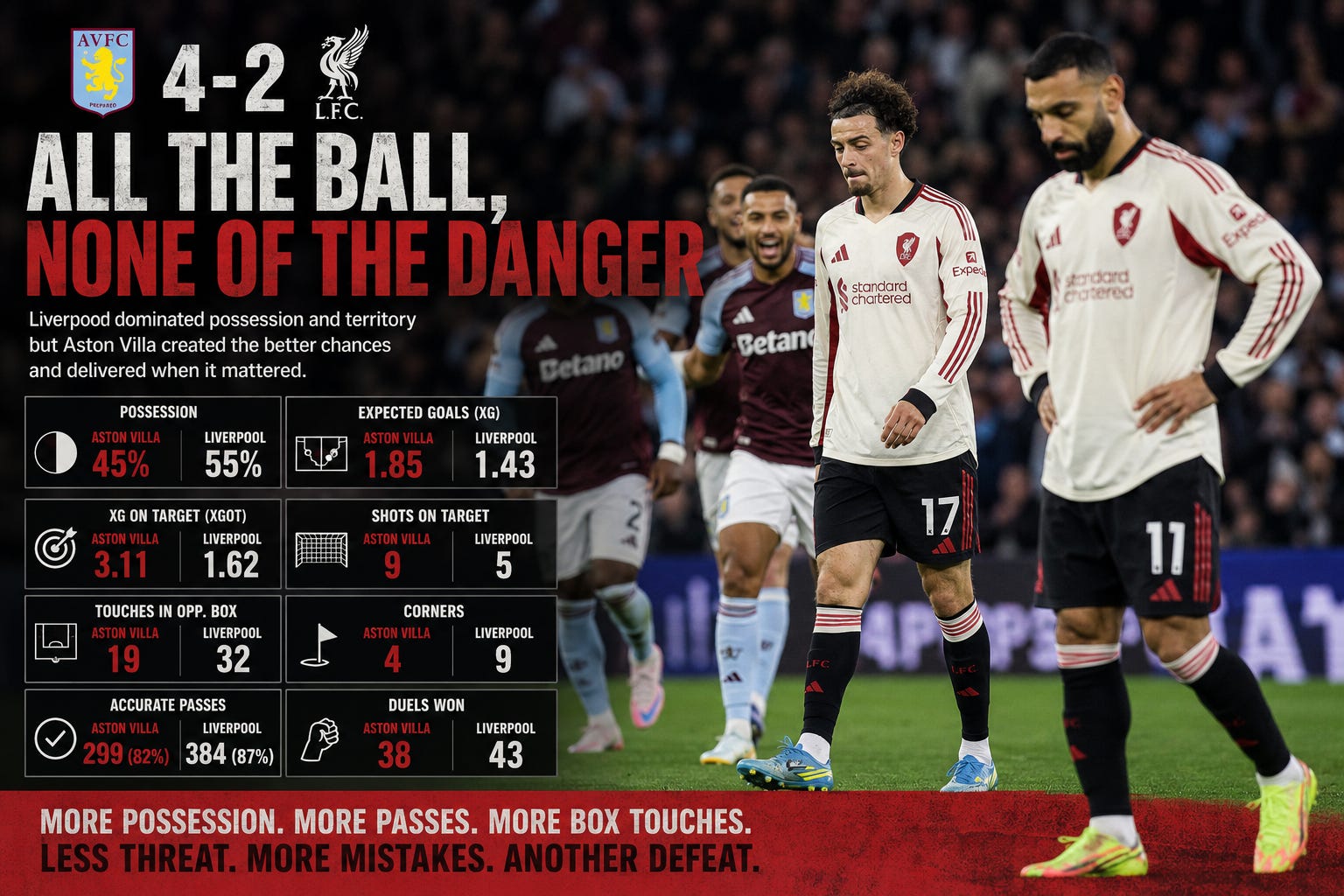
Liverpool’s 4-2 defeat at Aston Villa was not a story of complete domination from the home side. In many ways, that is what makes the result even more concerning.
On paper, Liverpool controlled large portions of the game. They had more possession, more passes, more touches in the opposition box, more corners and more territorial pressure. Yet somehow, by full time, Aston Villa looked like the sharper, more dangerous and more emotionally stable team.
That contradiction is where the real analysis begins.
For supporters watching this current Liverpool side, the frustration is no longer simply about dropped points. It is about a growing sense that this team can dominate harmlessly for long stretches before collapsing the moment pressure swings against them.
That happened again at Villa Park.
Territorial Dominance Counted For Very Little
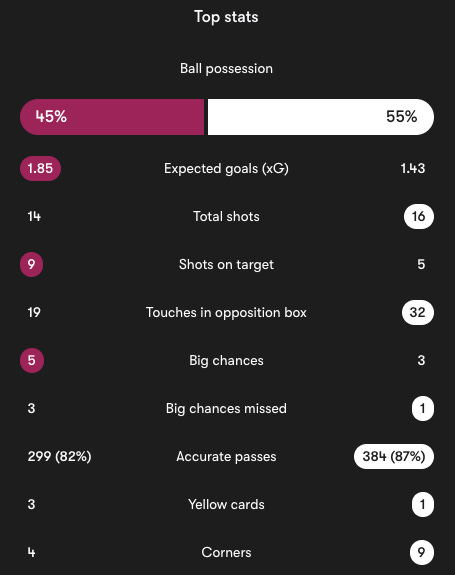
Liverpool, shown in white on the right hand side of the graphics, finished the match with 55% possession compared to Aston Villa’s 45%.
Liverpool completed 384 accurate passes at 87%, while Villa completed 299 at 82%. Liverpool also registered 197 accurate passes in the opposition half compared to Villa’s 125, while producing 32 touches inside the Villa penalty area against Villa’s 19.
On the surface, those are dominant away numbers in the Premier League.
Yet despite all of that, Aston Villa still looked like the side carrying genuine threat whenever they attacked.
That is because the quality of opportunities mattered far more than the quantity of Liverpool’s possession.
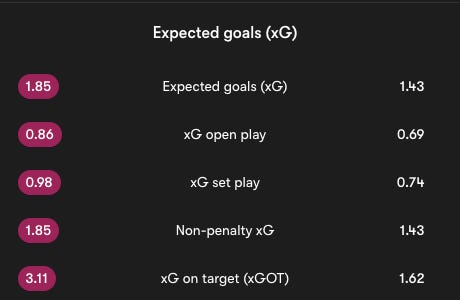
Villa finished with an expected goals figure of 1.85 compared to Liverpool’s 1.43. More importantly, Villa’s xG on target reached 3.11, almost double Liverpool’s 1.62.
That statistic explains the match perfectly.
Liverpool had plenty of the ball, but Villa created the more dangerous moments.
Arne Slot’s tactical setup actually worked reasonably well for spells in the first half. Liverpool’s pressing shape disrupted Villa’s build up at times, particularly when Cody Gakpo moved aggressively onto Emiliano Martinez while Liverpool’s midfield attempted to jump onto Villa’s pivots.
There was a structure to Liverpool’s pressing.
Joe Gomez often tucked inside to help Liverpool build possession more safely, while the midfield attempted to block Villa’s central progression toward Morgan Rogers and Ollie Watkins.
For around 20 minutes, Liverpool looked relatively comfortable.
But comfort without genuine attacking authority is dangerous against strong Premier League sides.
