

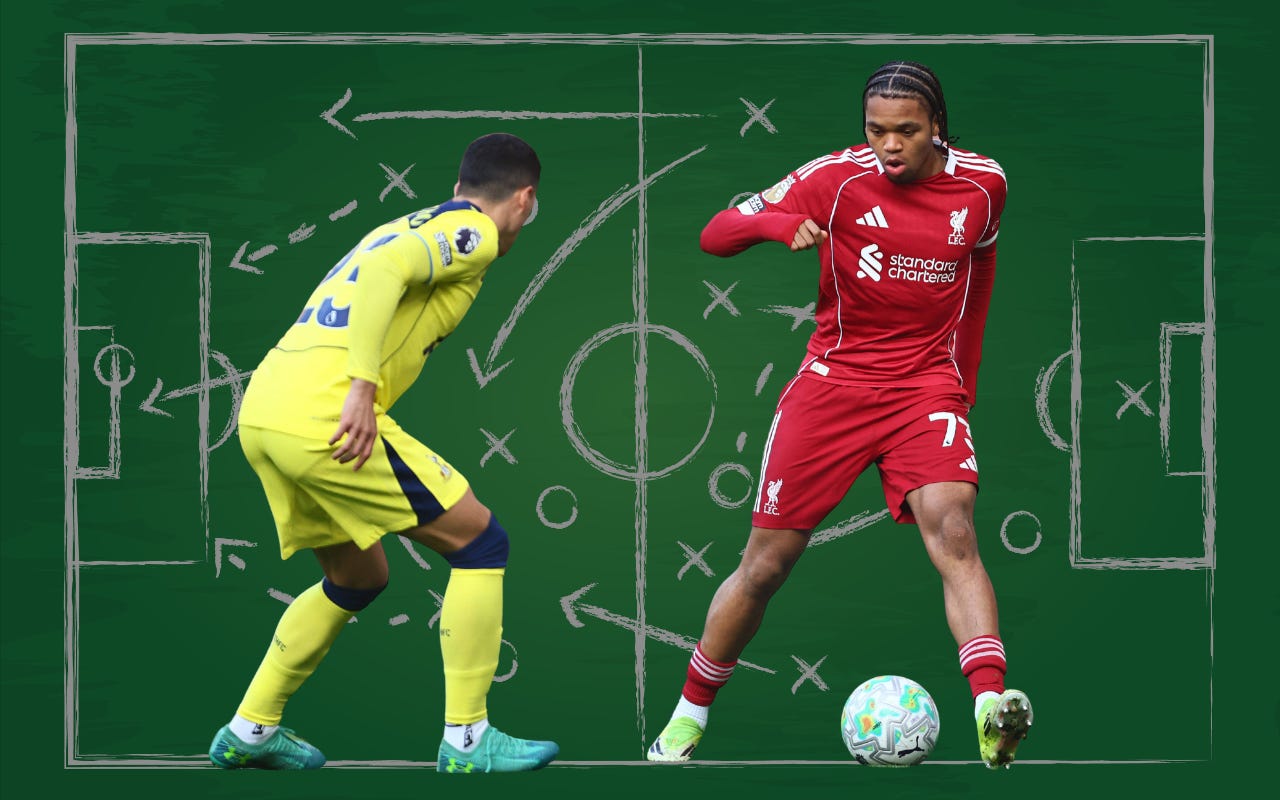
Liverpool left Anfield with a sense of lingering frustration after drawing with Spurs in a Premier League match that felt far more like a defeat than a point gained. Against a Tottenham side enduring one of the bleakest runs in the league, Liverpool failed to impose themselves and allowed an opportunity of real significance to slip away.
For a club chasing momentum in the Premier League, matches like this should be routine. Instead, Liverpool produced a performance that lacked clarity, conviction and, most importantly, control.
Spurs arrived in disarray. Since the New Year, Tottenham Hotspur had collected just four points before Sunday afternoon. Burnley, widely tipped before the season to be relegated, had managed eight in the same period. That context alone made Liverpool’s inability to dominate feel alarming.
There are moments in a campaign when patience begins to wear thin. Results and performances eventually have to align with ambition. Against a Tottenham side with vast resources, a modern stadium, and consistent top-ten placement in the Deloitte Football Money League, their current collapse is startling. Yet Liverpool still failed to assert the authority expected of them.
From a statistical perspective, the margins tell the story.

The expected goal difference finished at 0.45, a number that suggests Liverpool were marginally better but nowhere near convincingly so. A figure closer to 0.8 or 1.0 would normally indicate genuine dominance. Instead, the numbers reflected a match that remained open and uncertain throughout.
Liverpool produced just two more shots than Spurs, recorded only two shots on target, and managed the same number of attempts inside the penalty area. Against the Premier League’s poorest side based on recent form, that is not a profile of control.
Only one successful through ball highlighted another underlying problem; Liverpool struggled to break defensive lines with incisive passing.
Credit for the statistical analysis in this article goes to Mark Matrai and the tactical visualisations are provided by xfb Analytics.
Expected Threat Highlights Key Liverpool Creator
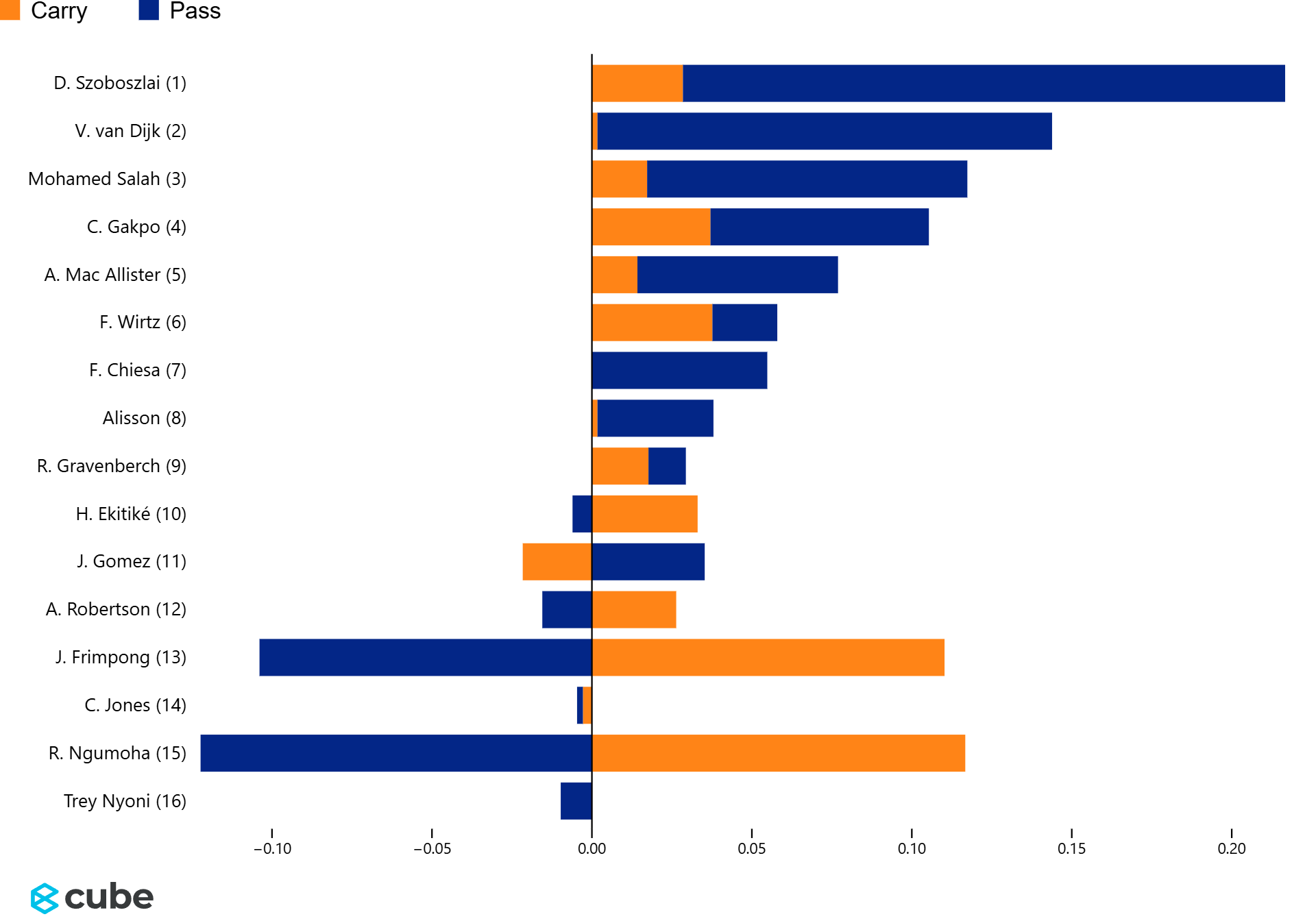
It is perhaps no surprise that Dominik Szoboszlai led Liverpool in expected threat created through both carrying and passing. Over the course of the season, he has increasingly looked like the team’s most influential attacking presence.
Szoboszlai’s ability to drive forward with the ball, combine with teammates and find forward angles has given Liverpool a degree of attacking impetus that others have struggled to provide. In a campaign where consistency has often been elusive, he has remained a constant source of progression.
