

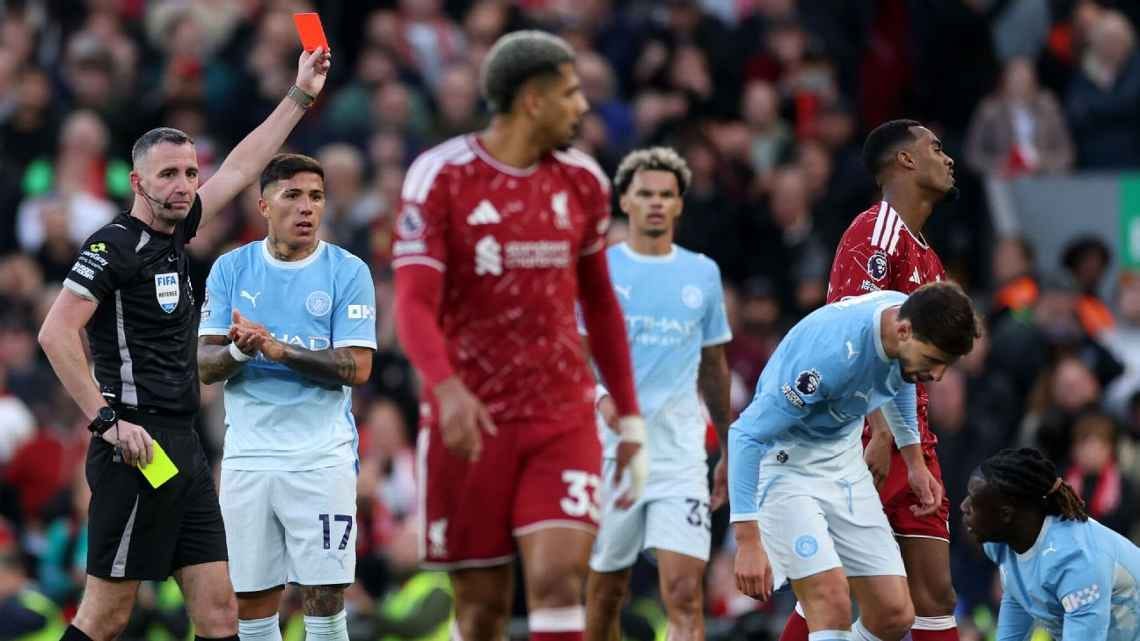
Liverpool’s 3-0 defeat to Manchester City at Anfield was painful enough in isolation. When you examine the numbers, however, the frustration becomes even greater because, for more than an hour, I thought Andoni Iraola’s side were producing a performance worthy of considerable credit.
There were two very different games on Sunday. One involved Liverpool competing impressively against the Premier League’s outstanding early-season team. The other saw a complete collapse following Ryan Gravenberch’s red card.
I think we have to examine both performances properly because there are lessons here for Iraola, particularly around Liverpool’s response to adversity, their attacking limitations and what we should realistically expect from this season.
With Liverpool sitting ninth, nine points behind Manchester City, the conversation has inevitably shifted towards Champions League qualification.
Yet there are positives worth examining, especially when you consider the players Liverpool had unavailable and the contributions of some of their younger attacking options.
Liverpool’s Numbers Before the Red Card Show Genuine Progress
For the opening 62 minutes, Liverpool were more than competitive. In fact, I would argue they were the side making the stronger case to win the match.
Manchester City arrived having won their opening six Premier League fixtures, scoring 16 goals. Restricting that attacking machine was always going to be difficult, particularly with Liverpool missing Alexander Isak, Cody Gakpo and Dominik Szoboszlai.
Yet Liverpool managed precisely that.
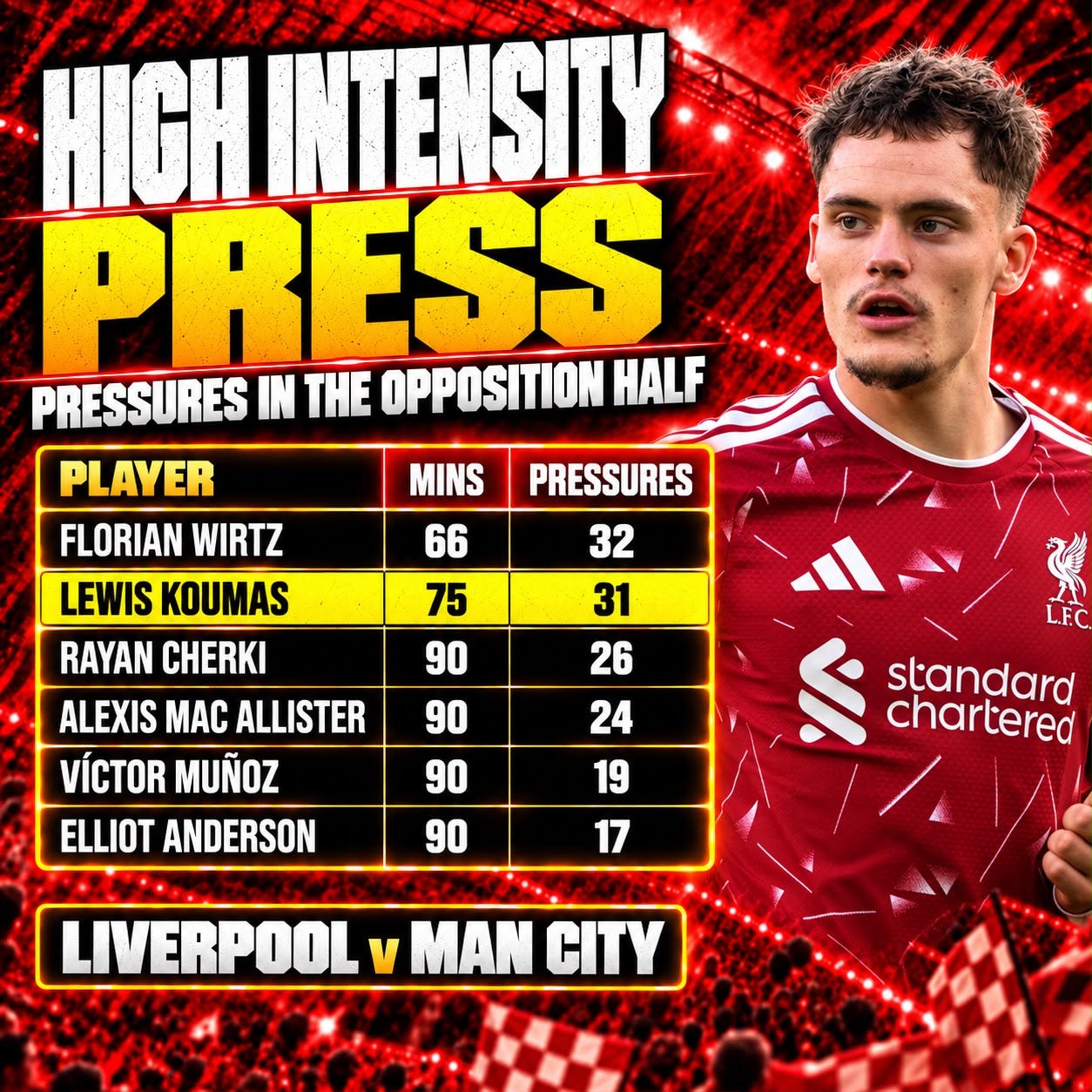
Before Gravenberch’s dismissal, Liverpool had registered 12 shots compared with City’s four. The expected goals figures were equally encouraging, with Liverpool producing 0.87 xG against City’s 0.42.
Erling Haaland’s opportunity, when he lifted the ball wide after being played through, was City’s only particularly threatening moment.
I was especially encouraged by Liverpool’s midfield performance.
We have discussed their struggles in individual battles this season, but Liverpool won 40 duels compared with City’s 36, giving them a 52.6% success rate.
Gravenberch was excellent before his dismissal. He was carrying the ball through midfield, completing dribbles and helping Liverpool compete against a physically imposing City side.
Alexis Mac Allister was also heavily involved in those midfield battles.
Considering the experience and quality within City’s team, I thought Liverpool deserved considerable credit for their competitiveness.
The refereeing contributed to the growing frustration.
Chris Kavanagh awarded Liverpool 19 fouls across the match, with Elliot Anderson winning eight free kicks, equalling the highest recorded figure for any player at Anfield in Premier League data going back to 2003/04.
There were inconsistencies around yellow cards, particularly Ronald Araújo receiving a booking for requesting one while Haaland escaped punishment for a similar appeal.
Liverpool still had to manage those circumstances, but I felt the officiating influenced the atmosphere and momentum.
Crucially, Liverpool were beginning to grow into the contest when everything changed.
Manchester City’s Dominance After the Red Card Raises Serious Questions
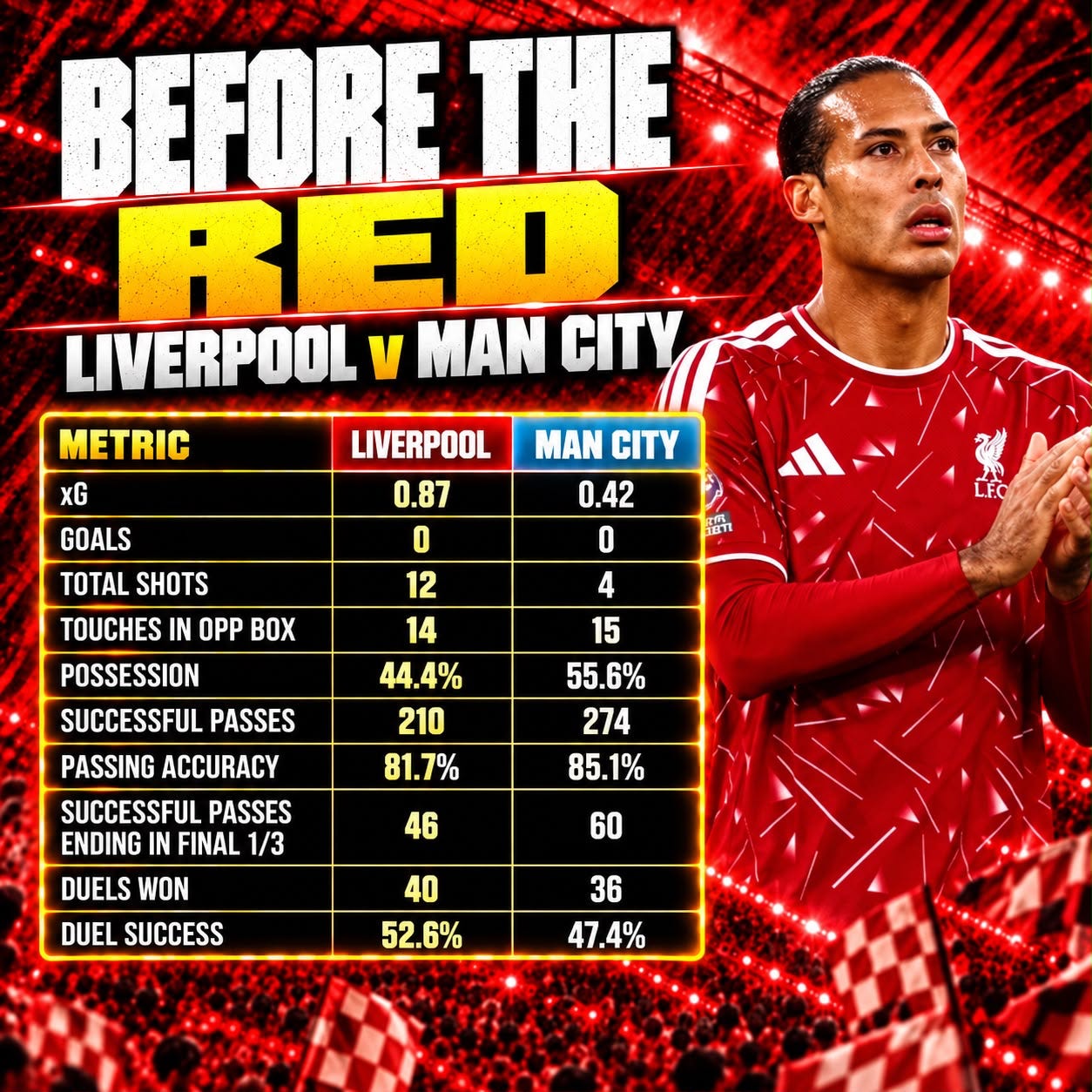
The numbers following Gravenberch’s dismissal are extraordinarily difficult to digest.
Liverpool managed just 15.5% possession, completed 30 successful passes and registered a solitary shot.
City, meanwhile, produced 11 shots, 18 touches inside Liverpool’s penalty area and 57 successful passes ending in the final third.
Liverpool managed five.
The contrast in duel success was equally alarming. Having won the majority of individual battles before the dismissal, Liverpool subsequently won only 25% of them.
I fully appreciate the circumstances. Liverpool were already missing several important players and were facing an outstanding City side with considerable squad depth.
Going down to ten men made an already difficult assignment significantly harder.
However, I cannot excuse how comprehensively Liverpool surrendered control.
We’ve seen Liverpool respond differently to dismissals in the past.
Under Jürgen Klopp, Liverpool won 2-1 at Newcastle despite playing with ten men. They also produced an extraordinary defensive effort against Tottenham with nine players, eventually losing through Joel Matip’s unfortunate own goal.
Even during Arne Slot’s title-winning season, Liverpool recovered to draw 2-2 against Fulham after an early dismissal.
Those performances demonstrated the importance of maintaining belief and finding ways to remain competitive.
Against City, Liverpool’s heads appeared to drop.
Rayan Cherki’s goal followed a sequence of approximately 41 City passes, with every visiting player touching the ball. It was the longest passing sequence leading to a goal Liverpool have conceded in the available records.
That tells its own story.
Iraola must examine how his players respond when reduced to ten men because this situation will inevitably arise again.
I don’t expect Liverpool to dominate Manchester City with a numerical disadvantage, but completing approximately one successful pass per minute is nowhere near good enough.
Lewis Koumas and Florian Wirtz Offer Encouragement Despite Liverpool’s Attacking Problems
One of the biggest challenges facing Iraola was obvious before kick-off.
Liverpool were missing Isak and Gakpo, their leading goalscorer and leading assist provider respectively. With Szoboszlai also absent, eight of Liverpool’s 12 league goals this season had come from players unavailable against City.
The starting attacking quartet of Florian Wirtz, Victor Muñoz, Bradley Barcola and Lewis Koumas had scored just six Premier League goals between them.
That lack of established goalscoring threat was always going to make life difficult.
However, I thought Koumas and Muñoz gave Liverpool plenty of encouragement.
Muñoz regularly troubled Nico O’Reilly and demonstrated his ability to attack defenders directly. One combination with Wirtz, involving an incisive pass into space and a run behind City’s defence, offered a glimpse of the attacking patterns Iraola wants to establish.
Koumas deserves particular praise.
Making his first Premier League start against Rúben Dias and Marc Guéhi represented an enormous challenge, yet he made life uncomfortable for both defenders.
His pressing was relentless.
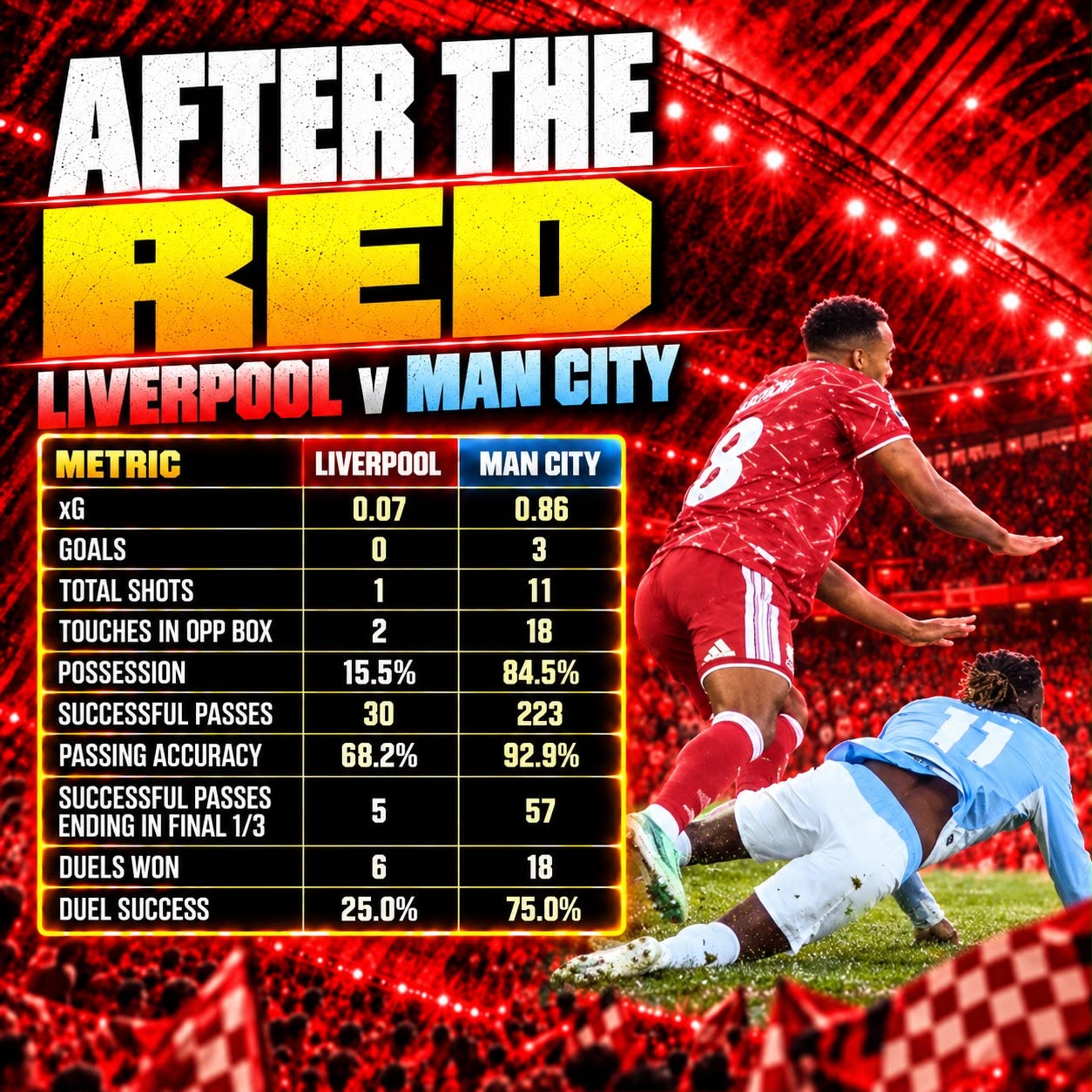
The numbers show Koumas registered 31 high-intensity pressures in the opposition half during his 75 minutes.
Only Wirtz, with 32 pressures in 66 minutes, recorded more.
Those figures underline the work both players contributed without possession.
Koumas also demonstrated his willingness to run the channels, compete physically and chase defenders into uncomfortable situations.
I can understand why Iraola values those qualities.
There is also a versatility to Koumas that makes him particularly useful. He can operate centrally, on either wing or in an attacking midfield position.
His opportunity in the second half, when Barcola played him through on his left foot, could have transformed his afternoon had he converted.
I would certainly be comfortable seeing him start again against LASK in the Champions League.
He has earned that opportunity.
Liverpool’s Premier League Reality and Champions League Challenge
Liverpool currently sit ninth in the Premier League, nine points behind Manchester City.
However, they are only four points away from third and one point behind fourth.
That distinction matters enormously when assessing Iraola’s start.
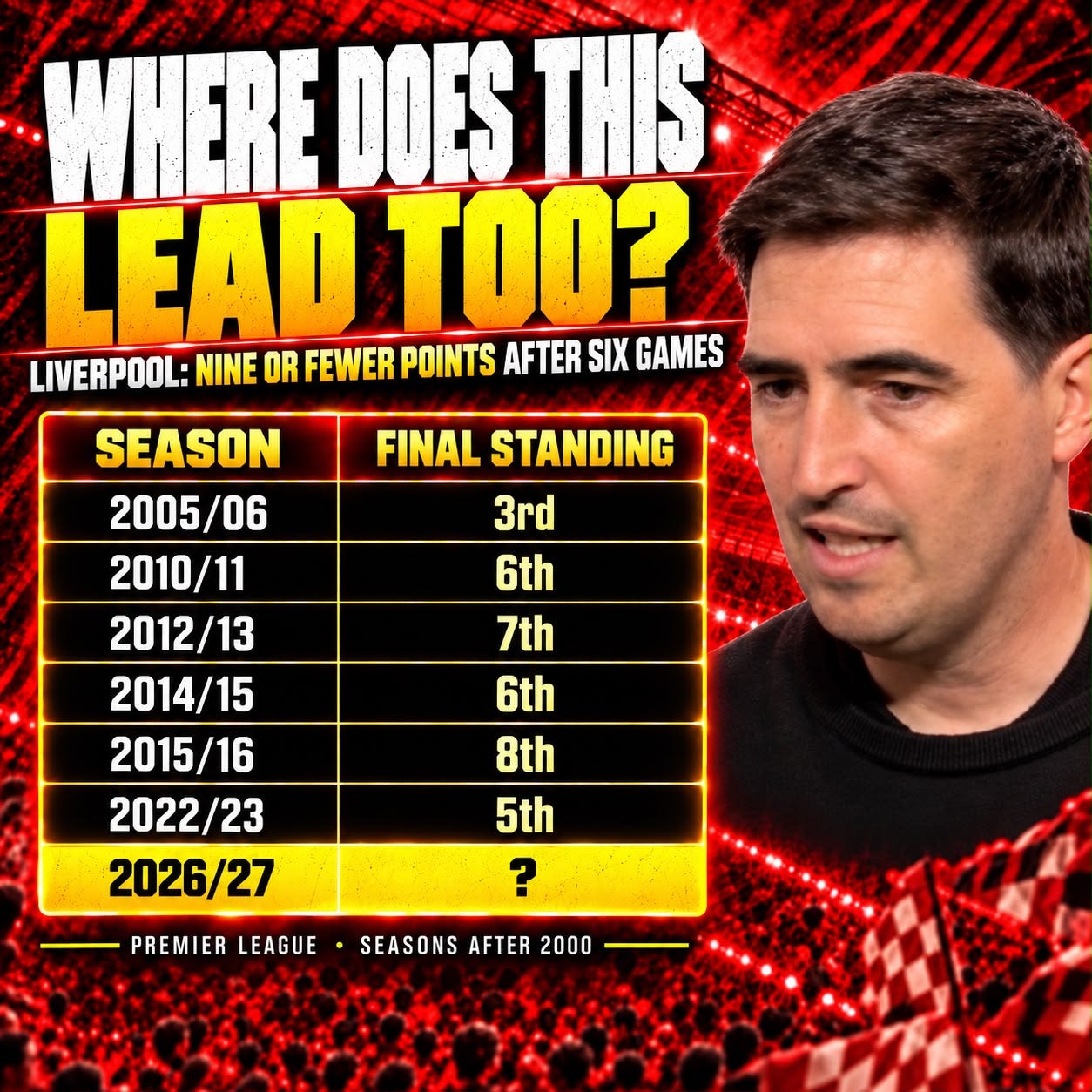
Looking back at Liverpool’s Premier League seasons since 2000, whenever they have collected nine points or fewer from their opening six fixtures, their eventual finishing positions have ranged from third to eighth.
The best outcome came in 2005/06, when Liverpool finished third and won the FA Cup.
Other seasons produced sixth, seventh and eighth-place finishes.
I think we now have to acknowledge that Champions League qualification is Liverpool’s realistic objective.
There were already reasons to expect a transitional season following the changes to the squad and the appointment of Iraola.
Liverpool still have obvious areas requiring attention, including right-back, holding midfield and the absence of a natural replacement for Mohamed Salah on the right wing.
Manchester City possess extraordinary squad depth, while Arsenal’s options are among the strongest we have seen in the Premier League.
Liverpool are currently operating with considerably fewer alternatives.
There are encouraging defensive signs under Iraola. Despite his reputation for attacking football, Liverpool have generally restricted opponents to low expected goals totals in recent league matches.
Indeed, Liverpool have effectively gone four Premier League games without conceding while playing with eleven men.
The attacking balance remains the problem.
Iraola has spoken about preferring a 4-3 victory to winning 1-0, yet Liverpool have looked far more likely to secure narrow victories this season.
Getting Wirtz, Barcola and Isak functioning together will be crucial to improving the quality of chances Liverpool create.
Attention now turns towards Wednesday’s Champions League trip to LASK.
Their Austrian Bundesliga numbers are impressive. They have recorded the most shots and faced the fewest, while ranking second for expected goals, high turnovers, direct attacks and build-up attacks.
They have faced just 67 shots in eight league games, almost 30 fewer than the next-best side.
Those figures suggest a well-organised opponent capable of competing through different approaches.
Liverpool should have the quality to win, but they cannot afford complacency.
I want to see Iraola’s side establish control, maintain their defensive discipline and create enough opportunities to settle the contest.
An early goal would certainly help.
Beyond Wednesday, Brighton and Brentford are Liverpool’s next two Premier League opponents, making the coming fixtures particularly significant for their Champions League ambitions.
The Manchester City defeat exposed genuine problems, particularly Liverpool’s response to adversity. Yet those opening 62 minutes demonstrated that Iraola’s team can compete against outstanding opposition.
Now the challenge is to turn those encouraging performances into results, improve the attacking output and establish the consistency required to climb the Premier League table.