

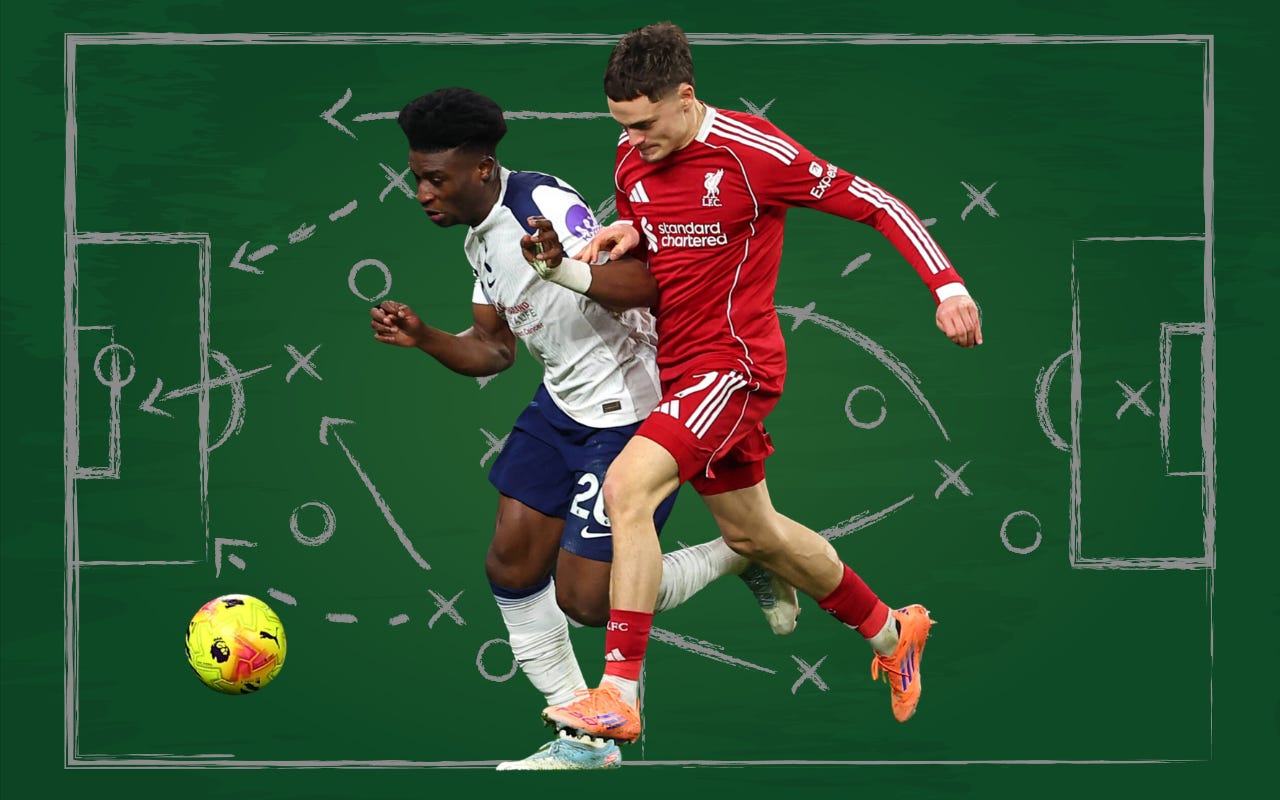
Liverpool left north London on Saturday evening with three points, a 2-1 win over Spurs that extended their unbeaten run in the Premier League to six matches and marked a third consecutive competitive victory. On paper, it reads like progress. In practice, it felt more complicated.
A free midweek and time on the training ground had raised expectations of refinement and cohesion. Mohamed Salah’s absence at the Africa Cup of Nations was not a surprise and should have been fully accounted for. Instead, what unfolded was another match where Liverpool’s resilience carried them through, even as familiar problems resurfaced beneath the surface.
The starting shape again featured four midfielders, with Ekitiké preferred up front ahead of Isak. Spurs, meanwhile, arrived with well documented structural problems. Their midfield has struggled all season, high profile signing Xavi Simons has yet to settle, and James Maddison’s ACL injury has capped their attacking ceiling. And yet, for long stretches, it was the home side who looked more coherent.
Before Simons’ red card, Liverpool had been outshot 5-1. Even after going a man up for more than an hour, their attacking output did not meaningfully improve. Spurs continued to generate chances and expected goals at a higher rate, even when accounting for shot sequences to avoid duplication.

By Wyscout’s xG model, Spurs created almost double the chance quality of Liverpool across the match. The Reds did win more duels, both on the ground and in the air, which speaks to effort and competitiveness. It does not, however, equate to control.
