

Try this. Your weekly food shop goes up by a pound. You shrug. Hardly worth mentioning. Then it goes up again next year. And the year after. Suddenly, it is not a pound anymore. It is a pattern. It is a direction. And it is one you never agreed to.
That is where Liverpool supporters find themselves now.
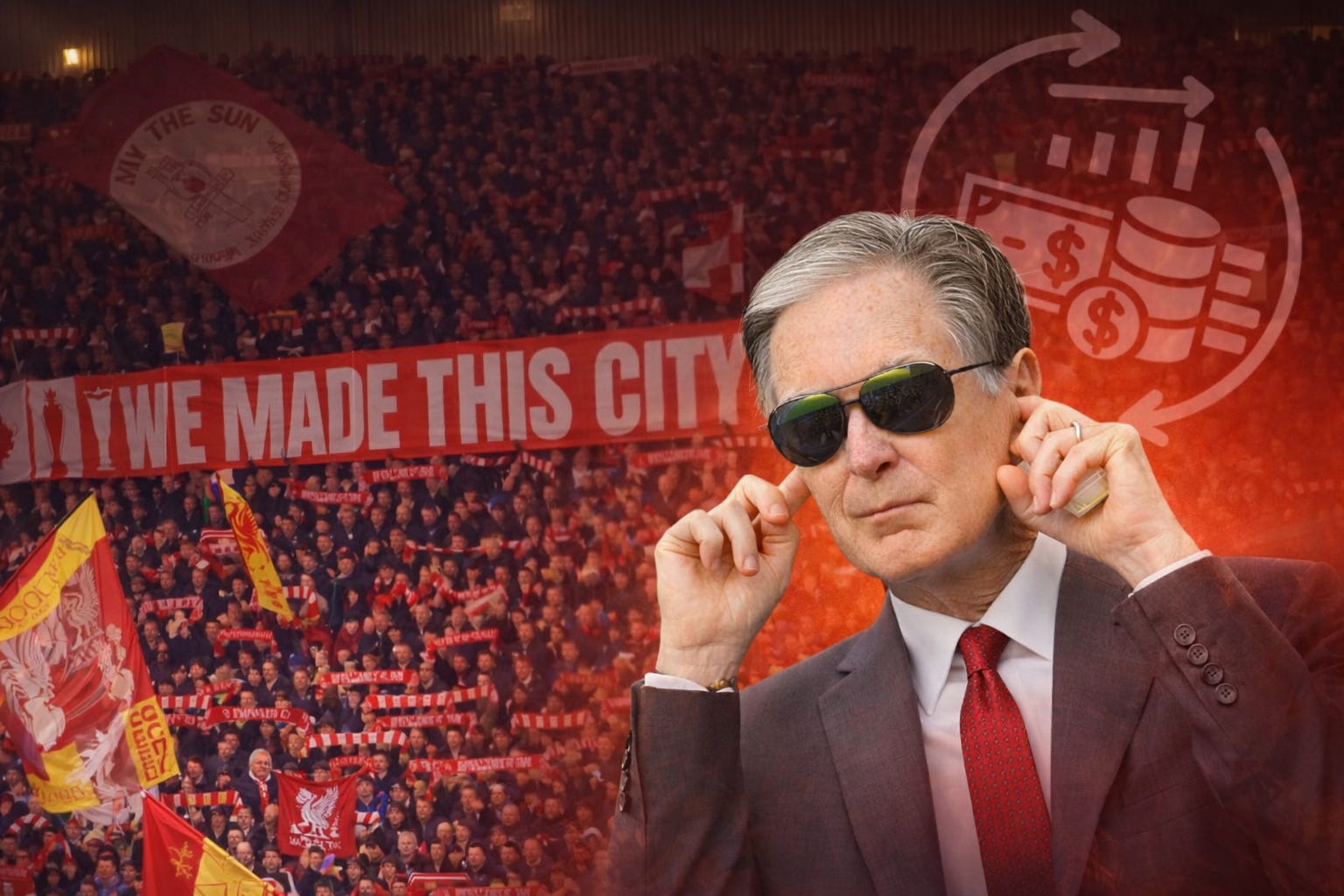
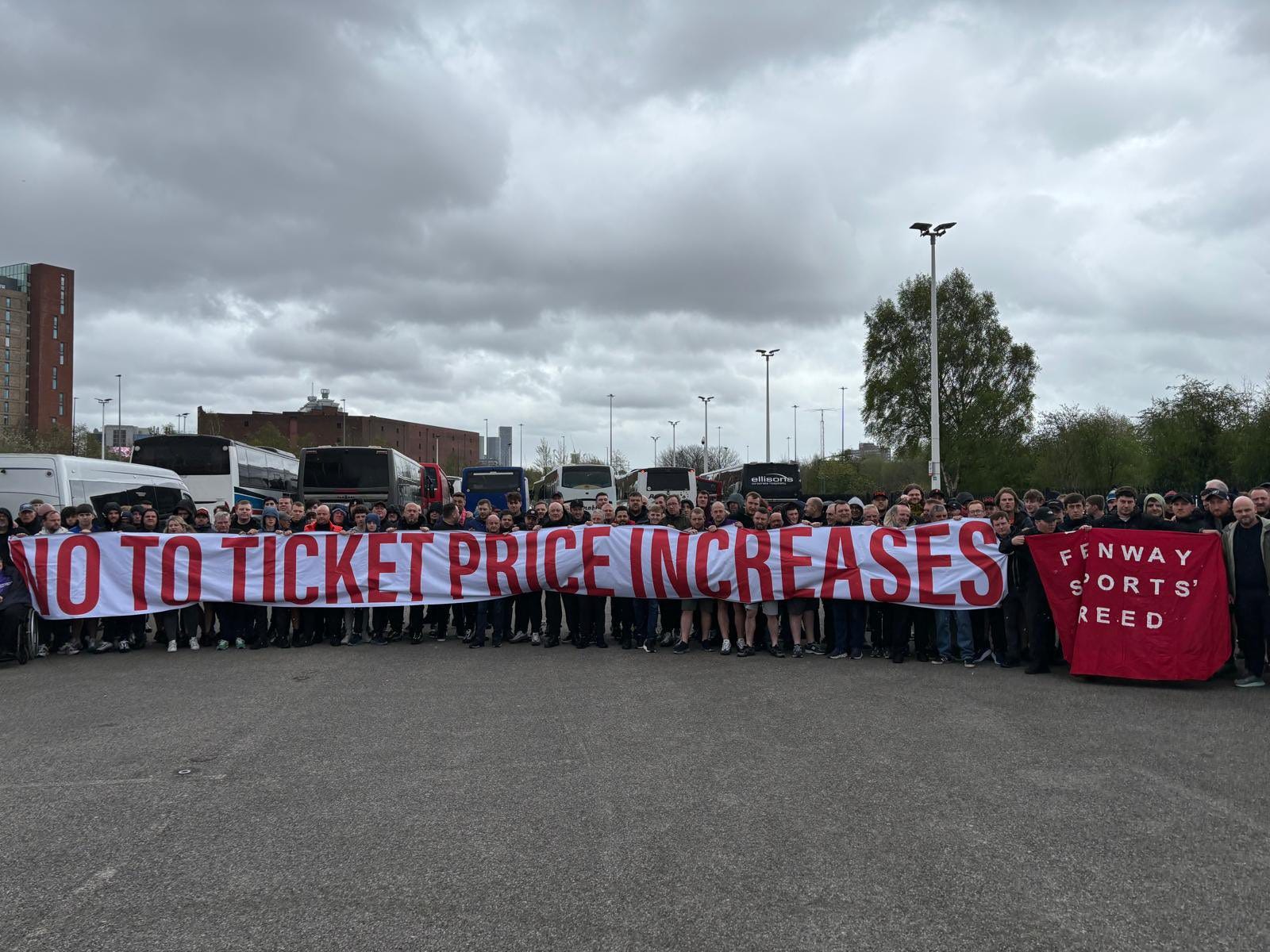
The club has confirmed a 3% increase on general admission tickets next season, with further rises linked to inflation for two more years. On paper, it feels small. Around £1.25 to £1.75 more per match. Easy to dismiss. Easy to defend.
But this is not about £1.
It is about what happens next.
Multi-Year Increases Change Everything
For the first time under Fenway Sports Group, Liverpool are not simply raising prices. They are locking supporters into a structure. Three years. Inflation-linked. Up to 5% annually.
That matters.
It sets a new baseline. It removes the annual fight. It tells supporters the conversation is effectively over before it begins.
Over three seasons, those increases could reach around 13%. That pushes matchday tickets towards £70. Season tickets drift towards £1,000. These are not abstract numbers. These are thresholds.
And thresholds matter.
Football has always relied on habit. Generations going together. Parents passing it down. That chain does not break suddenly. It erodes. Quietly. Gradually. Then one day, it is gone.
The danger here is not outrage. It is normalisation.
Fans Are Not a Revenue Stream
I have been lucky. I have been to Anfield hundreds of times. That’s not something I take lightly. It is a privilege.
I am also around 11,000th on the season ticket waiting list. I have been there for nearly 20 years.
That tells its own story.
Liverpool speak often about their supporters. “This means more.” The “twelfth man.” The Kop as a global symbol. The club markets its identity through the people who fill the ground.
And rightly so.
But that identity cannot be switched on when convenient and priced out when it is not.
Supporters are not a side note. They are part of the product being sold. The noise. The flags. The culture. These are not extras. They are central to Liverpool’s global appeal.
Yet this decision treats them as a cost to be managed.
That is the disconnect.

Inflation Argument Falls Short
The club’s justification is clear. Costs have risen. Utilities are up. Wages are up. Operating expenses have increased sharply since 2016.
All true.
But so have revenues.
Liverpool reported over £700 million in revenue. Commercial growth has been relentless. Broadcast deals continue to surge. Sponsorship agreements grow in scale and value every year.
Ticket price increases will generate roughly £1.2 million next season.
Put that into context.
That is a fraction of overall income. It does not transform competitiveness. It does not bridge a financial gap. It does not decide whether Liverpool win or lose on the pitch.
It is marginal.
And that is why the question keeps coming back.
Why do it?
The inflation argument also struggles under scrutiny when viewed over time. In 1994, standing on the Kop cost £8. Adjusted for inflation, that would be around £17 today.
The cheapest Kop ticket now sits at £39.
Football has already outpaced inflation by a distance.
So this is not about keeping up. It is about continuing a trend that has been running for decades.
Real Cost of Loyalty
There is another layer here. One that numbers alone do not capture.
Everything around football has become more expensive.
Travel. Food. Merchandise. Subscriptions. Even access to the game on television now comes with multiple paywalls. Each one rising.
For many supporters, attending a match is not just the ticket. It is the full day. The full commitment.
And that is where the tipping point sits.
Not in one increase. Not even in three. But in the accumulation.
At some stage, people stop going. Or they go less. Or they change how they engage. Maybe they skip the pub. Maybe they stop bringing their kids. Maybe they drift.
That matters more than any spreadsheet.
Because once that habit breaks, it rarely returns in the same form.
Missed Opportunity for Leadership
Liverpool had a chance here.
Eight price freezes in the last decade built goodwill. They showed restraint. They positioned the club differently from many of its rivals.
This could have continued.
Instead, the club has chosen to follow the same path as others. Incremental increases. Inflation justification. Commercial logic.
Safe. Predictable. Corporate.
But Liverpool has never been about that.
There was space to lead. To explore alternative revenue streams. To push harder on commercial income. To protect matchgoing supporters as a priority rather than a balancing figure.
Other clubs will look at this decision. If Liverpool can do it, so can they.
And just like that, the cycle continues.
Demand Does Not Justify Everything
One argument keeps surfacing. Demand is huge. Tickets sell out. Waiting lists stretch for decades. The ground will fill regardless.
All true.
But demand alone cannot be the guiding principle.
If it were, prices would spiral far beyond current levels. Hospitality already offers a glimpse of that world. Packages priced at hundreds per game. Thousands per season.
That model exists.
And it is creeping closer.
Once the logic becomes “people will pay,” the ceiling disappears.
Football then shifts from community to commodity.
Liverpool should be better than that.
Where This Leaves Supporters
There is frustration. There is also division.
Some fans accept the increase. It feels modest. Manageable. Part of modern football.
Others see something else entirely. A line being moved. Again.
Both views exist because football sits in two worlds at once. It is a business. It is also something deeper.
That tension will never disappear.
But decisions like this tilt the balance.
For me, it comes back to a simple point.
This did not have to happen.
There were other options. Other ways to grow revenue. Other ways to manage rising costs without asking more from the people who already give the most.
Liverpool do many things right. They are stable. Successful. Well-run compared to others.
That is why this feels so unnecessary.
And that is why it matters.
Final Thought
This is not about £1.
It never was.
It is about direction. About values. About what Liverpool chooses to be.
A club that sees its supporters as part of its foundation. Or one that sees them as part of the bill.
Right now, the answer feels uncomfortable.
And if this continues, the real cost will not be measured in pounds.
It will be measured in what gets lost along the way.
Looking at the club year profits published recently, income from ticket sales is not at all crucial to the wellbeing of the club. Increasingly it’s going to become a ‘theatre’ not a football stadium with seats filling half way through the second half when the corporate hospitality section has served it’s last latte - increasingly I’m looking at the fans at the Bunderslegue and wow - what a crazy fan led atmosphere they generate. That’s what I want. We are in trouble of losing that at Anfield. I would almost pay as much to drive to Munich and stay overnight and join that lot than to sit sipping a cocktail in the corporate boxes at Anfield. anyone fancy filling the car for a trip to Germany- Holland??? I can’t believe I’m saying that but that’s how I feel at the moment.