

There is something about Richard Hughes that has never quite sat right with me.
That probably sounds unfair. Football supporters are perfectly capable of taking against people for irrational reasons. Sometimes personalities simply fail to connect. Yet after watching Hughes’ time at Liverpool unfold, reading every briefing, following every transfer window and listening to the constant praise surrounding his work, I have arrived at a conclusion that extends far beyond whether I think he has been a good sporting director.
Richard Hughes has come to embody everything I dislike about the modern game.
That is not entirely his fault. Football has changed dramatically over the past decade. Managers have become head coaches. Owners have become portfolio managers. Recruitment departments resemble investment firms. Sporting directors have evolved into the most influential people inside clubs despite many supporters having only the vaguest idea what they actually do.
They exist in a curious space. When a signing succeeds, credit quietly flows to them. When a manager lifts a trophy, they are praised for making the appointment. When recruitment departments are admired, they receive another pat on the back. Yet when things begin to unravel, responsibility suddenly becomes much harder to locate. There is always another explanation, another layer of complexity, another reminder that supporters simply cannot appreciate the work happening behind closed doors.
I have never been entirely comfortable with that.
Football is complicated. Nobody sensible believes a sporting director spends all day negotiating transfer fees before disappearing into the sunset. The role stretches across contracts, succession planning, recruitment, staffing, academy pathways and creating continuity between ownership and the coaching staff. It is one of the most demanding jobs in football.
That wider remit should make scrutiny greater, not smaller.
Instead, sporting directors have somehow become mythical figures. Their reputations often seem built upon whispers rather than evidence, reputation rather than accountability. We are forever told that rival clubs admire them, that executives across Europe speak glowingly about their work, that they are quietly transforming football clubs from within.
Perhaps they are.
Supporters, however, can only judge what they see.
When Richard Hughes arrived at Liverpool, the club had just emerged from one of the most successful periods in its modern history. Replacing Jürgen Klopp was arguably the most significant executive decision Fenway Sports Group had faced since appointing him almost a decade earlier. Hughes inherited an extraordinarily difficult brief, one that deserved patience and understanding.
He also inherited an outstanding football club.
Liverpool possessed world class players throughout the spine of the team. The club remained financially healthy. Recruitment structures were already established. Michael Edwards had returned to oversee football operations and there appeared to be a coherent plan behind the scenes.
That plan feels far less convincing today.
The conversation has gradually shifted from optimism towards uncertainty. Every few weeks another significant issue seems to emerge. Contracts drift uncomfortably close to expiry. Transfer priorities appear to change. Liverpool miss targets that once felt attainable. Senior figures prepare to leave before projects feel complete. Supporters are repeatedly asked to trust the process despite finding it increasingly difficult to identify exactly what that process is.
Perhaps none of those issues can be laid solely at Hughes’ door.
Collectively, however, they define his tenure.
Football clubs rarely decline because of one catastrophic decision. More often they lose their edge through a succession of smaller compromises. Standards slip almost imperceptibly. Recruitment becomes fractionally less effective. Planning becomes marginally less proactive. Contract situations become slightly more awkward. Before long, supporters begin discussing another rebuild despite feeling as though the previous one never truly ended.
That is where Liverpool appear to find themselves.
The frustrating part is that much of the discussion surrounding Hughes has focused almost entirely upon transfers. Did Liverpool overpay here? Should they have pursued somebody else? Was missing out on one target avoidable?
Those debates matter.
They also miss the bigger picture.
The greatest sporting directors create stability. They establish a football department capable of surviving managerial change, ownership uncertainty and inevitable disappointments in the transfer market. The strongest organisations feel calm because every significant decision appears connected to a long term vision.
I am struggling to identify that vision at Liverpool.
Even the managerial transition illustrates the point.
Arne Slot required one type of squad. Andoni Iraola demands something rather different. One coach preferred control through possession, the other wants relentless aggression without the ball. Those philosophical differences inevitably require alterations to the playing staff, meaning another period of significant recruitment barely twelve months after Liverpool appeared settled.
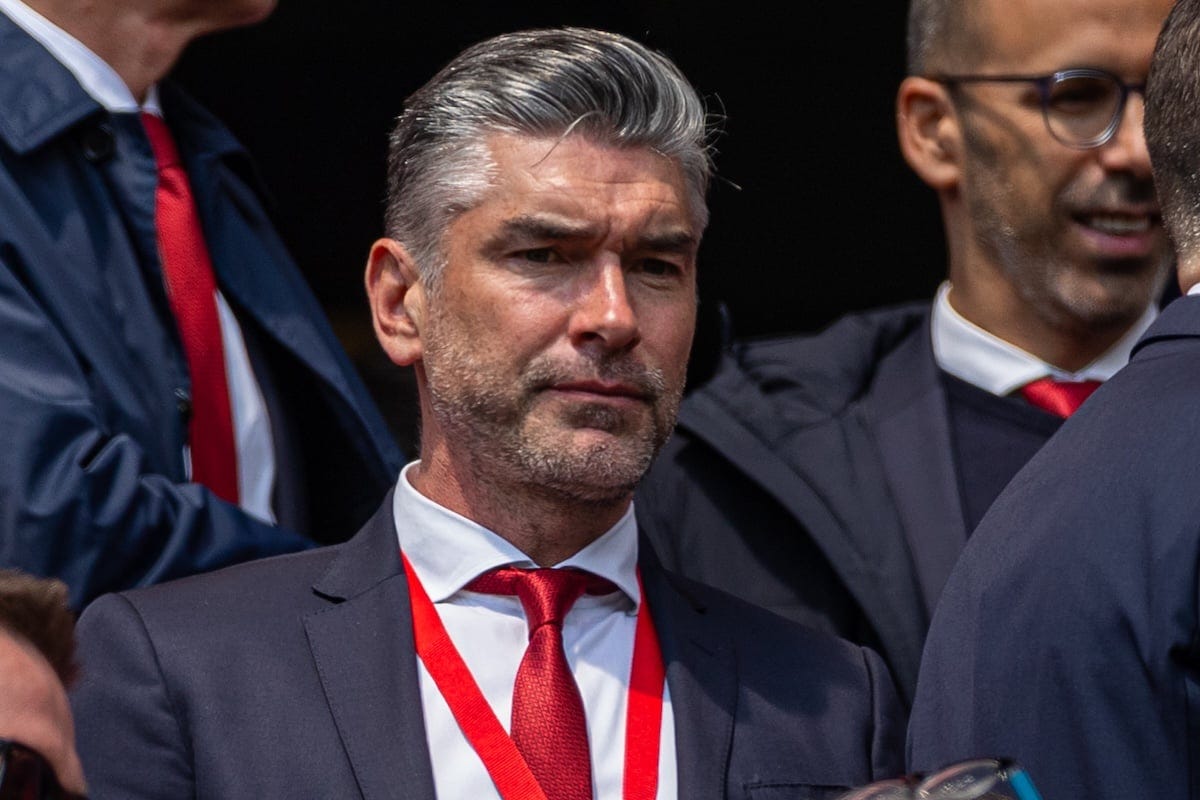
That may prove worthwhile.
It does not necessarily reflect organisational clarity.
Supporters can forgive mistakes. Football is impossible to perfect.
They struggle to forgive confusion.
Which brings me to the issue I simply cannot shake.
Forget recruitment for a moment.
Forget contracts.
Forget transfer fees.
Think instead about what Liverpool Football Club should represent.
For generations the club has prided itself upon connection. Between supporters and players. Between managers and the city. Between those making decisions and those living with their consequences. Liverpool has always felt different because it demanded complete commitment from the people fortunate enough to represent it.
Modern football increasingly seems determined to remove that connection.
Executives move between clubs with remarkable speed. Ownership groups discuss football institutions in the same language used for financial assets. Multi club ownership transforms community organisations into pieces of a much larger corporate strategy. Everything feels cleaner, smarter and infinitely more efficient.
It also feels colder.
Richard Hughes has become the face of that evolution.
Not because he created it.
Because he represents it.
And nowhere is that more obvious than in the way he has chosen to do the job.
Perhaps I am old fashioned.
Perhaps I place too much importance on symbolism.
Yet I have never understood how the sporting director of Liverpool Football Club could choose to remain living on the south coast. I appreciate football has changed. Technology allows meetings to happen anywhere. Recruitment takes place across continents rather than counties. Nobody expects the club’s senior executives to clock in at Melwood every morning before grabbing lunch in the city centre.
That is not really the point.
Liverpool is unlike most football clubs because the city itself matters. It shapes the institution. It shapes expectations. It shapes relationships. Supporters have always valued people who immerse themselves in the environment rather than merely working within it. The greatest figures associated with the club understood that representing Liverpool involved more than carrying a business card with the crest printed across the top.
Hughes never gave me that impression.
Every supporter will draw their own line. Some will quite rightly argue that where a sporting director sleeps has absolutely no bearing on whether he negotiates a transfer successfully. That is a perfectly reasonable opinion. For me, though, it became another reminder that football increasingly resembles every other corporate industry. The executive flies in, chairs the meetings, signs the paperwork and flies home again. Efficient? Probably. Romantic? Certainly not.
Then came the Saudi Arabia reports.
Again, I find myself returning to optics rather than legality.
Liverpool are preparing for another hugely important season. There are obvious holes within the squad. Several significant contracts continue to demand attention. Another recruitment drive remains unfinished. Yet the man charged with overseeing much of that work already appears to have one eye fixed firmly on his next destination.
Perhaps he remains completely professional. I have no reason to suggest otherwise. Professionalism has never really been my concern.
Commitment has.
Football supporters invest emotionally in their clubs. They expect the people making the biggest decisions to do likewise. Finding out that Liverpool’s sporting director is already preparing for life elsewhere inevitably raises uncomfortable questions, regardless of whether those questions are entirely fair.
What puzzles me even more is the destination itself.
Leaving Liverpool for Real Madrid, Bayern Munich or perhaps even the Premier League’s biggest rivals would sting, but there would at least be an obvious sporting logic behind it. They are institutions that compete for the highest honours in world football. Success there strengthens your reputation because the standards remain unforgiving.
Saudi Arabia feels different.
Nobody can deny the financial rewards. They are extraordinary. Hughes may never need to work another day after a few seasons there. I would never criticise somebody for securing their family’s future.
Professionally, however, I struggle to understand what such a move proves.
How does running recruitment with effectively unlimited financial backing enhance your standing among Europe’s elite clubs? How does dominating a league whose economic landscape bears little resemblance to the Premier League demonstrate that you are one of football’s outstanding executives?
If anything, it feels like stepping away from the hardest examination available.
For somebody whose reputation has been built around operating at the very highest level, that surprises me.
Perhaps that feeling exists because I have never fully bought into the mythology surrounding sporting directors.
Football has reached a point where executives sometimes receive greater protection than managers. Every unsuccessful transfer comes with mitigating circumstances. Every failed negotiation has hidden complexities. Every difficult contract is apparently somebody else’s responsibility.
Eventually there comes a point where responsibility has to settle somewhere.
Liverpool have repeatedly found themselves reacting rather than dictating. The contract situation has remained untidy. Recruitment has felt inconsistent. The squad still appears incomplete despite significant spending. The title-winning Head Coach Hughes appointed, Arne Slot, was finally and rightfully sacked. Michael Edwards, the man who recruited Hughes, has already departed. Viewed individually, each exit can be explained away. Viewed together, they paint a less flattering picture.
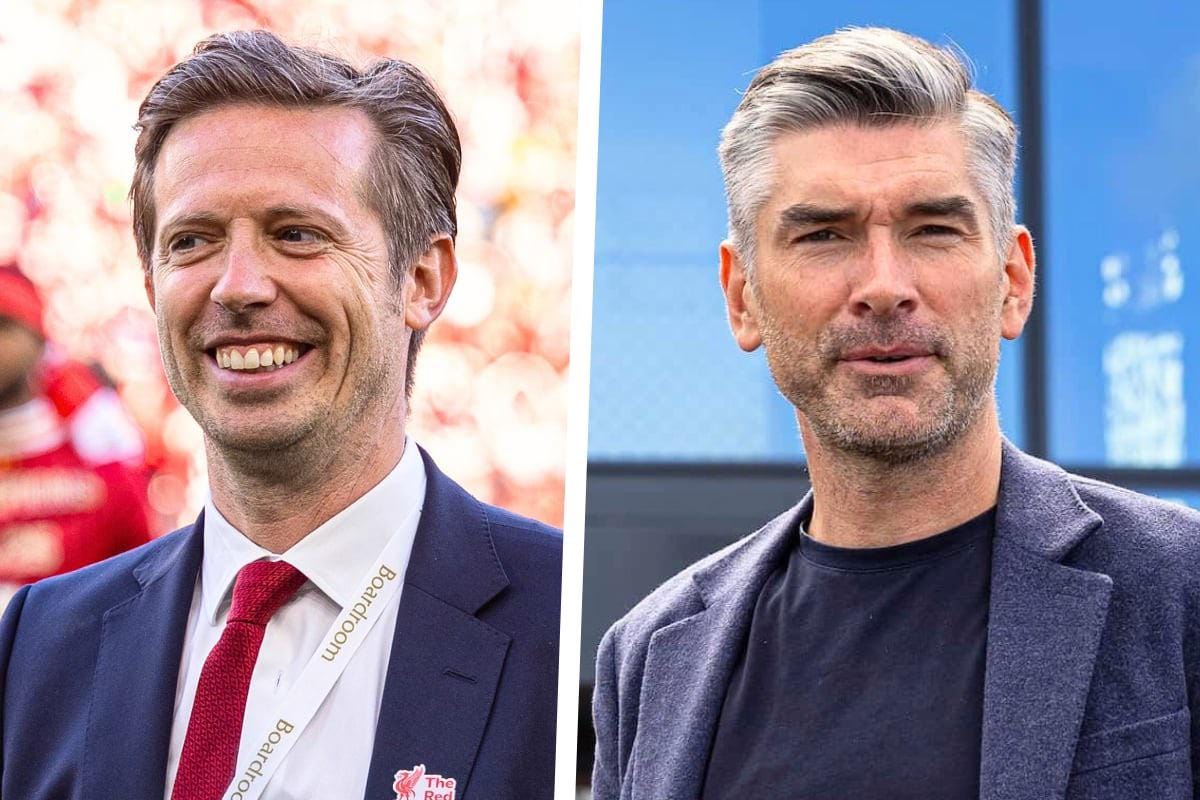
That is why I cannot simply dismiss criticism as impatience.
Football supporters are entitled to judge the direction of travel.
History may yet prove Richard Hughes to have been an excellent sporting director. Florian Wirtz could become one of Liverpool’s greatest ever signings. Alexander Isak may fire the club towards another Premier League title. Young players like Leoni, Jacquet and Kerkez, recruited during Hughes’ tenure, could form the backbone of the next great side. If that happens, I will happily acknowledge it.
But history also remembers atmosphere.
It remembers confidence.
It remembers whether a football club felt united behind a common purpose.
Liverpool no longer gives me that feeling.
Perhaps the greatest disappointment is that Hughes arrived with every opportunity to become one of the defining figures of Liverpool’s next chapter. Instead, he leaves me thinking less about the football decisions themselves and more about what his tenure symbolises. A sporting director who never appeared fully rooted in the club, who seems ready to exchange one of world football’s greatest institutions for extraordinary wealth, and who has presided over a period that has often felt uncertain rather than assured.
For me, that represents far more than one executive’s career choices.
It reflects the direction football continues to travel.
Maybe I simply preferred the game when the people running clubs looked as though they belonged to them.
Maybe that makes me hopelessly nostalgic.
Or maybe Liverpool should expect more from the people entrusted with protecting everything that has always made the club special.
Hmmm. Not sure on this.
How on earth have Liverpool missed out on targets that once seemed attainable?!
Quote the opposite - through the entirety of my supporting Liverpool, we have *never* been able to sign targets of the calibre of Wirtz, Isak.
Make no mistake - Ian Graham made it absolutely clear how vital Klopp was in raising the quality of target we could get over the line. But… aside from VVD, which was frankly all about Klopp and a world record fee… we have never signed the world’s most indemand players. always missed out.
Wirtz had his pick of City, Madrid, Bayern.. and frankly he could have made more money at any of them.. and picked us.
Isak.. could have gone on strike to force a move to arsenal on more money and they would have loved to have him.
Frankly, even Frimpong at £35m buyout could have his pick.
Hughes played the hand that was dealt him.. and that hand was having a runaway league winning team and using it as leverage to sign the worlds most in-demand top-tier players that were available.
Who did we miss out on in the summer? Guehi.. the deal was agreed, Glasner threw his toys out. Absolutely no chance they were selling him before their euro qualifying game.
At January… it’s the 12 game losing streak that meant we missed out on Guehi and Semanyo to city. Not Hughes.
The sporting directors play a hugely important role.. BUT.. fans need to grasp reality and understand that top players sign for clubs based on reality, no romance.
As for Hughes’ career choice - SD’s operate in a world of multi-millionaire and billionaires.. and entirely at the whim of a team or coaches performance… and they are paid nowhere near the coaches or players.
Right now, people are (wrongly) judging Hughes’ signings last season as a failure.
However - he will now go to Saudi, make his life changing big bucks… and in two years when he may want to move on…. Wirtz, Kerkez, Isak, Leoni, Rio could be amazing and he will be judged a genius… and take his pick of jobs anywhere
Top article Eddie. I loved hearing Iraola speak about Curtis the other day. He already gets the club and city far better than Slot or the SD.