Liverpool Leave Craven Cottage With More Questions Than Answers
Liverpool’s 2–2 draw away to Fulham in the Premier League felt, on the surface, like a win thrown away. In reality, it was another afternoon that exposed a side still searching for rhythm, clarity and conviction under Arne Slot. The scoreboard says parity, the underlying numbers suggest Liverpool carried more threat, yet the overriding feeling is one of frustration rather than encouragement.
This was not a collapse, nor was it a tactical disaster. Instead, it was a familiar story of Liverpool controlling large parts of a match without ever fully dictating it, leaving the door open for a Fulham side happy to wait, absorb and strike when invited. The data tells us plenty about how this game unfolded, but it also underlines why Liverpool continue to walk a fine line away from home.
Control Without Authority in Possession
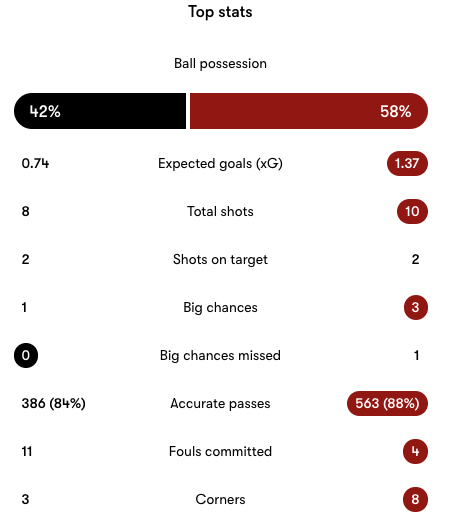
Liverpool finished the match with 58% possession, completing 563 accurate passes at an 88% success rate. Fulham, by contrast, had 42% of the ball and completed 386 passes at 84% accuracy. On paper, this suggests Liverpool dictated the tempo. In practice, that control rarely translated into sustained pressure or clear territorial dominance.
Expected goals further supports this reading. Liverpool posted an xG of 1.37 to Fulham’s 0.74. That gap matters, but it is not overwhelming. It points to Liverpool being the more threatening side, yet not by a margin that guarantees control or safety in a Premier League away fixture.
What stands out is how Liverpool moved the ball. Of their 639 total passes, 338 were played in the opposition half, compared to Fulham’s 149. Liverpool progressed play, but too often did so without pace or incision. Fulham were comfortable retreating into shape, knowing that Liverpool’s possession was rarely accompanied by chaos or sustained penalty box pressure.
This is where control becomes hollow. The ball circulates, the numbers look respectable, but the opponent remains calm.
Shot Volume Tells Only Half the Story
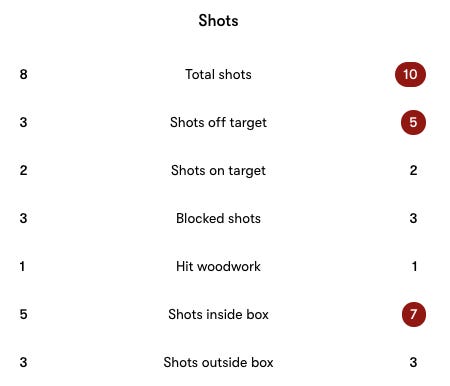
Liverpool registered 10 shots to Fulham’s 8, with both sides managing 2 shots on target. On the surface, that parity in accuracy undermines the idea of Liverpool dominance. Dig deeper, though, and the picture becomes clearer.